
Frontier Airlines Flight FFT3224 Diverts to Chicago O'Hare: What Triggered the Emergency Reroute from Dallas to Minneapolis
Frontier Airlines Flight FFT3224 diverted unexpectedly to Chicago O'Hare International Airport en route from Dallas to Minneapolis. Here's what caused the emergency landing and what passengers need to know about their compensation rights.

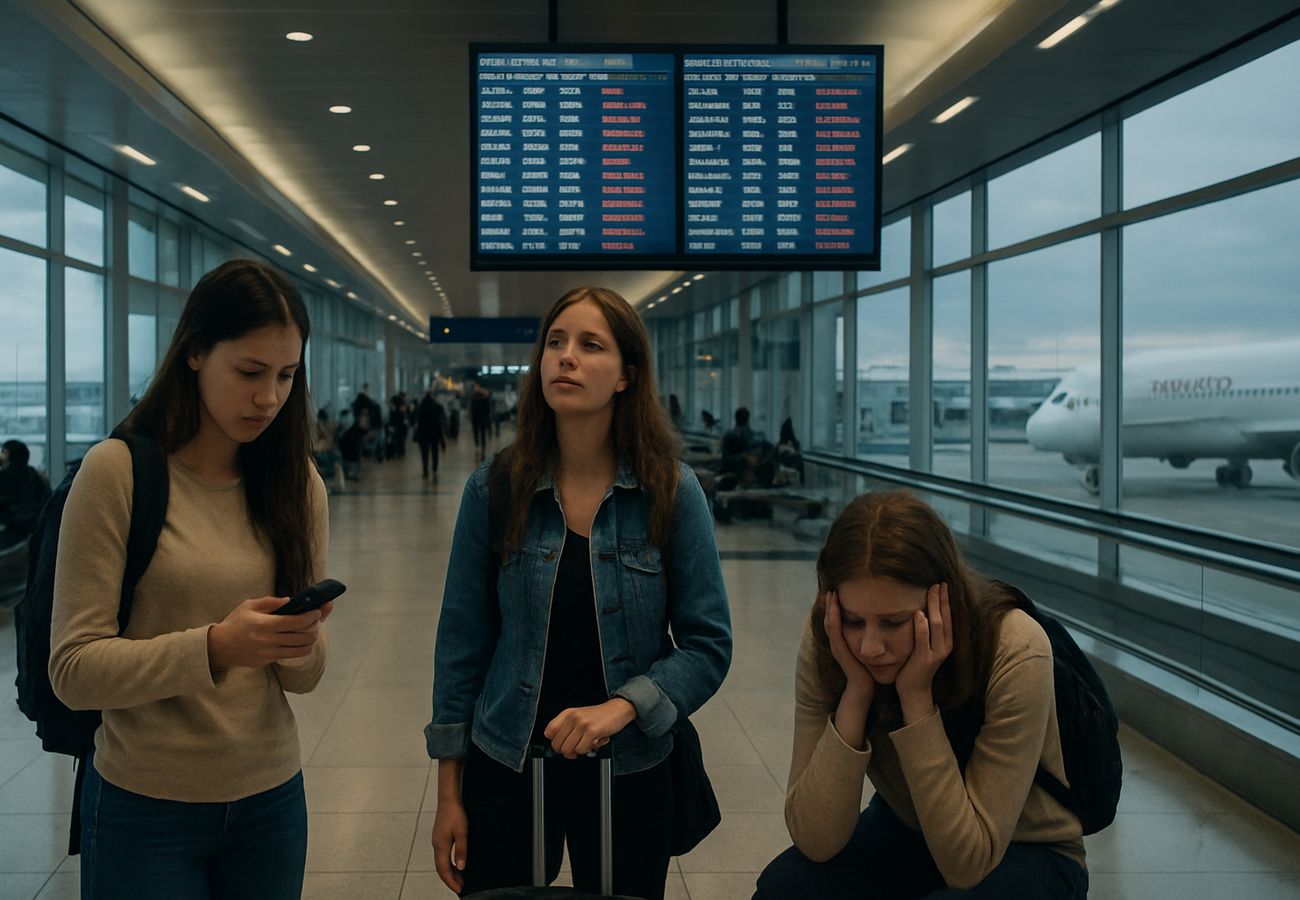
Image generated by AI
A Routine Flight Turned Unexpected
On June 24, 2026, what should have been a standard afternoon flight became a dramatic lesson in modern aviation safety protocols. Frontier Airlines Flight FFT3224, operated by an Airbus A320-214, departed Dallas-Fort Worth International Airport bound for Minneapolis-Saint Paul International Airport. Roughly midway through the journey, the aircraft suddenly altered course and diverted to Chicago O'Hare International Airport.
Passengers who boarded that aircraft expecting a direct route to Minnesota found themselves making an unscheduled stop in Illinois. While diversions happen regularly in commercial aviation, the speed and coordination required to execute one safely still represents a remarkable feat of modern flight operations.
Reddit: "Diversions happen more often than people realize, but it's how airlines handle the aftermath that matters." — r/aviation
What Triggered the Emergency Diversion?
The exact operational factors that prompted the diversion remain partially undisclosed by Frontier Airlines, but aviation experts point to two primary culprits: unexpected weather patterns developing across the Midwest or a minor technical irregularity detected during flight.
The flight crew prioritized passenger welfare above schedule adherence—a decision that reflects Federal Aviation Administration standards requiring pilots to divert when conditions warrant immediate ground inspection. Air traffic control centers coordinating the reroute worked seamlessly with Chicago O'Hare's controllers to map the safest approach vector and secure available runway capacity on short notice.
This wasn't a crisis situation. This was aviation's safety system functioning exactly as designed.
The Cockpit Response: Precision Under Pressure
The pilots commanding FFT3224 demonstrated textbook professionalism during the course change. Rather than rushing toward O'Hare, the flight crew carefully adjusted altitude and descent rate to ensure a smooth final approach for 180+ passengers and crew members.
Seasoned commercial pilots undergo extensive simulator training annually—training specifically designed for scenarios like mid-flight reroutes across vast geographical distances. The captains and first officers on Flight FFT3224 had practiced emergency diversions hundreds of times before that afternoon, which meant their execution was controlled, deliberate, and confident.
"These crews don't panic because they've already seen this scenario play out in the simulator," explains modern aviation training doctrine. The psychological preparation matters as much as the technical skill.
Passenger Communication: Keeping Calm at 35,000 Feet
Transparent communication during flight disruptions can mean the difference between cooperation and cabin chaos. The cabin crew aboard FFT3224 immediately briefed passengers about the course change, explaining that diversions are routine precautionary measures—not emergency responses to life-threatening situations.
Flight attendants carefully framed the situation for anxious travelers: an alternate landing was necessary, the aircraft was operating perfectly, and Chicago O'Hare was equipped with everything needed for a safe touchdown and inspection. This measured communication prevented widespread anxiety from developing during the flight's final 45 minutes.
"The best airlines during disruptions are the ones that explain what's happening," passengers noted across social media. "It turns panic into understanding."
The Cascading Impact on Schedules
When a Boeing-series commercial jet lands off-schedule, the ripple effects can disrupt multiple downstream flights. Frontier Airlines ground coordinators immediately initiated crisis logistics: sourcing potential replacement aircraft, arranging passenger rebooking, updating destination information systems, and coordinating hotel accommodations for stranded travelers.
The airline's customer service teams worked frantically to minimize total passenger delay time. According to the U.S. Department of Transportation reporting standards, carriers must provide specific compensation and care provisions when diversions exceed certain timeframes.
Despite the inconvenience, Frontier's recovery program unfolded with impressive speed—a testament to how modern aviation networks handle sudden operational challenges.
Mandatory Inspection Protocols
Once FFT3224 safely reached its gate at O'Hare, the aircraft immediately underwent comprehensive diagnostic evaluation. Aviation engineers conducted legally mandated maintenance checks on every mechanical and electrical system before the plane could return to passenger service.
These inspections aren't optional suggestions—they're Federal Aviation Administration requirements. Engineers scrutinized the Airbus's onboard computer systems, external fuselage integrity, hydraulic systems, and avionics packages. Only after this thorough evaluation was the aircraft cleared for future operations.
The technical team drafted detailed inspection reports that now feed into Frontier's fleet-wide maintenance and safety improvement strategies.
Historical Context: Diversions Are More Common Than You Think
The diversion of FFT3224 wasn't unprecedented or unusual by aviation standards. According to Federal Aviation Administration records, commercial aircraft execute dozens of diversions daily across U.S. airspace alone—most for weather, some for mechanical precautions, occasionally for medical emergencies.
What distinguishes a well-managed diversion from a crisis is preparation, training, and systems redundancy. Frontier Airlines executed all three with the FFT3224 incident, and the aircraft touched down without incident.
The broader lesson: modern aviation has built extraordinary safety margins into every operation. Diversions represent those safety systems working as intended.
Passenger Compensation: What Travelers Need to Know
Passengers aboard Flight FFT3224 may be entitled to compensation depending on the diversion's duration and cause. Under U.S. Department of Transportation regulations, passengers experiencing significant delays are entitled to meals, hotel accommodations, and rebooking options at no additional cost.
If the diversion resulted from airline-controlled factors (maintenance issues, crew scheduling), compensation frameworks differ from weather-related diversions. Frontier Airlines has published specific policies addressing these scenarios, though passengers should contact customer service directly for individual claim assessments.
Documentation from the flight—boarding passes, receipts for meals and accommodations—strengthens any compensation claim.
The Bigger Picture: Why This Matters
The FFT3224 diversion illustrates why air travel remains statistically safer than driving. Aircraft don't ignore warning signs or push through problematic conditions hoping everything works out. Instead, pilots and air traffic controllers execute carefully choreographed procedures designed specifically for unexpected situations.
That Dallas-to-Minneapolis flight took a detour through Chicago, but it brought 180+ people safely to the ground. That's the story that matters.
Modern aviation's greatest achievement isn't flying—it's flying safely when things don't go according to plan.
Related Travel Guides
Disclaimer
This article is for informational and educational purposes only. It does not constitute legal, financial, or professional advice. While we strive to provide accurate and up-to-date information, travel policies, regulations, and conditions change rapidly. Always verify information with official sources before making travel decisions. Nomad Lawyer makes no representations about the accuracy, reliability, completeness, or suitability of the information provided. Readers should consult qualified professionals for advice specific to their circumstances. The views expressed in this article are those of the author and do not necessarily reflect the views of Nomad Lawyer.
Kunal K Choudhary
Co-Founder & Contributor
A passionate traveller and tech enthusiast. Kunal contributes to the vision and growth of Nomad Lawyer, bringing fresh perspectives and driving the community forward.
Learn more about our team →