
Delta Air Lines Flight DAL2863 Diverted to Duluth: How Pilots Avoided Supercell Thunderstorm Disaster
Delta Air Lines DAL2863 executed a dramatic mid-air diversion from Minneapolis to Duluth when a massive supercell thunderstorm forced pilots to abandon their original flight path. Here's what really happened.

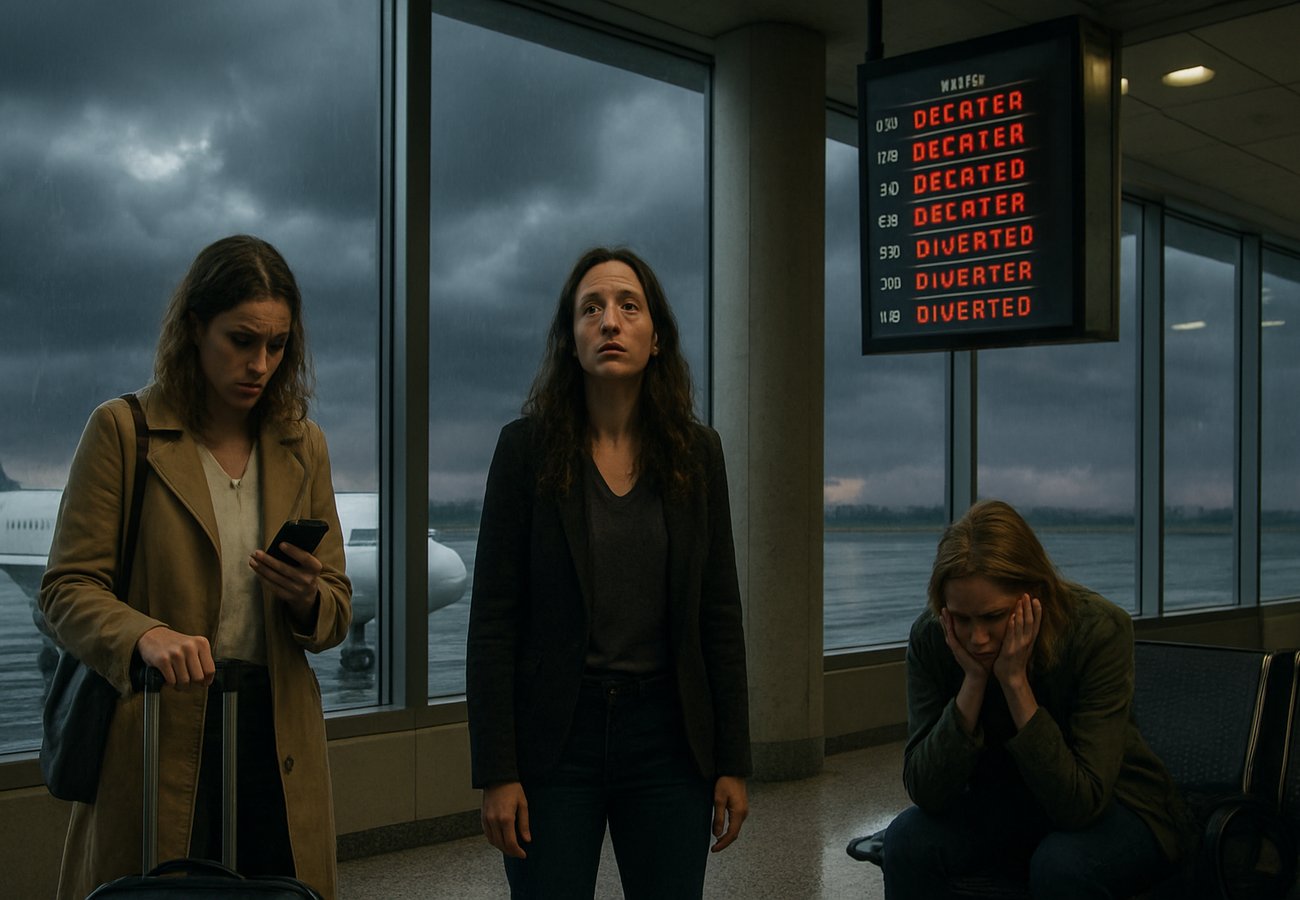
Image generated by AI
The Route That Never Happened
Delta Air Lines flight DAL2863 departed Washington on what seemed like a routine afternoon journey to Minneapolis-St. Paul International Airport. The Airbus A319-114 (registration N314NB) carried passengers eager to reach their destination. But Mother Nature had other plans.
As the aircraft approached the Twin Cities, meteorologists had already issued urgent ground stops. The pilots monitoring their onboard radar saw what no traveler wants to witness: a wall of red and purple precipitation indicators. A massive supercell thunderstorm had materialized directly over Minneapolis, bringing with it a toxic combination of heavy hail, torrential downpours, and dangerous microbursts.
Reddit: "My flight got diverted last week for similar weather. The pilots explained everything clearly and we felt safe the whole time. That transparency matters." — r/travel
The decision was instantaneous. Continue toward Minneapolis and risk violating fundamental aviation safety thresholds, or divert immediately. The crew chose the only viable option.
When Severe Weather Forces the Hand of Experienced Pilots
The atmospheric conditions over the American Midwest during summer months can turn volatile in minutes. What caught Delta Air Lines DAL2863 was a textbook example of how quickly commercial aviation can shift from routine to critical.
Air traffic controllers continuously broadcast deteriorating visibility metrics and wind shear alerts. According to the Federal Aviation Administration's guidance on severe weather diversions, pilots must abandon their original flight plans whenever crosswinds and lightning create unacceptable hazard levels. This isn't optional—it's regulatory mandate.
The flight deck of DAL2863 activated their pre-planned contingency strategy. Rather than circling endlessly in a holding pattern and burning precious reserve fuel, the experienced aviators elected an immediate lateral track change toward the north. Duluth International Airport, located approximately 150 miles away, presented the ideal alternative: pristine skies completely devoid of the convective activity ravaging the Twin Cities.
The Aircraft That Made It Possible
The Airbus A319-114 operating this flight showcased exactly why modern narrow-body jets are engineered for survival. This aircraft is heavily equipped with state-of-the-art navigation systems that allowed pilots to plot a new trajectory instantaneously.
When the diversion instruction was confirmed, the advanced flight management computers aboard DAL2863 rapidly calculated an optimal, fuel-efficient route. The aircraft's robust aerodynamic profile absorbed residual turbulence brilliantly, ensuring passengers experienced minimal physical discomfort despite the hostile atmospheric environment surrounding them.
Fuel management represents the most critical metric during sudden airborne diversions. Every commercial flight is legally required to carry sufficient alternate fuel reserves, which is precisely why DAL2863 was never in immediate danger. The crew meticulously monitored burn rates while coordinating with dispatchers on the ground, verifying the aircraft maintained more than adequate reserves to safely touch down in Duluth.
Communication That Kept Panic at Bay
Seamless cockpit-to-ground communication proved absolutely vital. As soon as severe weather warnings became apparent, the pilots of DAL2863 established continuous dialogue with regional air traffic control centers. Controllers swiftly cleared a direct corridor through congested airspace, authorizing the aircraft to ascend away from dangerous storm cells and pivot toward northern Minnesota safety.
The flight attendants remained composed and transparent throughout. The captain made a reassuring public address, clearly explaining that DAL2863 was diverting strictly as a precautionary measure to avoid turbulent skies. This transparency neutralized brewing panic within the cabin.
Managing passenger expectations during mid-air reroutes ranks among the most challenging aspects of modern aviation. The cabin crew of DAL2863 excelled at maintaining a calm environment when uncertainty could have triggered distress. Because the communication chain remained unbroken—from dispatchers through pilots to ticketed passengers—the entire diversion unfolded seamlessly.
The Bigger Picture: How Common Are These Diversions?
Extreme weather forces diversions across American aviation daily. While exact statistics vary seasonally, the National Weather Service regularly coordinates with airlines to manage convective activity across major flight corridors. What happened to DAL2863 represents standard operating procedure when conditions deteriorate beyond acceptable safety margins.
The incident highlights a fundamental truth about 21st-century commercial aviation: safety protocols work. Planes don't crash because of weather diversions—they crash when those protocols fail. By executing this diversion, Delta Air Lines DAL2863 and its experienced crew transformed a potentially catastrophic scenario into a textbook example of aviation resilience.
Passengers eventually reached Minneapolis after the storm passed. Some missed connections. A few experienced frustration. But everyone arrived safely—which remains the only metric that truly matters when severe weather threatens overhead.
The skies may be unpredictable, but modern aviation's response to them is not.
Related Travel Guides
Disclaimer
This article is for informational and educational purposes only. It does not constitute legal, financial, or professional advice. While we strive to provide accurate and up-to-date information, travel policies, regulations, and conditions change rapidly. Always verify information with official sources before making travel decisions. Nomad Lawyer makes no representations about the accuracy, reliability, completeness, or suitability of the information provided. Readers should consult qualified professionals for advice specific to their circumstances. The views expressed in this article are those of the author and do not necessarily reflect the views of Nomad Lawyer.
Kunal K Choudhary
Co-Founder & Contributor
A passionate traveller and tech enthusiast. Kunal contributes to the vision and growth of Nomad Lawyer, bringing fresh perspectives and driving the community forward.
Learn more about our team →