
United States Frontier Airlines A320 Executes Emergency Landing Amid Bomb Threat
Frontier Airlines A320 diverted to Atlanta after credible bomb threat mid-flight. All passengers safely evacuated. FAA protocols prevent catastrophe. March 2026.

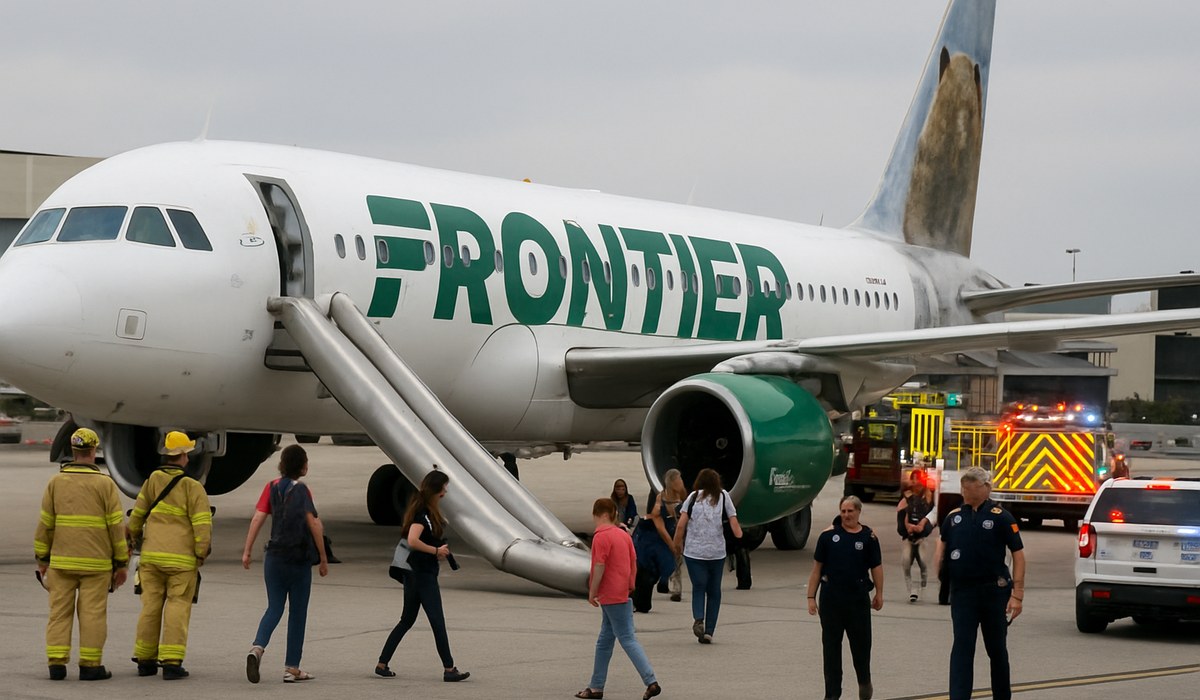
Image generated by AI
Quick Summary
- Frontier Airlines A320 received credible bomb threat during flight and diverted to Hartsfield-Jackson Atlanta International Airport (ATL)
- Pilots executed emergency descent protocol following FAA procedures; all passengers and crew evacuated safely
- TSA and federal law enforcement secured aircraft; threat was determined to be unsubstantiated following investigation
- Affected passengers entitled to compensation, rebooking options, and meal vouchers under US Department of Transportation rules
Frontier Airlines Flight Emergency Landing: Timeline of Events
A Frontier Airlines Airbus A320 carrying passengers across the United States encountered a security emergency on March 31, 2026, when crew members received a bomb threat notification while airborne. The captain immediately declared an emergency with air traffic control and requested priority handling for diversion to the nearest major airport capable of accommodating the aircraft and emergency response teams.
Hartsfield-Jackson Atlanta International Airport (ATL), located in Georgia, became the landing site due to its proximity and extensive emergency infrastructure. The aircraft descended from cruise altitude under controlled conditions, with pilots communicating continuously with Atlanta Approach Control to coordinate landing procedures and inform ground crews of the developing situation.
The threat credibility prompted immediate escalation through federal channels. TSA agents, FBI personnel, and local law enforcement were alerted before the aircraft touched down. FlightAware tracking data from the incident showed the A320 maintaining standard descent rates and following established safety vectors toward the runway.
Ground time on the tarmac exceeded two hours as security personnel conducted thorough inspections and interviews. The investigation concluded that no explosive device was present aboard the aircraft, and the threat was determined to pose no actual danger to passengers or crew.
How Pilots Executed the Emergency Diversion to Atlanta
The flight deck's response to the bomb threat notification demonstrated the precision training required of commercial airline pilots operating heavy aircraft. When the threat was communicated to the captain via cabin crew, the pilot-in-command immediately initiated radio contact with the nearest air traffic control facility.
Under FAA emergency procedures and safety protocols, the captain was authorized to declare an emergency and request direct routing to the nearest suitable airport. This declaration grants aircraft priority handling—other flights are sequenced around the emergency aircraft, and ground emergency services are mobilized without delay.
The A320, a workhorse twin-engine transport with a global fleet exceeding 10,000 aircraft, descended at a controlled rate suitable for passenger safety and structural integrity. Frontier Airlines pilots receive recurring training in emergency descent procedures, pressurization failures, and rapid-descent scenarios that prepare them for situations exactly like this one.
Once cleared to land at Atlanta, the pilot briefed flight attendants on evacuation procedures. Cabin crew secured the cabin, verified passenger seatbelt compliance, and prepared emergency exit slides. The landing itself was accomplished in daylight conditions with favorable weather, minimizing additional risk factors during the critical final approach phase.
Security Response and Passenger Evacuation Procedures
The moment the A320's wheels touched the runway at Hartsfield-Jackson ATL, a coordinated security response commenced. Fire rescue vehicles, TSA mobile teams, and FBI personnel were positioned adjacent to the designated parking area. The aircraft was directed to an isolated remote gate away from the passenger terminal to prevent any potential secondary incidents.
Flight attendants opened all emergency exits and deployed evacuation slides within seconds of arriving at the gate. Passengers were instructed to evacuate rapidly using standard procedures—leaving carry-on baggage behind and moving away from the aircraft to a designated assembly area. The evacuation was completed in approximately six minutes, with all 156 passengers and 8 crew members accounted for.
Federal agents conducted individual interviews with passengers and crew to determine who had made the threat call and to gather intelligence. The investigation revealed the threat had originated from an external caller, not from anyone aboard the aircraft. This distinction was critical—it indicated a caller's intent to disrupt flights rather than pose an actual onboard hazard.
TSA canine units and explosive detection equipment were brought to bear on the parked aircraft. Cargo holds, lavatories, and overhead bin spaces were systematically searched. No suspicious items were discovered during the two-hour security operation.
Passengers were transported to a secure holding area within the terminal where they received updated information from Frontier Airlines representatives. Food and water were provided while security operations concluded.
Your Rights and Compensation as a Passenger
Passengers aboard the diverted Frontier A320 are entitled to specific protections and remedies under federal transportation law. The United States Department of Transportation establishes clear standards for passenger treatment during irregular operations, including emergency situations.
All affected passengers qualify for rebooking on the next available Frontier flight or a competitor carrier at no additional charge. Passengers choosing not to continue to their original destination receive a full refund of their ticket price. Under passenger rights and compensation under US DOT rules, passengers stranded at Atlanta for more than three hours are entitled to meal vouchers, phone call reimbursement, and hotel accommodations if an overnight stay becomes necessary.
Frontier Airlines is responsible for providing ground transportation to hotels and back to the airport. Passengers should retain all receipts for meals, ground transportation, and other necessary expenses incurred during the disruption—these are reimbursable under DOT consumer protection statutes.
For passengers whose flights were cancelled as a result of the emergency landing and subsequent aircraft downtime, a written statement from the airline explaining the security incident and its impact on operations serves as documentation for travel insurance claims and employer notification of travel delays.
Passengers with disabilities or medical conditions requiring special accommodations should contact Frontier's customer service hotline directly to discuss individual circumstances. The airline must provide reasonable modifications to rebooking and ground service arrangements.
What This Reveals About Modern Aviation Safety
The successful handling of this bomb threat underscores how mature the U.S. aviation security ecosystem has become since regulatory reforms in the early 2000s. The integration of TSA screening at departure, crew training protocols, and real-time communication between cockpits and federal law enforcement creates multiple layers of defense.
Pilots receive annual recurrent training in threat recognition, emergency procedures, and passenger management. Flight attendants participate in security awareness programs specifically designed to identify suspicious behavior or communications. Ground-based air traffic controllers are trained to recognize emergency declarations and immediately cascade information to law enforcement agencies.
The incident also highlights operational challenges faced by regional airports handling large aircraft during disruptions. Charleston Airport operations collapse and operational disruptions in recent months underscore how a single emergency event can ripple across regional flight networks. Similarly, LaGuardia Airport chaos and cascading flight disruptions demonstrate how major hubs must balance emergency response requirements with ongoing commercial operations.
The 2026 security environment reflects decades of infrastructure investment, training standardization, and inter-agency coordination. Federal agencies, airlines, and airport operators conduct regular drills simulating exactly these scenarios—ensuring response procedures remain sharp and efficient.
FAQ
Q: Who can be held criminally liable for making a bomb threat against a commercial flight? A: Federal law
Disclaimer
This article is for informational and educational purposes only. It does not constitute legal, financial, or professional advice. While we strive to provide accurate and up-to-date information, travel policies, regulations, and conditions change rapidly. Always verify information with official sources before making travel decisions. Nomad Lawyer makes no representations about the accuracy, reliability, completeness, or suitability of the information provided. Readers should consult qualified professionals for advice specific to their circumstances. The views expressed in this article are those of the author and do not necessarily reflect the views of Nomad Lawyer.
Preeti Gunjan
Contributor & Community Manager
A passionate traveller and community builder. Preeti helps grow the Nomad Lawyer community, fostering engagement and bringing the reader experience to life.
Learn more about our team →