
Austin Airport Travel Chaos: American Airlines, Spirit, Southwest Ground 7 Flights Amid Massive Delays Across Dallas, Newark, Amsterdam, Atlanta
Travel disruption hits Austin-Bergstrom as 7 flights grounded and dozens delayed across major US and international hubs including Dallas, Newark, and Amsterdam.

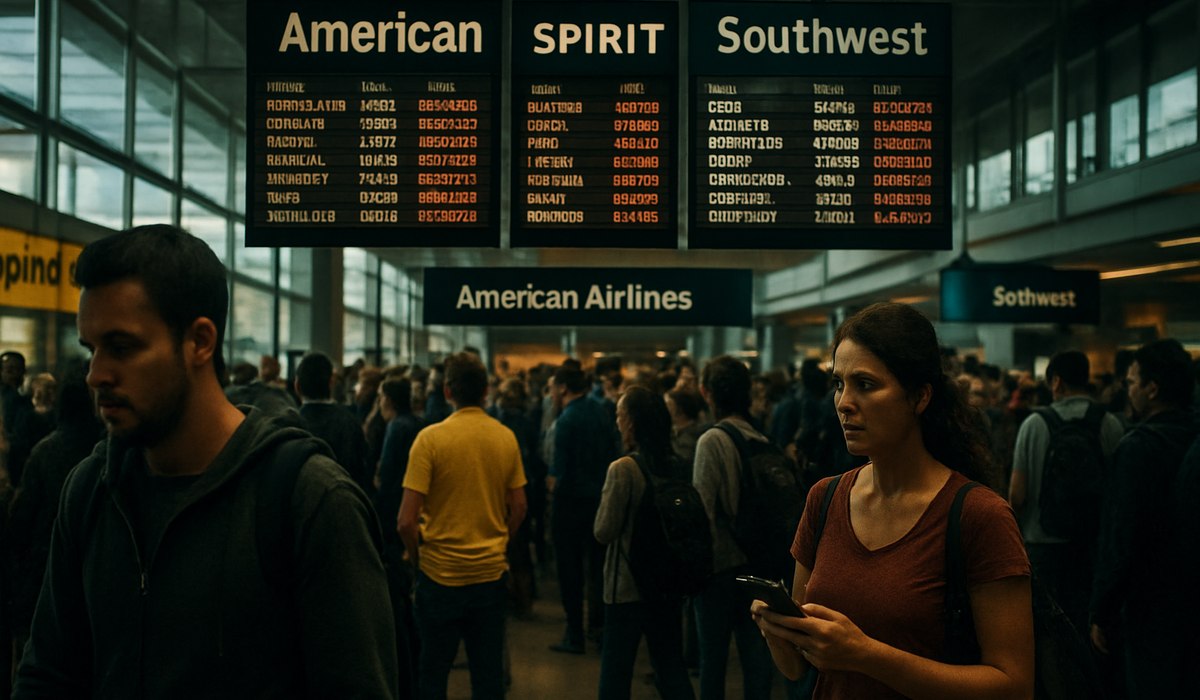
Image generated by AI
Austin Airport Travel Chaos: American Airlines, Spirit, Southwest Ground 7 Flights Amid Massive Delays Across Dallas, Newark, Amsterdam, Atlanta
A major travel disruption has unfolded at Austin-Bergstrom International Airport, sending shockwaves across the North American and transatlantic aviation network. American Airlines, Spirit Airlines, and Southwest Airlines have collectively grounded 7 flights, while 60 additional flights face significant delays across interconnected routes. The cascading effect is reshaping travel plans for thousands of passengers heading to and from Austin, Dallas, Newark, Amsterdam, Atlanta, and dozens of other major destinations worldwide.
The operational crisis emerged rapidly on April 5, 2026, with Austin-Bergstrom International Airport emerging as the primary epicenter of disruption. However, the impact extends far beyond Texas. Passengers traveling through Dallas/Fort Worth International Airport, Newark Liberty International Airport, and connecting hubs across Europe and the Southeast are experiencing mounting uncertainty. The ripple effect has touched major cities including Nashville, Charlotte, Houston, Washington D.C., Jacksonville, Las Vegas, Los Angeles, Kansas City, Orlando, Miami, Minneapolis, Chicago, Phoenix, San Diego, Seattle, San Francisco, Tampa, Toronto, Frankfurt, Boston, Baltimore, New York, New Orleans, and Salt Lake City. International travelers bound for Amsterdam and other European destinations face extended waits and missed connections.
American Airlines reported the highest operational impact, with 4 flights cancelled and 21 flights delayed. Southwest Airlines followed with 1 cancellation and a staggering 37 delayed flights, indicating severe scheduling strain across its network. Spirit Airlines contributed 2 cancellations and 2 delays to the overall disruption. According to FlightAware, the data reveals that while absolute cancellation numbers remain relatively contained, the proportional impact at key hubs signals underlying operational stress that extends well beyond Austin's borders.
The disruption has created a domino effect across the aviation system. Passengers at Austin-Bergstrom International Airport are facing extended waits at service desks, with airline crews working in real-time to reschedule connections and accommodate stranded travelers. Those heading to Dallas, Newark, Amsterdam, and Atlanta are experiencing cascading delays that threaten to compromise their entire itineraries. The situation underscores the fragility of modern air travel networks, where a localized disruption at one major hub can trigger system-wide consequences affecting international routes and transcontinental connections. Weather conditions, congestion, and operational factors have all contributed to the mounting pressure on American Airlines, Southwest, and Spirit as they attempt to restore normal service levels.
Flight cancellation data indicates that disruptions remain concentrated at specific operational hubs rather than system-wide. Austin-Bergstrom International Airport recorded the highest number of cancellations with 4 cancellations (1% of total flights), signaling consistent operational strain at this primary hub. Dallas/Fort Worth International Airport followed with 2 cancellations in each dataset, though with higher proportional impact ranging between 11% and 16%, indicating fewer total flights but greater relative disruption. Newark Liberty International Airport registered 1 cancellation in both datasets, with percentages ranging between 16% and 20%, suggesting intermittent but notable service interruptions. Dallas Love Field appeared in secondary data with 1 cancellation (12%), further highlighting pressure within the Dallas aviation network. Notably, all other listed airports—including major global hubs such as Amsterdam Airport Schiphol and Hartsfield-Jackson Atlanta International Airport—reported zero cancellations, indicating that while delays were widespread, outright cancellations remained localized and relatively contained.
For travelers caught in this travel nightmare, immediate action is essential. The U.S. Department of Transportation (DOT) recommends that passengers monitor their email, phone, and airline apps for rebooking confirmations and real-time updates. Contact your airline's customer service immediately—either in person at the airport or through their online chat system to avoid lengthy queues. Familiarize yourself with your airline's cancellation policies, as many carriers offer rebooking options or compensation, particularly when cancellations fall within their operational control. If you cannot secure a suitable alternative flight, consider booking through another airline or exploring alternative transportation such as trains or buses. For international passengers, particularly those heading to Amsterdam or other European destinations, verify your connection status with your airline before proceeding to the airport, as missed connections may require rebooking on entirely different routes.
The broader implications of this disruption extend beyond immediate passenger inconvenience. The cascading delays affecting Austin, Dallas, Newark, Amsterdam, and Atlanta represent a significant challenge to the interconnected global aviation system. As travelers increasingly rely on seamless connections across multiple carriers and international borders, localized disruptions at major hubs like Austin-Bergstrom International Airport can trigger widespread consequences. The situation highlights the critical importance of operational resilience and real-time coordination among American Airlines, Southwest, Spirit, and airport authorities. Industry observers note that such disruptions underscore the need for enhanced contingency planning and investment in airport infrastructure to accommodate peak travel periods and unexpected operational challenges.
Related Travel Guides
Disclaimer
This article is for informational and educational purposes only. It does not constitute legal, financial, or professional advice. While we strive to provide accurate and up-to-date information, travel policies, regulations, and conditions change rapidly. Always verify information with official sources before making travel decisions. Nomad Lawyer makes no representations about the accuracy, reliability, completeness, or suitability of the information provided. Readers should consult qualified professionals for advice specific to their circumstances. The views expressed in this article are those of the author and do not necessarily reflect the views of Nomad Lawyer.
Raushan Kumar
Founder & Lead Developer
Full-stack developer with 11+ years of experience and a passionate traveller. Raushan built Nomad Lawyer from the ground up with a vision to create the best travel and law experience on the web.
Learn more about our team →