
Frome, Somerset: Exploring England's Independent Market Town, Medieval Leats, and Artisan High Streets in 2026

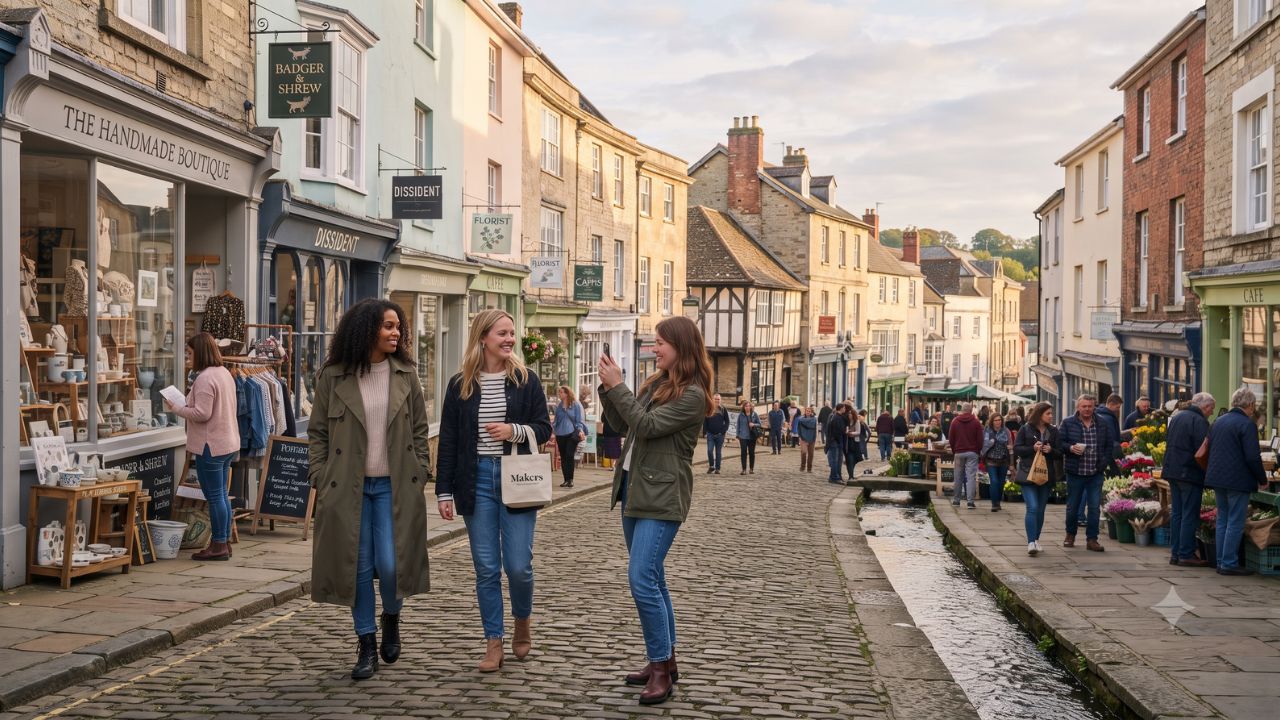
Running directly down the center of Frome's cobblestone Cheap Street flows a continuous freshwater leat channeled from an ancient spring beneath the seventh-century parish church of St John the Baptist. While mainstream tourists flock to nearby Georgian Bath just 13 miles away, this Somerset hill town has quietly established the largest concentration of independent shops in southwest England, boasting more than 80 non-chain retailers and a monthly artisan festival that draws over 80,000 visitors.
Founded in 685 AD by Saint Aldhelm, Frome evolved from an early Anglo-Saxon monastery into a dominant wool and cloth manufacturing hub during the Industrial Revolution. When mechanized manufacturing waned, the community resisted the generic chain-store modernization that sanitized other English market towns. Today, steep medieval lanes, timber-framed merchant dwellings, and creative community-owned enterprises define a town that celebrates radical self-reliance, local craft, and sustainable small-batch enterprise.
A Pioneer in Community-Led Retail and Independent Culture
Frome's commercial core stands in stark contrast to conventional British town centers. Rather than multinational franchises, the town center is populated by over 80 independent businesses spanning vintage clothing ateliers, bespoke furniture makers, independent bookshops, artisan sourdough bakeries, and zero-waste refill pantries.
The focal point of this creative renaissance is the steep, cobbled incline of Catherine Hill. Lined with pastel-hued 17th-century shopfronts, Catherine Hill has garnered national acclaim as a model for independent high streets. Independent makers display handmade ceramics, botanical apothecary remedies, and mid-century design wares directly from open workshops where visitors can engage with artisans at work.
Market culture anchors weekly community life in Frome. Official records documented by Visit Somerset highlight weekly general markets every Wednesday and Saturday, alongside the historic Frome Farmers’ Market. Operating since 1998 on the second Saturday of each month between February and December, the farmers' market brings regional cheesemakers, organic cider orchards, and regenerative livestock farmers into the town center.
The absolute pinnacle of the town's seasonal calendar is The Frome Independent. Taking place on the first Sunday of each month from March through December, this massive street festival closes central roads to vehicular traffic, attracting more than 80,000 annual visitors. The event reclaims public urban space with designer craft markets, regional street food stalls, acoustic buskers, and family creative workshops.
What Makes Frome’s Medieval Architecture Distinct
Frome’s street layout preserves rare architectural features that have survived intact since the Middle Ages:
- Cheap Street and the Ancient Spring Leat: Derived from the Old English word ceap (meaning market), Cheap Street retains its 14th-century pedestrian proportions. The open stone stream running through the center originally served as a hygienic water supply for medieval butchers and tanners. Listed by Historic England as an exceptional heritage street, it remains one of the best-preserved medieval shopping corridors in Europe.
- Gentle Street and Sheppards Barton: Climbing toward St John's Church, Gentle Street features stone-mullioned weaver cottages and Georgian stone facades constructed from local oolitic limestone. Narrow connecting passages known locally as "bartons" reveal secret courtyards and terrace gardens.
- The Silk Mill and Black Swan Arts: The industrial heritage of Frome’s textile era lives on through converted historic mills. The Silk Mill houses open artist studios, while Black Swan Arts operates contemporary exhibition galleries, artisan gift shops, and outdoor courtyard cafés.
- St John the Baptist Church: Towering above the town since Saxon foundations, the church features the famous 19th-century Via Crucis (Way of the Cross) stone carvings cascading down the exterior cemetery steps.
Visitor Insider Tips
Maximizing a trip to Frome requires strategic scheduling to balance quiet heritage exploration with market-day excitement:
- Schedule for First-Sunday Markets: To experience The Frome Independent market, book your visit on the first Sunday of the month between March and December. Arrive by 9:30 AM before market stalls open at 10:00 AM to secure convenient parking near the Cattle Market car park.
- Midweek Quiet Heritage Walks: If you prefer quiet photography and unhurried browsing along Catherine Hill and Cheap Street, visit on a Tuesday or Thursday morning when streets are free of market stalls.
- Sample Regional Somerset Gastronomy: Taste traditional Somerset farmhouse cheddar, dry-cured bacon rolls, and craft unpasteurized ciders fermented with heritage apples from the nearby Mendip Hills.
- Pedestrian Navigation: Frome is built across steep hillside gradients. Wear comfortable, supportive walking shoes suited for wet cobblestones and uneven flagstones.
- Direct Rail Connections: The town is served by Frome Railway Station, featuring one of the last remaining timber-roofed railway train sheds in Britain. Direct Great Western Railway services connect to Bath Spa (under 40 minutes) and London Paddington (under two hours), with scheduling accessible via National Rail.
Cultural and Environmental Context
Frome is celebrated across the United Kingdom as a testing ground for innovative community governance and environmental activism. The town made political history by electing independent, non-aligned town councils dedicated to local sustainability, community flatpacks, and ecological resilience.
Community initiatives include the UK's first community fridge (reducing food waste) and a town-wide Library of Things, where residents borrow tools and outdoor gear instead of purchasing single-use items. Visitors are encouraged to respect local pedestrian zones, support zero-waste retail shops, and travel via public rail. By prioritizing local independent trade over corporate supply chains, Frome demonstrates how historic market towns can preserve their authentic identity while creating sustainable, community-centered local economies.
FAQ: Visiting Frome Somerset 2026
How far is Frome from Bath and Bristol?
Frome is located 13 miles south of Bath (approximately 30 minutes by car or direct train) and 25 miles southeast of Bristol (about 50 minutes by road).
When does The Frome Independent market take place?
The Frome Independent runs on the first Sunday of every month from March to December, between 10:00 AM and 3:00 PM.
Are independent shops in Frome open on Sundays?
On market Sundays, all shops and stalls operate fully. On non-market Sundays, some independent boutiques close, so check individual shop hours in advance.
Is Frome accessible by public transport?
Yes, direct Great Western Railway trains run regularly from Bath Spa, Bristol Temple Meads, Weymouth, and London Paddington directly into Frome Station.
Wandering through the stone-cobbled alleys of Frome reminds travelers that authentic community spirit and independent craft remain the true heart of the English countryside.
Related Travel Guides
Disclaimer
This article is for informational and educational purposes only. It does not constitute legal, financial, or professional advice. While we strive to provide accurate and up-to-date information, travel policies, regulations, and conditions change rapidly. Always verify information with official sources before making travel decisions. Nomad Lawyer makes no representations about the accuracy, reliability, completeness, or suitability of the information provided. Readers should consult qualified professionals for advice specific to their circumstances. The views expressed in this article are those of the author and do not necessarily reflect the views of Nomad Lawyer.
Raushan Kumar
Founder & Lead Developer
Full-stack developer with 11+ years of experience and a passionate traveller. Raushan built Nomad Lawyer from the ground up with a vision to create the best travel and law experience on the web.
Learn more about our team →