
US Air Force to Expand Stealth Bomber Arsenal Sixfold: B-21 Raider Production Accelerates Dramatically
Breaking airline news and aviation industry updates for 2026.

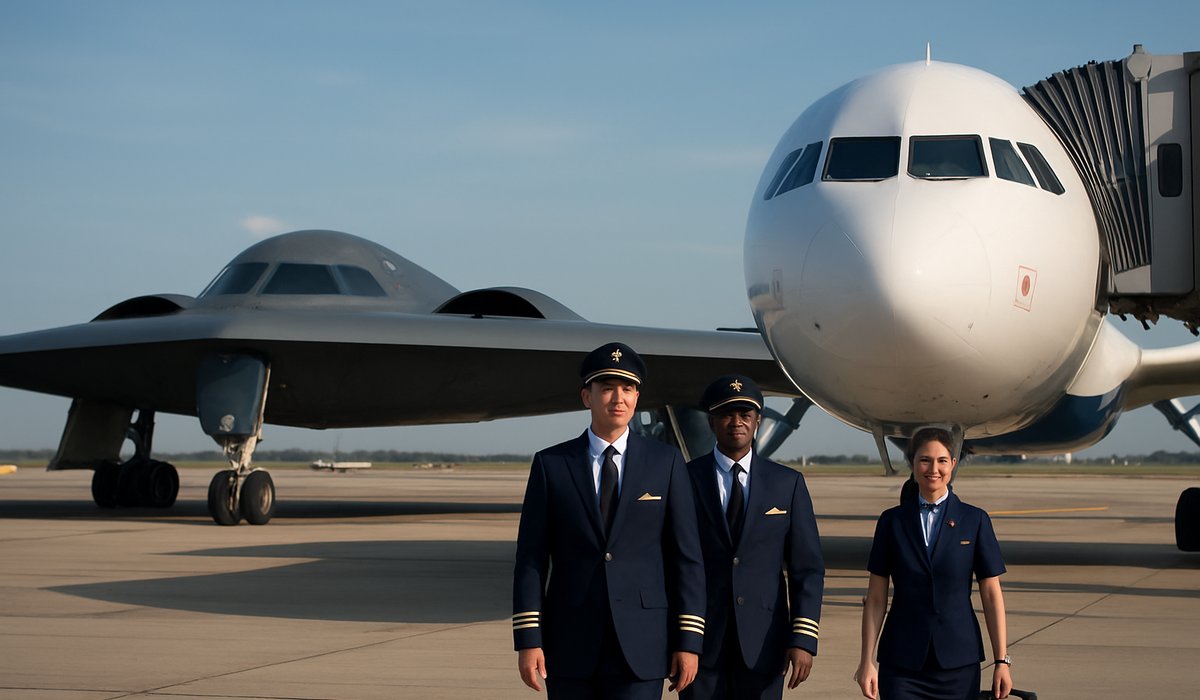
Image generated by AI
US Air Force to Expand Stealth Bomber Arsenal Sixfold: B-21 Raider Production Accelerates Dramatically
The Pentagon's next-generation platform represents a historic expansion of America's strategic bombing capability
Pentagon Commits to Historic Fleet Modernization
The United States Air Force is poised for a transformative expansion of its stealth bomber operations, with plans to scale its current fleet from just 19 operational aircraft to as many as 145 advanced platforms over the coming decades. This represents a more than sevenfold increase in strategic bombing capacity and marks one of the most significant military modernization initiatives of the 21st century.
The transition centers on Northrop Grumman's B-21 Raider, the successor to the aging B-2 Spirit platform that has anchored American long-range strike capabilities since the 1990s. The inaugural operational B-21 is scheduled to arrive at Ellsworth Air Force Base in 2027, signaling the beginning of a multi-billion-dollar production ramp-up designed to fundamentally reshape U.S. strategic deterrence.
Production Timeline and Capital Investment
The Defense Department has begun allocating substantial resources to expand manufacturing capacity for the next-generation bomber, acknowledging that meeting the projected 145-aircraft requirement will demand unprecedented industrial commitment. Industry analysts note that this production surge will likely span multiple decades, with sustained annual deliveries necessary to achieve the full fleet complement.
The B-2 Spirit fleet, comprising only 19 airframes in active service, has borne the primary burden of America's stealth bombing responsibilities for over three decades. Despite their advanced capabilities and stealth characteristics, the limited number of operational bombers has constrained strategic flexibility and created maintenance challenges for Air Force planners.
Strategic Implications for Global Defense Posture
The expansion signals Pentagon confidence in the B-21's design and reflects broader geopolitical tensions that have elevated demands for long-range strike platforms. Military strategists emphasize that the enlarged fleet would enable simultaneous operations across multiple geographic theaters while maintaining operational reserves for contingencies.
Northrop Grumman has positioned the B-21 as a technological leap forward, incorporating advanced stealth features, reduced operating costs compared to the B-2, and enhanced flexibility for evolving mission requirements. The contractor's ability to scale production while maintaining quality standards will prove critical to program success.
What This Means for Allies and Adversaries
The modernization effort carries implications beyond U.S. borders, reinforcing American commitment to extended deterrence agreements with NATO allies and Indo-Pacific partners. The expanded fleet would substantially increase the credibility of U.S. strategic guarantees during an era of heightened great-power competition.
Frequently Asked Questions
Q: When will the first operational B-21 Raider enter service? A: The first B-21 is scheduled to achieve operational status at Ellsworth Air Force Base in 2027.
Q: How many B-2 Spirits currently exist? A: The U.S. Air Force operates 19 B-2 Spirit stealth bombers, representing the current backbone of American strategic bombing capabilities.
Q: What makes the B-21 different from the B-2? A: The B-21 incorporates updated stealth technology, reduced lifecycle costs, and enhanced mission flexibility while maintaining comparable strategic capabilities.
Q: How long will the B-21 production program last? A: Production will likely span multiple decades to reach the projected fleet of 145 aircraft, requiring sustained annual manufacturing commitments.
Q: Why is the Air Force expanding its bomber fleet now? A: Geopolitical tensions, aging B-2 inventory, and the need for sustained multi-theater operations justify the investment in expanded stealth bombing capacity.
Related Travel Guides
Flight Delay Compensation Guide 2026
Understanding Airline Route Changes
Airport Security Process Updated (2026)
External Resources
Disclaimer
This article is for informational and educational purposes only. It does not constitute legal, financial, or professional advice. While we strive to provide accurate and up-to-date information, travel policies, regulations, and conditions change rapidly. Always verify information with official sources before making travel decisions. Nomad Lawyer makes no representations about the accuracy, reliability, completeness, or suitability of the information provided. Readers should consult qualified professionals for advice specific to their circumstances. The views expressed in this article are those of the author and do not necessarily reflect the views of Nomad Lawyer.
Raushan Kumar
Founder & Lead Developer
Full-stack developer with 11+ years of experience and a passionate traveller. Raushan built Nomad Lawyer from the ground up with a vision to create the best travel and law experience on the web.
Learn more about our team →