
France and US Lead Global Tourism Strategy at ITE Hong Kong 2026 with 500+ Exhibitors
Analysis of ITE Hong Kong 2026 reveals a massive shift toward Free Independent Travel (FIT), with 88% of short-haul travelers rejecting traditional group tours.

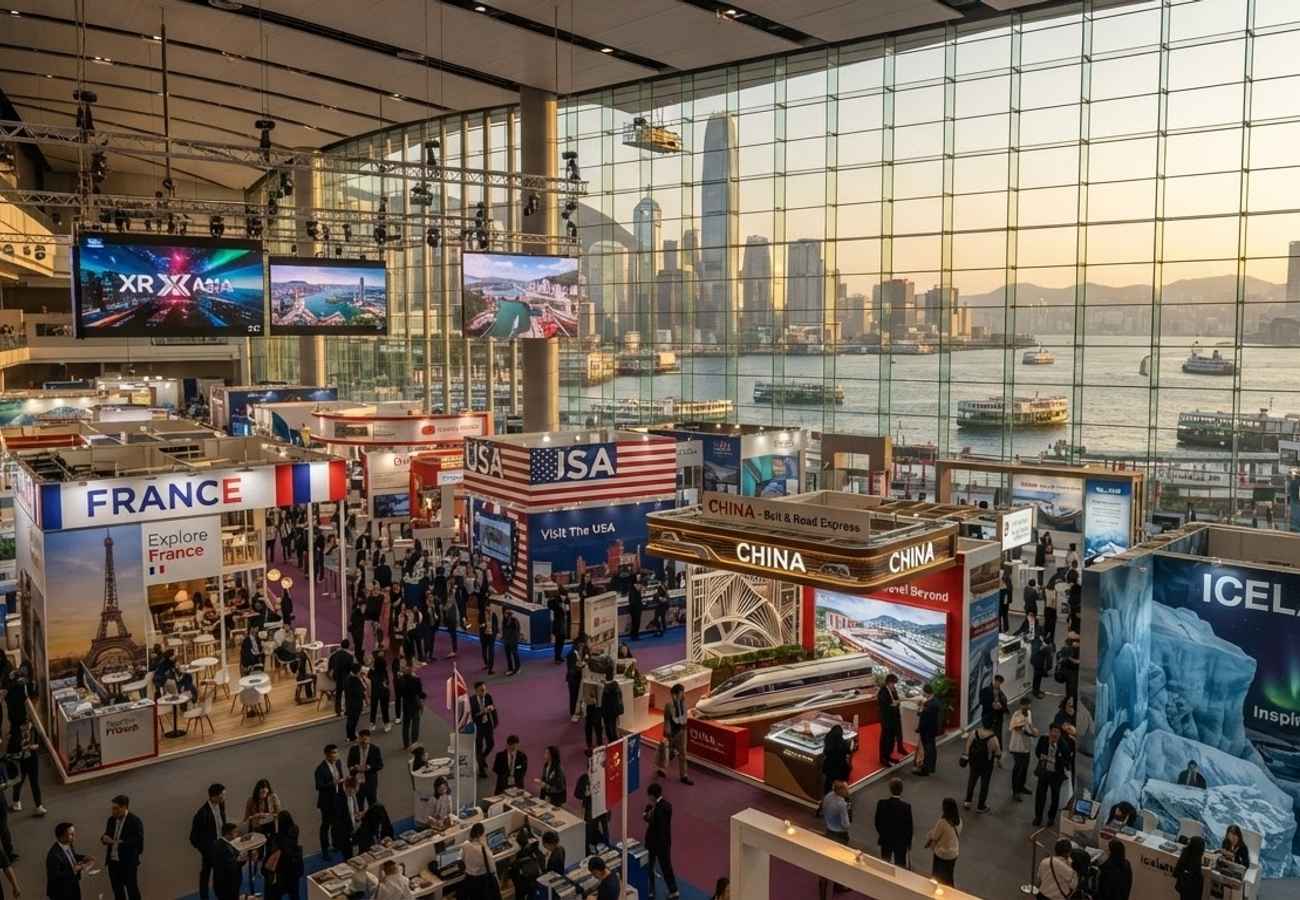
Image generated by AI
The 40th ITE-Leisure and 21st ITE-MICE events have solidified Hong Kong's position as the primary strategic nexus for Asia-Pacific travel. With over 500 international exhibitors, the 2026 summit signals a definitive industry pivot toward high-value, personalized itineraries and a systemic rejection of traditional group tourism.
Strategic Convergence at HKCEC
From June 11 to 14, 2026, the Hong Kong Convention and Exhibition Centre (HKCEC) hosted a massive assembly of travel boards, trade delegations, and commercial operators. The event served as a critical bridge between Western destination marketing organizations—specifically those from France and the United States—and the burgeoning outbound markets of Mainland China and the Greater Bay Area (GBA).
Our analysis of the event's scale indicates a heavy emphasis on internationality, with over 80% of the 500+ exhibitors representing overseas destinations from 68 different countries and regions. The exhibition spanned Halls 1C, 1D, and 1E, creating a concentrated hub for bilateral trade negotiations.
Operational Breakdown and Impact Metrics
The event utilized a dual-track execution strategy to separate corporate procurement from consumer engagement.
- Trade Days (June 11–12): Focused on B2B matching and regulatory exchange. This phase hosted 8,000 corporate buyers and travel trade professionals, featuring seminars on foreign visa policies and sustainability forums.
- Public Days (June 13–14): Transitioned to B2C engagement, attracting over 74,000 affluent public visitors. This phase included 80 travel seminars and direct booking incentives.
- Regional Distribution: The influence of the Greater Bay Area was evident, with 20% of trade delegates originating from Guangdong Province and 10% from other Mainland Chinese provinces.
The Surge of Free Independent Travel (FIT)
The most significant data point emerging from ITE Hong Kong 2026 is the structural collapse of the traditional group tour model in favor of Free Independent Travel (FIT).
According to attendee surveys:
- Short-haul travelers: 88% now prefer FIT or customized private tours.
- Long-haul travelers: 72% have shifted toward self-directed travel.
For the travel provider, this means a mandatory shift in commercial portfolios. We are seeing an increased demand for boutique accommodations, flexible transport passes, and self-guided packages over rigid, pre-planned itineraries.
Specialized Tourism and Technological Integration
The 2026 expo highlighted a move toward "niche-ification" of travel, utilizing dedicated pavilions to capture specific market segments.
Theme-Based Sector Growth
- Ice and Snow Travel: A dedicated pavilion featuring high-latitude destinations including Iceland, Northern Canada, Beijing, Chongli, Heilongjiang, and Xinjiang.
- Sustainable Tourism: Forums focused on decarbonization, green hotel operations, and eco-certified practices.
- Family and Youth Travel: Specialized itineraries targeting multi-generational travel, with a focus on educational and wildlife-based tourism in regions like Sabah.
Immersive Tech Implementation
The integration of "Experience Tech" has moved from novelty to a core marketing tool. ITE 2026 deployed XR 6D multi-sensory cinema, combining AR, VR, and olfactory cues to provide virtual destination previews. Additionally, AI-powered heritage displays, including the "Time Tunnel," allowed visitors to generate AI portraits and explore archival travel data from 1936.
Global Representation Matrix
The show floor demonstrated a strategic expansion of both Eastern and Western presence.
| Regional Pavilion | Key Focus Areas | Strategic Highlight |
|---|---|---|
| Mainland China | Luxury Rail & Provincial Growth | 30% expansion; Panda-themed train (Sichuan to Xinjiang) |
| Americas & Europe | Western Destination Marketing | Strong presence from France, USA, Peru, and Belarus |
| Asia & Africa | Emerging Markets | Official stands from Mongolia and the Embassy of Uganda |
Passenger Rights & Advisory: Navigating Customized Travel
As the industry shifts toward the FIT model highlighted at ITE 2026, travelers are increasingly responsible for their own logistics. Our analysis of current aviation policies suggests that while customized travel offers more freedom, it can complicate compensation claims.
For the affected traveler, this means:
- Rebooking Rights: When booking "self-guided" packages through multiple vendors (as opposed to a single tour operator), a flight delay may not automatically trigger hotel refunds. Ensure your travel insurance specifically covers "trip interruption" for independent bookings.
- EU261/2004 Application: For those booking FIT flights from Europe to Asia, remember that compensation for delays over 3 hours remains applicable regardless of whether you are on a guided tour or traveling independently.
- DOT Guidelines: US-based travelers using customized itineraries should be aware that the Department of Transportation's new refund mandates apply to the flight segment, even if the overall "experience package" is managed by a third-party boutique agency.
Industry Analyst View
The 2026 ITE Hong Kong summit confirms that the "mass tourism" era is being replaced by "precision tourism." The heavy investment in AI-driven previews and XR technology suggests that the pre-trip phase is becoming as important as the trip itself. By leveraging Hong Kong as a springboard into the Greater Bay Area, Western operators are not just selling destinations; they are adapting their entire business models to meet the demands of a more autonomous, affluent, and tech-savvy traveler.
The transition to FIT is no longer a trend—it is the new baseline for global tourism viability.
Related Travel Guides
Disclaimer
This article is for informational and educational purposes only. It does not constitute legal, financial, or professional advice. While we strive to provide accurate and up-to-date information, travel policies, regulations, and conditions change rapidly. Always verify information with official sources before making travel decisions. Nomad Lawyer makes no representations about the accuracy, reliability, completeness, or suitability of the information provided. Readers should consult qualified professionals for advice specific to their circumstances. The views expressed in this article are those of the author and do not necessarily reflect the views of Nomad Lawyer.
Preeti Gunjan
Contributor & Community Manager
A passionate traveller and community builder. Preeti helps grow the Nomad Lawyer community, fostering engagement and bringing the reader experience to life.
Learn more about our team →