
France Issues Urgent 2026 Drought Travel Guidance as 85% of Country Faces Water Shortages
France implements strict water restrictions via VigiEau as 58 departments reach critical emergency levels during the 2026 summer drought.

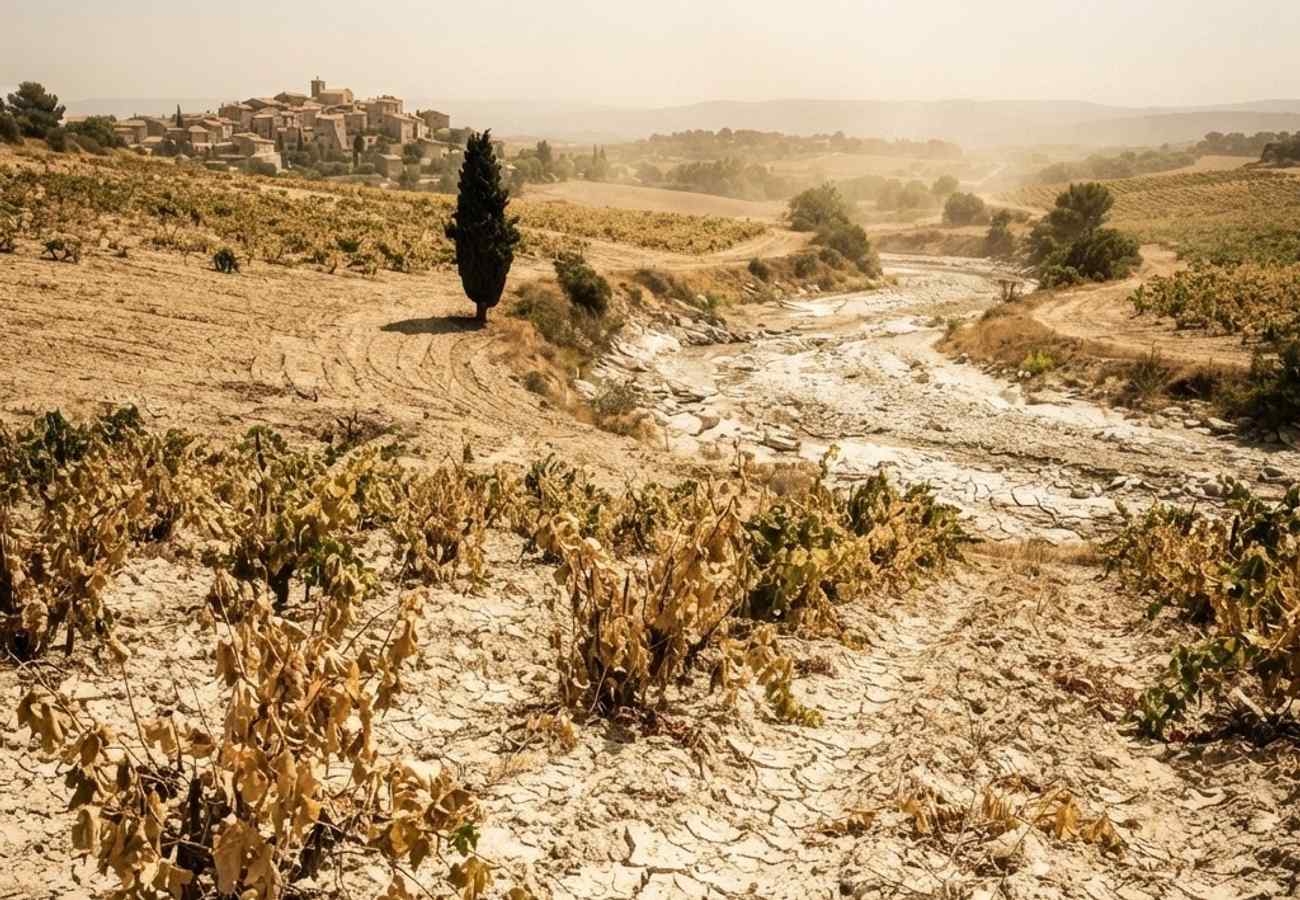
Image generated by AI
Over 85% of France is currently under serious drought conditions, with 58 departments officially entering a state of emergency. International visitors face strict water usage penalties of up to €1,500 under new national conservation mandates.
National Water Crisis and Regulatory Framework
The French government has escalated its environmental response as the summer of 2026 sees a drastic deterioration in water reserves compared to previous years. Data from the European Drought Observatory indicates that by mid-July 2026, more than 85% of the country was impacted by serious drought. This represents a significant spike from 2025, where 65% of the country was under warning, and 2024, when only 2% were affected.
To manage these scarce reserves, the state utilizes the VigiEau platform, a geo-located real-time system that dictates water usage permissions for every municipality. While the majority of tourism infrastructure—including airports, hotels, and museums—remains operational, visitors are legally required to adhere to the specific restriction tier of the region they are visiting.
Drought Progression Statistics (July Peak)
| Year | Drought Warning Coverage (% of France) | Departments in Crisis Tier |
|---|---|---|
| 2024 | < 2% | 0 |
| 2025 | 65% | 18 |
| 2026 | > 85% | 58 |
Monitoring and Infrastructure Impact
The current travel guidance is informed by a network of scientific agencies monitoring the environmental decline. The Ministry for Ecological Transition manages the VigiEau database, while the Copernicus Emergency Management Service utilizes satellite tracking to confirm record soil moisture deficits across Western Europe. Additionally, Vigicrues has reported historically low flows on the Loire river, and the National Forestry Office is maintaining heightened surveillance for wildfires.
While tap water remains safe and protected by national law, regional impacts are evident. In the Gironde and Landes regions, local prefectures have implemented temporary forest access bans to prevent wildfires. Travelers are warned that entering restricted pine forests or nature reserves illegally will result in heavy fines.
VigiEau Restriction Tiers for Travelers
Water usage rules apply equally to residents and tourists. Those renting private villas must be particularly cautious, as filling or topping up swimming pools is strictly prohibited during "Heightened Alert" and "Crisis" tiers.
| Restriction Tier | Permitted Activities | Banned Activities |
|---|---|---|
| Vigilance | All standard uses; voluntary saving | Wastage during peak afternoon heat |
| Alert | Basic hygiene, essential agriculture | Daytime garden watering, hose car washing |
| Heightened Alert | Essential commercial/domestic needs | Filling private pools, watering golf fairways |
| Crisis | Drinking water, health, fire safety | Garden watering, pool topping, non-essential washing |
Traveler Logistics Guide: Navigating the Crisis
From a ground-level perspective, the best way to navigate this period is to integrate real-time digital monitoring into your daily itinerary.
Digital Transit & Safety Tools
- VigiEau Platform: Check this immediately upon arrival in any new municipality to avoid fines of up to €1,500.
- Météo-France: Monitor the four-color danger scale daily. A "Red" alert indicates extreme hazards; during these windows, reschedule all outdoor activity.
- FR-Alert System: Ensure your mobile device is powered on. This state-run system broadcasts audible alarms and evacuation instructions directly to phones in risk zones, overriding silent modes.
Operational Adjustments
- Rail Travel: Be aware that rail operators may reduce train speeds during intense heatwaves to prevent tracks from buckling. Allow for additional transit time between cities.
- Daily Scheduling: To avoid heat exhaustion, shift outdoor excursions to early morning or late evening. The window between 12:00 and 16:00 should be reserved for indoor activities such as visiting galleries or cathedrals.
- Hydration & Health: Carry portable water supplies for all excursions. In the event of heat-related illness, local pharmacies are the primary point of contact for immediate cooling assistance and medical advice.
Regional Connectivity and Tourism Assessment
Despite the critical status of 58 departments, France remains open for business. The disruption is localized rather than systemic. Coastal resorts and historic city centers continue to operate normally, though Mediterranean municipalities have disconnected several beach showers to conserve water. Commercial car washes that utilize recycled water systems remain the only legal option for vehicle cleaning in affected zones.
The overarching impact is a shift toward "climate-aware" tourism. The World Travel & Tourism Council and UN Tourism have urged guests to actively conserve resources to ensure that the hospitality sector can continue functioning without systemic failure.
Stay informed, stay hydrated, and respect the local environment to ensure a safe journey.
Related Travel Guides
Disclaimer
This article is for informational and educational purposes only. It does not constitute legal, financial, or professional advice. While we strive to provide accurate and up-to-date information, travel policies, regulations, and conditions change rapidly. Always verify information with official sources before making travel decisions. Nomad Lawyer makes no representations about the accuracy, reliability, completeness, or suitability of the information provided. Readers should consult qualified professionals for advice specific to their circumstances. The views expressed in this article are those of the author and do not necessarily reflect the views of Nomad Lawyer.
Raushan Kumar
Founder & Lead Developer
Full-stack developer with 11+ years of experience and a passionate traveller. Raushan built Nomad Lawyer from the ground up with a vision to create the best travel and law experience on the web.
Learn more about our team →