
France Partners With Germany and Other EU Nations to Transform Europe’s Rail Tourism Landscape As 74% Demand Green Travel
France Partners With Germany and Other EU Nations to Transform Europe’s Rail Tourism Landscape As 74% Demand Green Travel

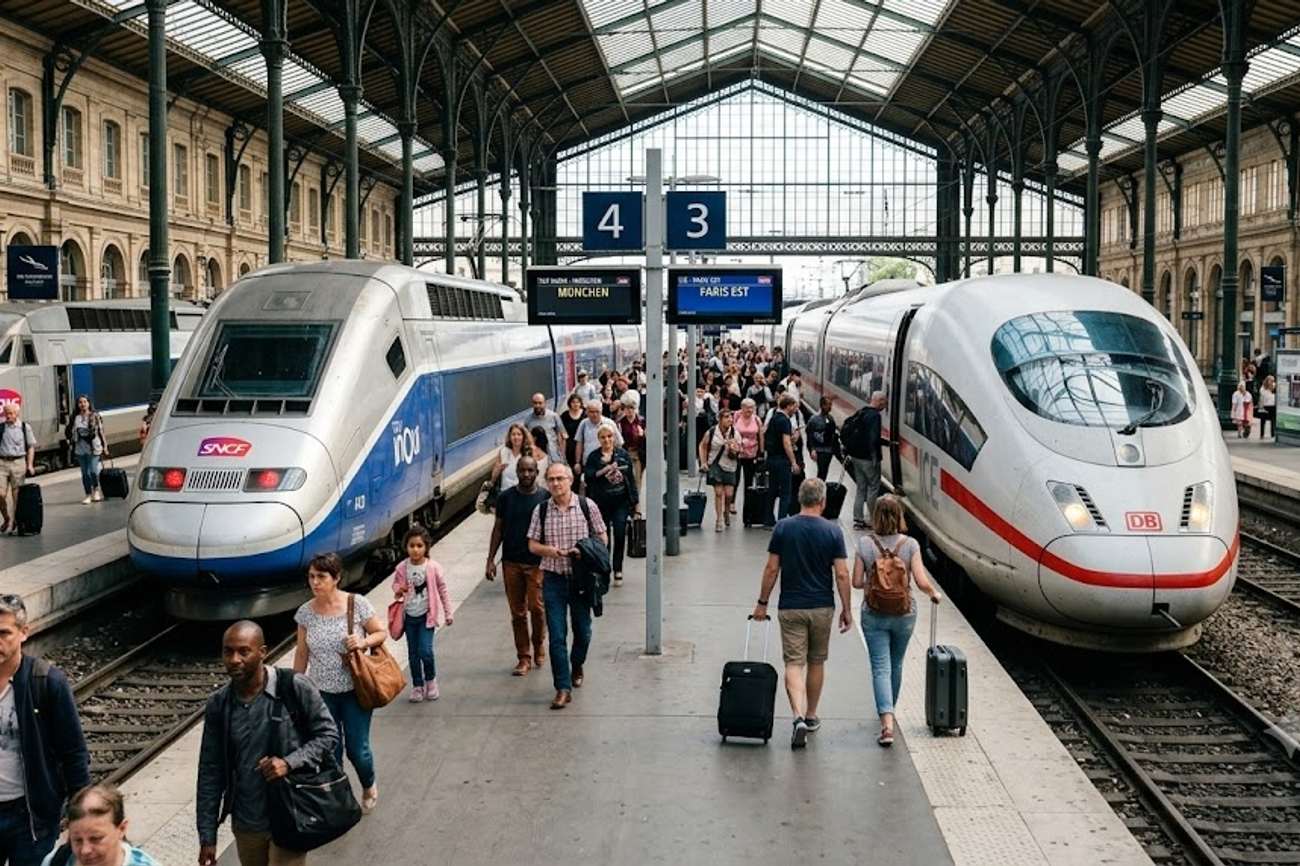
Image generated by AI
[Brussels, October 2023] — A massive majority of European Union citizens are calling for a fundamental shift toward high-speed rail to drive sustainable tourism, according to a comprehensive survey of 5,048 residents across all 27 EU member states. The study, commissioned by the Community of European Railway and Infrastructure Companies (CER), reveals that 74% of respondents believe promoting rail is essential for the future of the tourism industry.
The data serves as a primary catalyst for the European Commission as it develops a formal policy framework for sustainable tourism. While the appetite for greener travel is high, the findings expose a stark "intention-action gap," where environmental ideals are frequently overridden by the immediate pressures of ticket pricing, journey duration, and overall passenger comfort.
The Sustainability Gap
The surge in support for rail is not uniform across the continent, reflecting a divide in how different regions perceive the role of trains in tourism. Southern Europe leads the charge in enthusiasm, with 79% of respondents supporting rail promotion. Italy and Spain are the primary engines of this trend, recording support levels of 79% and 75% respectively.
Central and Eastern Europe follow closely with 75% support, while Northern Europe shows the lowest relative enthusiasm at 69%. Despite these figures, the actual adoption of rail for tourism remains critically low; only 4% of those surveyed report that they already use trains regularly for tourism purposes. This suggests that while the ideological shift toward sustainability has occurred, the operational reality of European rail has not yet caught up to passenger expectations.
Regional Priorities and Market Friction
The survey highlights that the "big four" rail markets—France, Germany, Italy, and Spain—operate under different psychological drivers. In established networks like France and Germany, passengers are less focused on the existence of the tracks and more focused on the efficiency of the service.
In France, price sensitivity is the dominant factor, with 76% of respondents citing total journey cost as a primary decision driver. Time is also a critical friction point, with 55% of French travelers prioritizing journey duration. Similarly, 51% of German respondents identify total travel time as a key factor in their choice of transport.
Conversely, Italy and Spain show a higher readiness to migrate toward rail if the infrastructure improves. The willingness to switch to trains for leisure travel is highest in Poland (74%), Spain (74%), and Italy (72%). In contrast, France (56%) and Germany (53%) show lower willingness to switch, a trend analysts attribute to higher expectations for service quality and pricing in markets where rail is already deeply integrated.
Affected Travelers, Airlines and Logistics
The findings impact a broad spectrum of the European travel ecosystem, from regulatory bodies to the individual passenger.
| Stakeholder | Primary Impact/Concern | Key Data Point |
|---|---|---|
| EU Policy Makers | Need to align sustainability goals with economic reality | 74% general support for rail |
| Rail Operators | Pressure to lower costs and increase speed to compete with air/road | 60% of travelers prioritize cost |
| French Travelers | High sensitivity to ticket pricing and duration | 76% cost sensitivity |
| Northern Europeans | Demand for higher onboard luxury and experience | 61% prioritize comfort |
| Polish/Spanish Tourists | High latent demand for expanded connections | 74% willing to switch |
Practical Traveler Advisory and Strategic Insights
For the average person booking a trip across Europe, these findings signal a looming shift in how transport is marketed and priced, but also highlight current frustrations.
The "Green Paradox" If you are booking a flight or train today, you are likely experiencing the "Green Paradox" identified in the CER study. While you may want to reduce your carbon footprint, the data shows that only 19% of travelers actually prioritize environmental impact when hitting the "buy" button. Instead, 60% are driven by cost and 53% by comfort. This means that until rail operators can match or beat the price points of budget airlines, most travelers will continue to choose the less sustainable option despite their personal beliefs.
Connectivity Hurdles For those attempting to visit "off-the-beaten-path" destinations, the study confirms your frustration: infrastructure is the main barrier. With 65% of Europeans stating they would choose the train if more connections existed, the current lack of seamless cross-border ticketing and regional links remains the primary deterrent for leisure travelers.
Expectations for Comfort If you are traveling through Northern Europe, expect a continued emphasis on the "onboard experience." With 61% of passengers in this region prioritizing comfort, the industry is likely to pivot toward higher-end amenities to lure passengers away from private vehicles.
The Roadmap for European Connectivity
The European Commission is now tasked with translating this data into a sustainable tourism policy. The goal is to move beyond major hubs and use rail to redistribute tourism flow. By expanding high-speed networks and regional feeders, the EU hopes to alleviate the pressure on overcrowded "hotspots" and drive economic growth into rural areas and smaller cities.
The success of this transition depends on three specific levers:
- Price Parity: Reducing the cost gap between rail and low-cost carriers.
- Intermodal Integration: Simplifying the process of booking a single ticket that covers multiple regional and international legs.
- Infrastructure Expansion: Building the missing links in Central and Eastern Europe to satisfy the high latent demand in countries like Poland.
The International Union of Railways (UIC) and national operators like SNCF in France and Deutsche Bahn in Germany will be under increased pressure to optimize schedules and lower fares to convert "support" into "usage."
FAQ: EU Sustainable Rail Tourism 2023
Why aren't more people taking the train if 74% support it? Practical barriers outweigh environmental concerns. Specifically, 60% of travelers prioritize total cost and 50% prioritize total journey time over the environmental impact, which only 19% cited as a primary decision factor.
Which EU countries are most likely to switch to rail? Poland and Spain show the highest willingness to switch to rail for leisure travel, both at 74%, followed closely by Italy at 72%.
What is the biggest obstacle to rail growth in Europe? Infrastructure limitations. 65% of Europeans stated they would choose trains over other transport modes if more connections were available, indicating that current route availability is insufficient.
How will this affect "overtourism" in major cities? The EU intends to use expanded rail networks to steer tourists away from overcrowded hubs and toward rural destinations and smaller cities, creating a more balanced distribution of tourism wealth and foot traffic.
The era of the budget flight is facing a psychological challenge, but the ticket price remains the ultimate decider.
Related Travel Guides
Disclaimer
This article is for informational and educational purposes only. It does not constitute legal, financial, or professional advice. While we strive to provide accurate and up-to-date information, travel policies, regulations, and conditions change rapidly. Always verify information with official sources before making travel decisions. Nomad Lawyer makes no representations about the accuracy, reliability, completeness, or suitability of the information provided. Readers should consult qualified professionals for advice specific to their circumstances. The views expressed in this article are those of the author and do not necessarily reflect the views of Nomad Lawyer.
Naina Thakur
Contributor & Travel Specialist
Travel enthusiast and legal writer covering visa regulations, responsible tourism, and cultural journeys across global destinations.
Learn more about our team →