
India Unveils Next-Level Travel Revolution With Second Sleeper Vande Bharat Connecting Delhi Varanasi Route
India Unveils Next-Level Travel Revolution With Second Sleeper Vande Bharat Connecting Delhi Varanasi Route

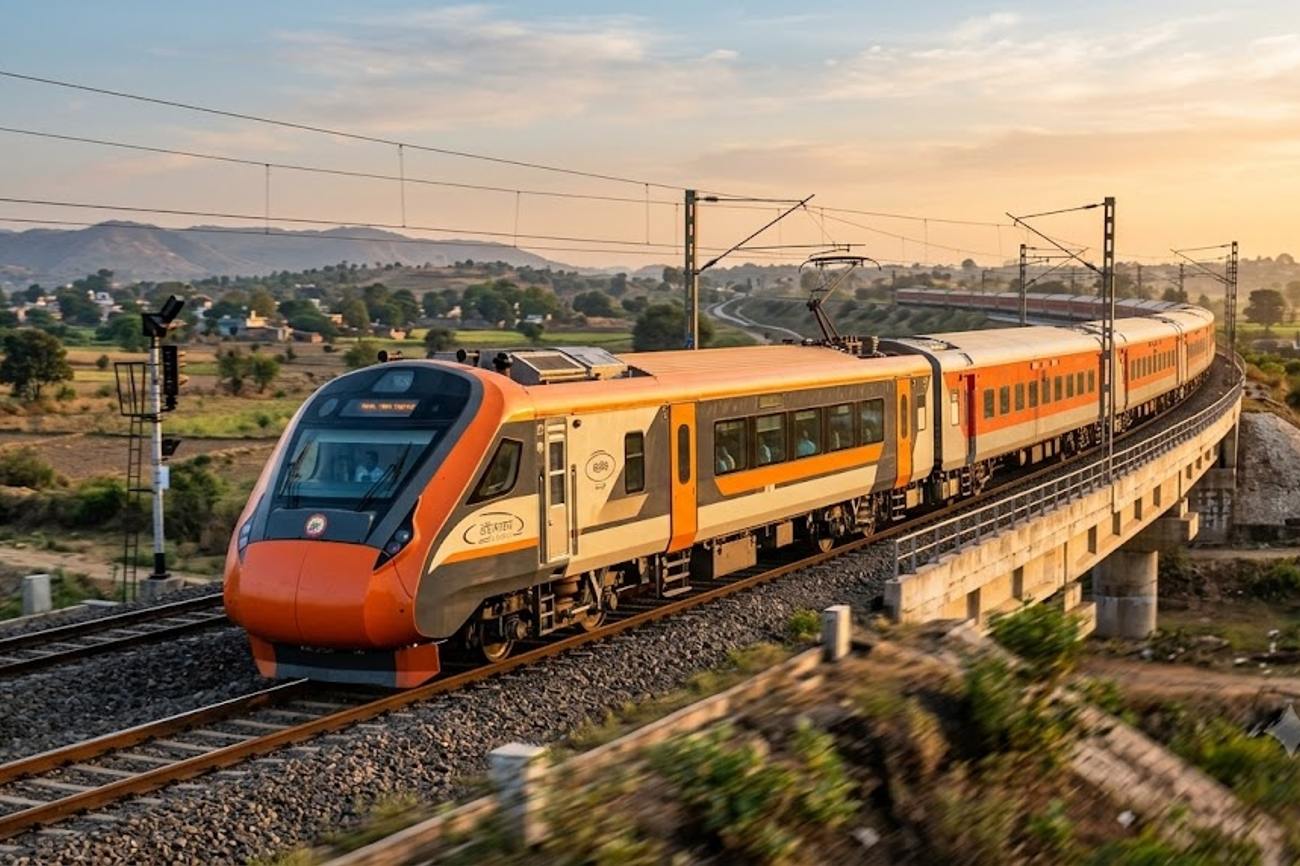
Image generated by AI
823 passengers per trip will be the capacity of the new sleeper Vande Bharat service, marking a strategic pivot for Indian Railways as it expands its semi-high-speed fleet into the overnight market. By deploying a 16-coach configuration on the Delhi-Varanasi corridor, the state rail operator is attempting to bridge the gap between luxury long-distance travel and operational efficiency. This move signals a departure from the Vande Bharat’s origins as a daytime "intercity" product, moving instead toward a comprehensive national network capable of handling the heavy overnight migration patterns typical of the Indian subcontinent.
The Strategic Pivot to Overnight Semi-High-Speed Rail
The introduction of the sleeper Vande Bharat on the route connecting New Delhi, Kanpur, Prayagraj, and Varanasi is not merely a fleet expansion; it is a response to the specific logistical demands of the North-East corridor. Historically, the Delhi-Varanasi stretch has been dominated by traditional express trains that, while functional, often struggle with aging infrastructure and inconsistent speeds.
By integrating the Vande Bharat platform—known for its distributed power and superior acceleration—into an overnight format, Indian Railways is targeting a demographic of "time-poor" travelers. The goal is to eliminate the "dead time" of daytime travel, allowing business professionals and tourists to utilize the daylight hours in the city while the transit occurs during sleep cycles. This is a calculated move to compete with the growing preference for regional aviation on these routes, offering a competitive alternative that delivers passengers directly into city centers without the overhead of airport transfers.
Operational Blueprint and Capacity Metrics
The proposed service is structured to optimize the high-density corridor between the national capital and eastern Uttar Pradesh. The technical composition of the train reveals a tiered approach to pricing and comfort, ensuring the service remains accessible while maintaining a "premium" brand identity.
The following table outlines the planned configuration and scheduling for the Delhi-Varanasi sleeper service:
| Specification | Detail |
|---|---|
| Total Coach Count | 16 Coaches |
| AC First Class | 1 Coach |
| AC Two-Tier | 4 Coaches |
| AC Three-Tier | 11 Coaches |
| Total Passenger Capacity | 823 Travelers |
| Target Top Speed | 130 kmph to 160 kmph |
| Primary Maintenance Zone | Northern Railway |
| Planned Launch Window | Diwali Festive Period |
The scheduling is designed for maximum utility. Departing Varanasi Cantt at 9:20 pm, the train is slated to hit Prayagraj at 10:45 pm and Kanpur Central at 12:35 am, finally arriving in New Delhi at 5:00 am. The return journey mirrors this timeline, departing New Delhi at 9:20 pm to arrive in Varanasi by 5:00 am the following morning. This "overnight loop" effectively turns the train into a mobile hotel, maximizing the productivity of the traveler.
The introduction of the Sleeper Vande Bharat Express on the Delhi-Varanasi route marks a significant upgrade in long-distance rail logistics, featuring ergonomic berths and enhanced onboard amenities. Passengers can manage bookings and check real-time schedules through the Indian Railways official portal to ensure seamless transit between the capital and the spiritual hub.
Expert Analysis: The "Mission Raftaar" Effect
For travelers booking this route, the direct consequence of this launch is a significant reduction in transit friction. However, the true story lies in the intersection of this train with "Mission Raftaar," the broader initiative to upgrade track infrastructure for higher speeds.
The projected speed of 130 kmph to 160 kmph is not a guarantee but a variable dependent on track readiness. When a semi-high-speed train like the Vande Bharat is placed on a mixed-traffic corridor—where slower freight and passenger trains operate—the "average" speed often lags behind the "top" speed. The pricing pressure this creates means that Indian Railways must justify a premium ticket price not just through the luxury of the sleeper berths, but through a demonstrable reduction in travel time.
If the Northern Railway can maintain the 160 kmph ceiling, the Delhi-Varanasi route becomes a viable alternative to short-haul flights. For the nomad lawyer or the corporate consultant, the value proposition is clear: the ability to leave a client meeting in Varanasi at 8:00 pm and be at a desk in New Delhi by 9:00 am the next morning, having avoided the chaos of airport security and the unpredictability of regional flight delays. Furthermore, this service acts as a precursor to the Howrah–Kamakhya route, suggesting that the sleeper Vande Bharat is the new blueprint for all long-distance, high-priority corridors in India.
This high-speed connectivity is expected to boost tourism in Uttar Pradesh by reducing travel time and increasing accessibility to ancient ghats and temples. Travelers seeking curated experiences and cultural guides can find comprehensive regional itineraries via the Ministry of Tourism website.
Key Takeaways
- Capacity Shift: The 16-coach layout provides 823 seats, with a heavy emphasis on AC Three-Tier (11 coaches) to maximize volume while maintaining AC standards.
- Time Optimization: The 9:20 pm to 5:00 am schedule is specifically engineered to reclaim daytime hours for passengers.
- Infrastructure Dependency: Actual travel times will be dictated by the progress of Mission Raftaar, with speed targets capped at 160 kmph.
- Strategic Timing: The launch is aligned with the Diwali peak travel season to capture maximum demand and test system stress under high loads.
- Network Expansion: This is the second planned sleeper Vande Bharat route, signaling a permanent shift toward overnight semi-high-speed rail.
FAQ: Delhi-Varanasi Sleeper Vande Bharat 2024-2025
When will the Delhi-Varanasi sleeper Vande Bharat start operating? While an exact date has not been released by the Railway Board, the service is planned for launch around the Diwali festive period, following the completion of technical trials and safety approvals.
What are the ticket prices for the new sleeper service? Official pricing has not yet been announced. However, it is expected to follow a premium tiered structure based on the AC First, Two-Tier, and Three-Tier coach configurations.
Which cities does the sleeper Vande Bharat stop at between Delhi and Varanasi? The planned route includes major stops at Kanpur Central and Prayagraj, connecting the national capital with eastern Uttar Pradesh.
How is this different from the current Vande Bharat trains? Unlike previous Vande Bharat models which were designed for daytime "chair car" travel, this version features dedicated sleeper berths for overnight journeys, enabling long-distance travel without losing a full working day.
The transition from chair cars to sleeper berths transforms the Vande Bharat from a luxury commuter tool into a genuine competitor for India's domestic aviation market.
Tags: Delhi-Varanasi Route, Indian Railways, Mission Raftaar, Sleeper Vande Bharat, Northern Railway, Uttar Pradesh Rail Connectivity
Related Travel Guides
Disclaimer
This article is for informational and educational purposes only. It does not constitute legal, financial, or professional advice. While we strive to provide accurate and up-to-date information, travel policies, regulations, and conditions change rapidly. Always verify information with official sources before making travel decisions. Nomad Lawyer makes no representations about the accuracy, reliability, completeness, or suitability of the information provided. Readers should consult qualified professionals for advice specific to their circumstances. The views expressed in this article are those of the author and do not necessarily reflect the views of Nomad Lawyer.
Raushan Kumar
Founder & Lead Developer
Full-stack developer with 11+ years of experience and a passionate traveller. Raushan built Nomad Lawyer from the ground up with a vision to create the best travel and law experience on the web.
Learn more about our team →