
Flydubai Targets 100% Network Recovery by Late 2026 Amid Capacity Deficits
Flydubai targets a return to 100% pre-conflict capacity by late 2026, navigating an 18.3% capacity decline and Boeing delivery deferrals.

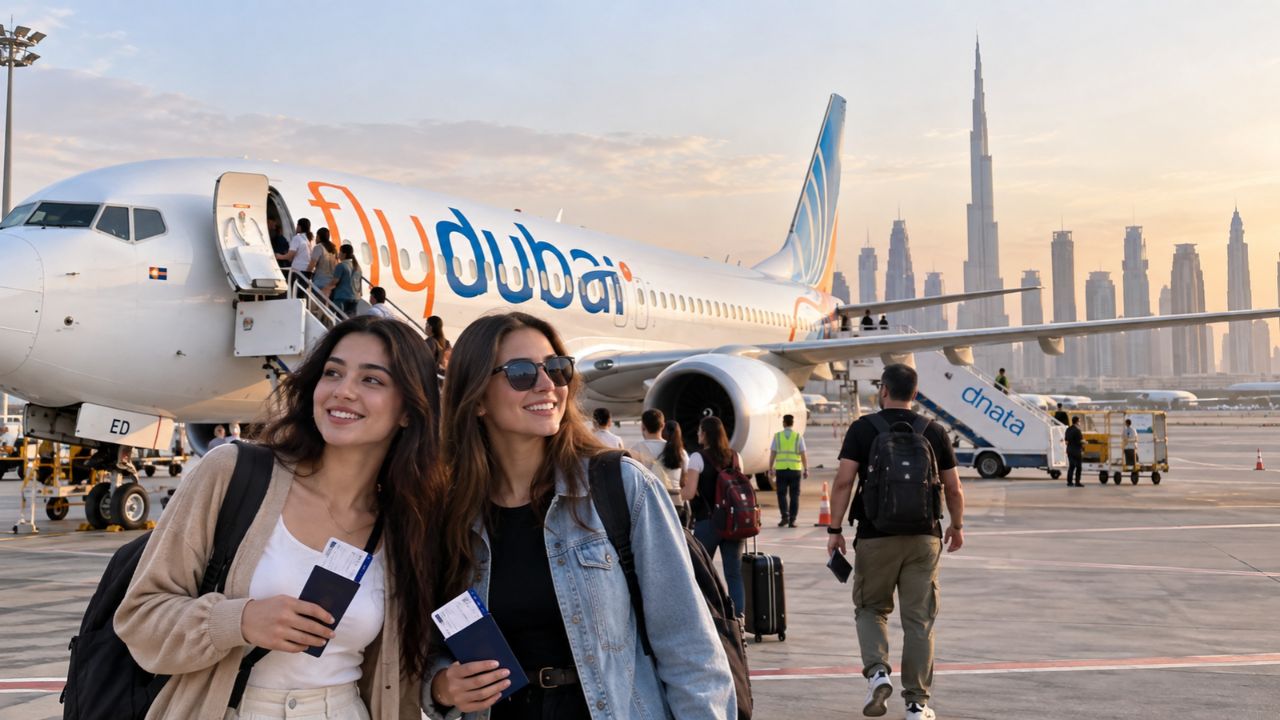
Image generated by AI
An 18.3% year-on-year drop in monthly seat capacity alongside a lingering 10-destination network deficit underscores the fragile operational tightrope facing Flydubai as it targets a full pre-conflict recovery by the close of 2026. Under the strategic direction of Chief Executive Officer Ghaith Al Ghaith, the Dubai-based carrier is attempting to bridge a substantial scheduling gap while operating 130 of its 140 pre-war routes—amounting to roughly 85% network reinstatement. Rebuilding frequency across the Middle East, Europe, Africa, and Central Asia is not merely an internal corporate milestone; it represents an essential conduit for passenger flows threading through Dubai International Airport (DXB). Yet, as fleet delivery constraints, shifting consumer sentiment, and volatile regional skies intersect, the road back to 100% pre-crisis seat volumes reveals the structural vulnerabilities confronting Gulf aviation.
Geopolitical Disruptions and Narrowbody Network Vulnerability
Earlier in 2026, acute security escalations forced extensive airspace closures and tactical diversions across key Middle Eastern flight paths. While long-haul legacy carriers operating widebody aircraft can absorb high-altitude reroutings over longer flight arcs, short-to-medium haul operators face acute operational arithmetic. Flydubai’s operational model relies on tight turnaround schedules and high aircraft utilization across point-to-point regional routes. When airspace access is abruptly restricted, additional flight miles quickly erode crew duty limits, fuel burn margins, and aircraft availability.
Connecting Dubai to underserved secondary and tertiary cities across Central Asia, Eastern Europe, North Africa, and the Levant meant Flydubai absorbed direct scheduling shocks. Flights to destinations near contested zones experienced temporary halts or reduced frequencies. While the airline has managed to restore commercial service to 130 of its previous 140 destinations, network breadth alone does not equal scheduling depth. Many restored routes currently function with fewer weekly rotations than they enjoyed in late 2025, forcing travelers into longer layovers and reduced connection flexibility.
Chief Executive Officer Ghaith Al Ghaith acknowledged that reaching full restoration remains contingent on multiple external variables. Regulatory approvals, dynamic sovereign airspace permissions, and individual market passenger confidence dictate how fast individual frequencies can scale up. The carrier cannot simply reactivate routes uniformly; instead, operations must adapt dynamically to evolving geopolitical risk assessments and municipal travel advisories.
Benchmarking Flydubai’s Rebuilding: Capacity Deficits and Operational Metrics
Independent schedule analytics reflect the severity of the operational pullback experienced throughout the current operating season. Data compiled by global aviation analytics provider OAG reveals that Flydubai logged an 18.3% year-on-year decline in seat capacity during September, placing it among the sharpest contractions recorded by any of the 10 largest Middle Eastern carriers. The airline scheduled approximately 1.05 million seats for the month, illustrating a noticeable shortfall compared to previous baseline projections.
| Performance Indicator | Operational Metric | Strategic Context |
|---|---|---|
| Operating Carrier | Flydubai | Primary Dubai-based hybrid narrowbody operator |
| Corporate Headquarters | Dubai, United Arab Emirates | Hub terminal based at Dubai International (DXB) |
| Pre-War Destination Count | 140 international airports | Peak global network prior to 2026 regional crisis |
| Current Active Destinations | 130 international airports | Rebuilt connectivity spanning 4 continental regions |
| Reported Network Restoration | Approximately 85% | Reflects active route destinations relative to baseline |
| September Seat Capacity | Approximately 1.05 million seats | Scheduled commercial volume per OAG tracking data |
| Year-on-Year Capacity Change | -18.3% seat volume | Steepest year-on-year decline among top 10 regional carriers |
| Target Network Benchmark | 100% pre-conflict capacity or higher | Stated year-end 2026 operational milestone |
| Executive Leadership | Ghaith Al Ghaith, CEO | Steering recovery strategy and fleet modernization |
| Fleet Restructuring Horizon | Widebody entry pushed to 2028 | Boeing manufacturing delays reshaping expansion plans |
Aviation capacity metrics specifically measure the volume of available seats deployed across scheduled departures rather than total ticketed passenger traffic. Consequently, an 18.3% contraction highlights fewer flights operated and smaller gauge aircraft assignments across select corridors. For passengers, this manifests directly as reduced daily frequencies on popular regional pairings, fewer redundant flight options during irregular operations, and elevated load factors on active departures.
Reaching 100% capacity by year-end demands a rapid ramp-up in monthly seat additions heading into the winter travel season. Traditionally, the fourth quarter represents the peak revenue window for Dubai’s hospitality and transit sectors, buoyed by major regional trade events, leisure winter sun seekers, and holiday migrations. Attempting a double-digit percentage rebound within a compressed three-month operational window requires near-perfect fleet availability and stable regional skies.
Expert Analysis: Fleet Allocation Realities and Secondary Market Pricing Pressures
The primary bottleneck capping Flydubai’s ability to accelerate its recovery does not stem from passenger demand alone, but from severe aerospace manufacturing logjams. Flydubai has historically operated an all-Boeing fleet, standardizing its operations on Boeing 737 Next Generation and 737 MAX aircraft. However, delivery disruptions and assembly delays originating from Boeing have continually constrained fleet deployment schedules across the airline industry. Most critically, delivery delays have pushed Flydubai’s ambitious transition into twin-aisle widebody aircraft toward 2028.
For travelers booking this route, the direct consequence is that Flydubai must extract higher yield and operational efficiency out of its existing narrowbody airframes rather than expanding its seat footprint. To offset delivery slippage and rising operational overhead, the airline is accelerating investments in premium cabin retrofits. By outfitting its Boeing 737 MAX fleet with lie-flat business class suites and upgraded in-flight entertainment, Flydubai is transforming itself from a traditional low-cost feeder into a high-yield hybrid carrier.
The pricing pressure this creates means that budget-conscious passengers will encounter fewer discounted entry-level economy fares across core secondary routes. When an airline faces an 18.3% capacity deficit alongside postponed aircraft arrivals, revenue management software prioritizes higher-yielding business travelers and high-value connecting traffic. On city pairs where Flydubai is the sole direct operator—such as regional routes into the Caucasus, Central Asia, and Eastern Europe—the absence of competitor capacity allows ticket prices to remain elevated well above historical averages.
In addition, Flydubai's operational cadence directly influences the broader connectivity of Dubai International Airport. Through its comprehensive codeshare partnership with Emirates, Flydubai serves as an essential short-haul distributor, feeding passengers from smaller regional airports into Emirates’ global long-haul network. When Flydubai trims frequencies or delays network restoration, connecting banks at DXB face scheduling friction. Transit passengers from regional spokes frequently face extended overnight connection windows, reducing the attractiveness of Dubai as a seamless stopover hub relative to rival Gulf gateways.
Fleet Modernization and the 2028 Widebody Horizon
The postponement of Flydubai's widebody entry into 2028 forces a tactical realignment of the airline's mid-term growth objectives. Originally envisioned to provide dense high-capacity lift on mature regional routes and open new medium-haul markets beyond the range of narrowbody aircraft, the widebody order was intended to redefine the airline's market position. Instead, the multi-year delay leaves the carrier dependent on incremental narrowbody deliveries to achieve its stated year-end 2026 targets.
To navigate this gap, Flydubai’s fleet planning team must balance aircraft maintenance cycles with demanding flight schedules. High-cycle narrowbody operations in harsh desert operating environments demand rigorous maintenance regimes. If supply chain shortages for engine components and spare parts persist, the carrier risks operational bottlenecks that could jeopardize its goal of matching or exceeding pre-war output before December 2026.
Despite these operational hurdles, the carrier's leadership remains focused on long-term fleet growth. Chief Executive Officer Ghaith Al Ghaith's confidence that capacity could slightly exceed pre-crisis levels hinges entirely on whether aircraft delivery schedules stabilize during the final quarter of the year. Every airframe delivered between October and December will immediately enter revenue service on high-demand trunk routes, relieving pressure on overstretched regional services.
Key Takeaways
- Ambitious Recovery Target: Flydubai intends to restore 100% of its pre-conflict capacity—with the potential to operate slightly above baseline levels—before the conclusion of 2026.
- Significant Capacity Deficit: September data from aviation intelligence firm OAG confirms Flydubai experienced an 18.3% year-on-year drop in seat capacity, offering approximately 1.05 million scheduled seats.
- Partial Destination Reinstatement: The carrier currently serves 130 of its 140 pre-war destinations, representing roughly 85% network recovery, though daily frequencies on many routes remain thinned.
- Deferred Widebody Ambitions: Chronic aircraft manufacturing delays have postponed Flydubai's planned widebody operations until 2028, forcing a greater operational reliance on retrofitted Boeing 737 narrowbody aircraft.
- Consumer Fare Pressure: Capacity constraints and premium cabin retrofits are driving up base economy fares and reducing frequency choices on secondary routes connecting to Dubai.
FAQ: Flydubai Network Recovery 2026
When will Flydubai return to full pre-crisis flight capacity?
Flydubai plans to restore 100 per cent of its pre-conflict operating capacity by the end of 2026. However, airline leadership notes that reaching this goal depends on aircraft delivery schedules, regional security conditions, and fluctuating passenger demand across international markets.
How many destinations does Flydubai currently operate?
Flydubai currently operates flights to 130 of its 140 pre-war destinations, achieving approximately 85 per cent network recovery. While destination access has largely resumed, several routes still operate with reduced weekly frequencies compared to previous years.
Why have Flydubai's widebody aircraft plans been delayed until 2028?
Ongoing manufacturing delays and supply chain logjams affecting Boeing have pushed Flydubai’s twin-aisle widebody deployment back to 2028. Consequently, the airline is prioritizing premium cabin retrofits on its existing narrowbody Boeing 737 fleet to optimize revenue.
How does the 18.3% capacity decline affect booked passengers?
The capacity reduction means fewer daily flights, higher average seat prices, and tighter connection windows at Dubai International Airport. Passengers traveling to secondary regional destinations should expect limited itinerary flexibility and verify schedules frequently before departure.
As Flydubai navigates external delivery delays and regional turbulence, the true measure of its recovery will not be the number of pins on its route map, but the operational reliability and affordability delivered to passengers across its 130 active destinations.
Related Travel Guides
Flydubai Ignites Dubai Travel Boom With 125 Destinations As Global Network Recovery Enters a New Era
Air France Extends Dubai Flight Suspension From Paris CDG Amid Regional Safety Concerns
The 10 Best Airline Lounges at Dubai International Airport, According To Reddit
Disclaimer
This article is for informational and educational purposes only. It does not constitute legal, financial, or professional advice. While we strive to provide accurate and up-to-date information, travel policies, regulations, and conditions change rapidly. Always verify information with official sources before making travel decisions. Nomad Lawyer makes no representations about the accuracy, reliability, completeness, or suitability of the information provided. Readers should consult qualified professionals for advice specific to their circumstances. The views expressed in this article are those of the author and do not necessarily reflect the views of Nomad Lawyer.
Raushan Kumar
Founder & Lead Developer
Full-stack developer with 11+ years of experience and a passionate traveller. Raushan built Nomad Lawyer from the ground up with a vision to create the best travel and law experience on the web.
Learn more about our team →