
Southwest Florida International Airport and Regional Expressway Networks Expand Capacity to Support Record Inbound Florida Gulf Coast Travel Surge
Southwest Florida International Airport and regional highway corridors undergo capacity upgrades to support a record influx of 3.32 million visitors.

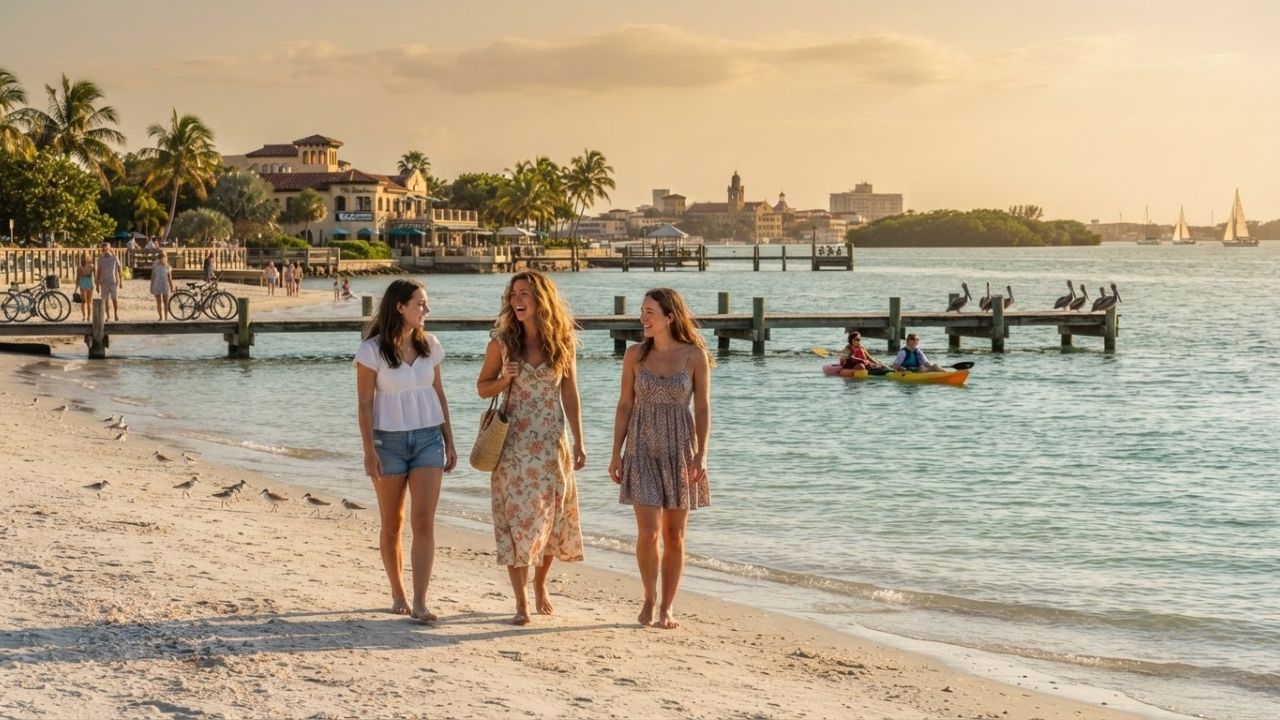
Image generated by AI
Southwest Florida International Airport and regional highway corridors are undergoing capacity upgrades to support a record influx of 3.32 million visitors to Fort Myers, which generated a direct spend of $3.31 billion in 2025. The transport developments aim to improve visitor transit to Gulf Coast destinations, including Sarasota, Dunedin, and New Smyrna Beach.
Airport terminals and state highway systems in Southwest Florida are recording high passenger volumes as travelers seek quieter coastal alternatives to the state's busiest hubs. Supporting this Florida Gulf Coast transit corridor expansion, regional transport authorities are upgrading facilities to accommodate travelers headed to Fort Myers, Sarasota, Dunedin, and New Smyrna Beach. Southwest Florida International Airport and regional expressways are receiving key improvements to manage the influx of domestic and international arrivals, distributing visitors directly to beaches, wildlife sanctuaries, and historic districts.
Southwest and Central Florida Transit Networks Prepare for Increased Volume
A major expansion of Florida's Gulf and Atlantic transit networks is underway as state and local agencies coordinate upgrades to manage rising passenger volumes. The Florida Department of Transportation (FDOT) is working with municipal authorities to expand lane capacity and improve interchanges along the Interstate 75 (I-75) corridor, which serves as the primary highway artery for travelers driving to Fort Myers, Naples, and Sarasota. The highway projects aim to reduce transit delays around central accommodation, dining, and beach access zones.
In Southwest Florida, the Lee County Port Authority is leading capacity expansions at Southwest Florida International Airport (RSW). The airport is adding new passenger gates, expanding passenger terminals, and upgrading security checkpoints to handle the growing volume of domestic and international air arrivals. In 2025, Fort Myers and the wider Lee County destination welcomed 3.32 million visitors, representing a 3.8 percent increase compared to 2024. Visitors generated 21.09 million visitor days, 4.73 million room nights, and $3.31 billion in direct spending, resulting in a total economic impact of $5.12 billion and supporting over 31,000 local jobs.
Concurrently, the Sarasota Manatee Airport Authority is upgrading terminal facilities at Sarasota-Bradenton International Airport (SRQ) to support rising passenger numbers. Sarasota County welcomed 2.71 million visitors in FY2025, generating over $2.3 billion in direct visitor spending, a $3.6 billion total economic impact, and more than 3 million overnight room nights. The transport projects are designed to facilitate smoother passenger transit, ensuring that travelers can access regional lodging and attractions efficiently.
Inbound Tourism Performance and Market Share Specifications
The tables below detail the performance indicators, international visitor markets, and domestic origin hubs for the major Florida coastal destinations:
Southwest Florida (Fort Myers / Lee County) Tourism Performance (2025)
| Tourism Performance Metric | 2025 Stated Value |
|---|---|
| Total Inbound Visitors | 3.32 million arrivals |
| Stated Visitor Days | 21.09 million days |
| Stated Room Nights | 4.73 million nights |
| Direct Visitor Spending | $3.31 billion |
| Total Economic Impact | $5.12 billion |
| Tourism-Supported Employment | 31,000+ local jobs |
Fort Myers Inbound Traveler Market Shares (2025)
| Visitor Origin Market | Percentage Share (2025) | Stated Annual Arrivals |
|---|---|---|
| United States (Domestic) | 89.1% | 2,958,120 visitors |
| Canada | 5.1% | 169,320 visitors |
| Germany | 2.7% | 61,200 visitors |
| United Kingdom | 1.2% | 32,610 visitors |
| Other Europe | 0.9% | 29,880 visitors |
| Other International | 1.0% | 33,200 visitors |
Top US Domestic Metro Inbound Markets to Fort Myers (2025)
| US Metropolitan Origin | Percentage Share of Domestic Market |
|---|---|
| New York City | 5.2% |
| Chicago | 5.2% |
| Minneapolis–St. Paul | 3.9% |
| Detroit | 3.7% |
| Atlanta | 3.5% |
Sarasota County Inbound Tourism Performance (FY2025)
| Tourism Performance Metric | FY2025 Stated Value |
|---|---|
| Total Inbound Visitors | 2.71 million arrivals |
| Direct Visitor Spending | $2.3 billion+ |
| Total Economic Impact | $3.6 billion |
| Overnight Room Nights | 3 million+ |
Top US Domestic Metro Inbound Markets to Sarasota (FY2024)
| US Metropolitan Origin | Visitors Staying in Paid Accommodation |
|---|---|
| New York City | 95,330 visitors |
| Chicago | 51,750 visitors |
| Orlando–Daytona Beach–Melbourne | 50,130 visitors |
| Boston | 45,140 visitors |
| Tampa–St. Petersburg | 41,070 visitors |
| Atlanta | 35,780 visitors |
| Detroit | 35,780 visitors |
Pinellas County (Dunedin) and Volusia County (New Smyrna Beach) Regional Inbound Transit Metrics
| Regional Tourist Destination Corridor | Annual Visitor Volume | Stated Economic Impact | Primary Inbound Travel Drivers |
|---|---|---|---|
| Pinellas County (Dunedin Area) | Around 15 million visitors | Multi-billion dollar sector | Beaches, coastal attractions, state parks, cycling trails |
| Volusia County (New Smyrna Beach Area) | Around 10 million visitors | More than $5 billion | Surfing, motorsports, dunes park, wildlife reserves |
Traveler Logistics Guide
For international passengers traveling to Southwest Florida, flight connections can be coordinated through Southwest Florida International Airport (RSW), which features a unified terminal structure with three concourses. Travelers flying from international markets, including Canada, Germany, and the United Kingdom, should verify customs wait times during the winter peak season. Passengers connecting to regional destinations like Naples or Sarasota-Bradenton should arrange vehicle rentals at the RSW Ground Transportation Center, located directly opposite the main arrivals hall, or utilize pre-booked airport shuttles.
For travelers visiting Dunedin and Honeymoon Island, flying into Tampa International Airport (TPA) is the most convenient option. Dunedin is located approximately 25 miles west of the airport, and travelers can access the city center via taxis, rideshares, or the Pinellas Suncoast Transit Authority (PSTA) bus network. PSTA operates regular services linking downtown Tampa, Clearwater, and Dunedin, allowing visitors to explore the Gulf Coast without requiring a rental vehicle.
For passengers traveling to New Smyrna Beach on the Atlantic Coast, flight options include Daytona Beach International Airport (DAB) or Orlando International Airport (MCO). New Smyrna Beach is located approximately 20 miles south of Daytona Beach and 70 miles east of Orlando. Travelers can access the coastal area via the Interstate 4 (I-4) and Interstate 95 (I-95) highway corridors, which link directly to Volusia County Transit (Votran) local bus routes serving the beachside districts.
Infrastructure Impact and Regional Integration
The modernization of Florida's regional transit infrastructure is improving connectivity between major entry gateways and coastal communities. By integrating airport terminal expansions with highway lane additions, the state provides a cohesive transit system that supports long-term economic growth.
The transport improvements also support local businesses by making it easier for visitors to travel between different neighborhoods. In Lee County, upgraded bridge networks link Fort Myers with Sanibel and Captiva Islands, distributing economic benefits across the region.
By reducing the dependency on private vehicles through improved public transit networks and pedestrian trails, such as the Fred Marquis Pinellas Trail in Dunedin, local planners are protecting the environment. This balanced approach to infrastructure development ensures that Florida can support sustained visitor interest while preserving the beaches, state parks, and wildlife reserves that define the coastline.
Related Travel Guides
- Curaçao Alongside Aruba and Bonaire Emerge as Caribbean Luxury Escapes Beyond Culture and Nature: All You Need to Know: New Travel Alert
- Oklahoma City Enhances Will Rogers World Airport and Streetcar Transit Infrastructure to Support Record 25 Million Annual Inbound Visitors: New Travel Alert
- Mexico City International Airport and Regional Bus Operators Expand Transit Corridors to Central Mexico Historic Cities Starting Late 2026: New Travel Alert
Disclaimer
This article is for informational and educational purposes only. It does not constitute legal, financial, or professional advice. While we strive to provide accurate and up-to-date information, travel policies, regulations, and conditions change rapidly. Always verify information with official sources before making travel decisions. Nomad Lawyer makes no representations about the accuracy, reliability, completeness, or suitability of the information provided. Readers should consult qualified professionals for advice specific to their circumstances. The views expressed in this article are those of the author and do not necessarily reflect the views of Nomad Lawyer.
Raushan Kumar
Founder & Lead Developer
Full-stack developer with 11+ years of experience and a passionate traveller. Raushan built Nomad Lawyer from the ground up with a vision to create the best travel and law experience on the web.
Learn more about our team →