
Kazakhstan Eco-Tourism Revolution 2026: 3.7M National Park Visitors, $4.8B Infrastructure Investment, and Carrying Capacity Logistics Guide
Kazakhstan transforms wilderness travel with $4.8B in eco-infrastructure, strict ST RK 2993-2025 carrying capacity limits, and smart digital trail analytics across 14 national parks.

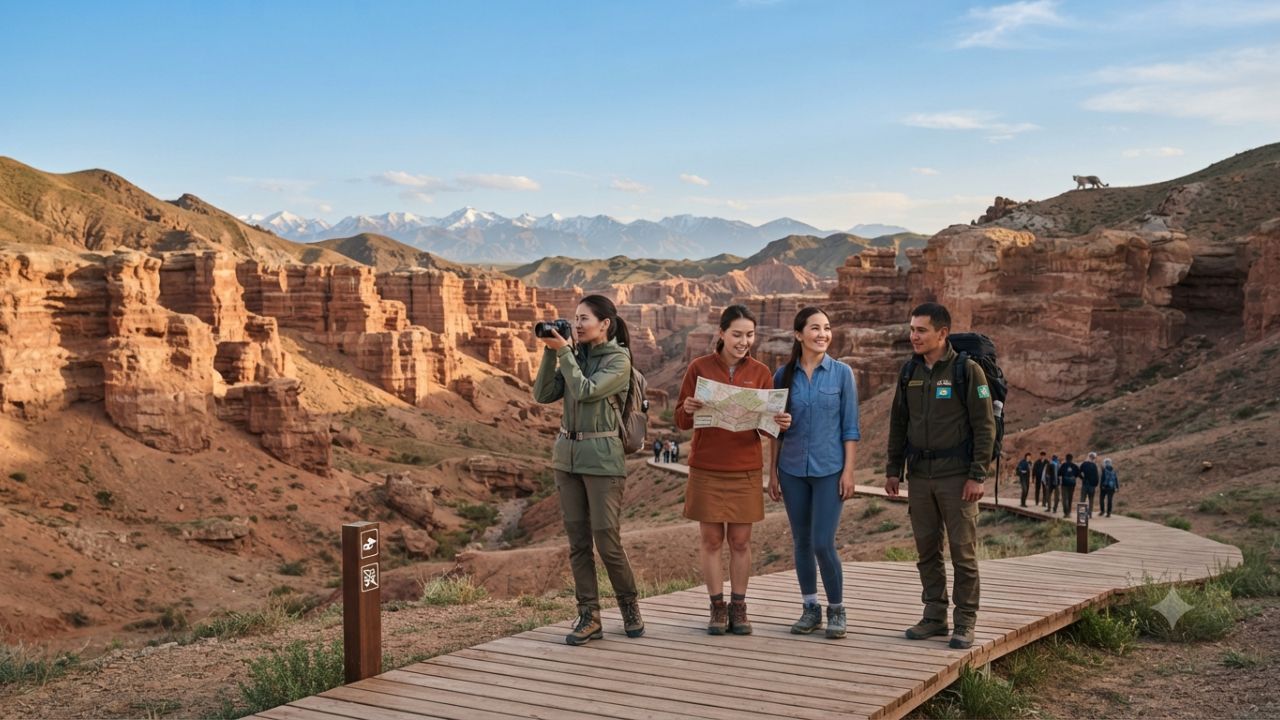
Image generated by AI
Kazakhstan has overhauled its national park administration and wilderness transit networks, shifting from reactive park closures to data-driven ecological management following a surge to 3.7 million national park visitors.
Supported by $4.8 billion in capital investments and statutory environmental limits under standard ST RK 2993-2025, the Central Asian nation is combining high-tech crowd monitoring, trail stabilization, and peripheral hospitality clusters to accommodate foreign arrivals while preserving vulnerable mountain ecosystems.
Visitor Statistics & Economic Impact Metrics
Data released by state environmental agencies and Kazakh Tourism underscores rapid growth across the country's protected territories:
- National Park Visitation: Rose from 2.4 million visitors in 2023 to 3.7 million in 2025, with an additional 1.7 million entries recorded in the first six months of 2026.
- Foreign Citizen Entries: Total international arrivals reached 15.7 million entries in 2025, lifting Kazakhstan 6 places to 52nd globally on the World Economic Forum Travel & Tourism Development Index (TTDI).
- Macro-Economic Contribution: The travel and hospitality sector contributed 5 trillion tenge (~$11 billion) to the national economy in 2025, supporting a workforce of 600,000 employees. Ecotourism revenues are projected to reach $6.4 million by 2030.
- Capital Investment Surge: Financial allocations for tourism infrastructure totaled over $4.8 billion across 2024–2025, marking a 60% two-year funding increase.
- Lodging Inventory Expansion: Registered accommodation units grew from 3,992 properties in 2023 to over 4,500 units by mid-2026, generating 350.6 billion tenge (~$770 million) in revenue.
| Ecological & Economic Metric | Historical Baseline (2023) | Recorded Value (2025–Mid 2026) | Target / Projected Benchmark |
|---|---|---|---|
| National Park Visitors | 2.4 million | 3.7 million (2025) / +1.7 million (H1 2026) | Sustainable growth under ST RK 2993-2025 |
| International Foreign Entries | ~10.5 million | 15.7 million arrivals | Sustained top-50 WEF TTDI ranking |
| National Sector Economy Value | 3.8 trillion tenge | 5.0 trillion tenge (~$11 billion) | Expanded GDP diversification |
| Sector Employment Workforce | 480,000 jobs | 600,000+ active positions | Direct regional job distribution |
| Capital Infrastructure Funding | $3.0 billion | $4.8 billion (2024–2025 period) | 60% allocation growth for trail networks |
| Certified Local Nature Guides | 600 guides | 1,500 trained local guides | Full coverage across 14 national parks |
| Trail Stabilization Network | 110 kilometers | 300+ kilometers installed | Eco-engineered wooden walkways & stone paths |
Regulatory Framework: ST RK 2993-2025 & The Environmental Code
To prevent over-tourism from degrading fragile alpine valleys, Kazakhstan enacted the updated Environmental Code alongside national standard ST RK 2993-2025. This legal framework mandates strict carrying capacity thresholds across all 14 national parks and 10 nature reserves.
Data-Driven Carrying Capacity Parameters
Instead of implementing sudden, unpredictable site shutdowns, park directors use automated sensor grids and online QR-code reservation tools to regulate real-time visitor density:
- Trail Threshold Monitoring: Soil compaction sensors and solar-powered cameras track hourly foot traffic along sensitive routes in Ile-Alatau National Park and Charyn Canyon.
- Peripheral Accommodation Clusters: New hotels, yurt camps, and guesthouses are deliberately built outside core wilderness boundaries, preventing overnight waste accumulation in high-altitude zones.
- Zero-Waste Mandates & Circular Logistics: Mandatory solar-powered trash compaction units and eco-friendly packaging rules reduced trailside refuse by over 45% between 2024 and mid-2026.
- Wildlife Buffer Boundaries: Enforced seasonal closures protect nesting zones for vulnerable species, including the snow leopard and Central Asian Bukhara deer.
- International Conservation Partnerships: Collaborative initiatives with the United Nations Development Programme (UNDP) and the Global Environment Facility (GEF) leverage the Biodiversity Finance Initiative (BIOFIN) to fund sustainable path construction.
Regional Hub Distribution & National Park Corridors
The majority of international and domestic eco-tourists transit through two main urban gateways before dispersing into surrounding national reserves:
[ International Air Gateways ]
  │
  ├── Almaty International Airport (ALA) ──► 1.8M Gateway Travelers ──► Ile-Alatau, Charyn Canyon, Kolsai Lakes
  │
  └── Astana Nursultan Nazarbayev Airport (NQZ) ──► 1.2M Gateway Travelers ──► Burabay National Park, Korgalzhyn Reserve
1. Almaty Hub (Southern Eco-Corridor)
Almaty hosted 1.8 million travelers in 2025. The city serves as the principal staging ground for:
- Ile-Alatau National Park: Located 30 minutes from downtown Almaty; features Medeu, Shymbulak, and Big Almaty Lake.
- Charyn Canyon National Park: Famous for the Valley of Castles; features real-time digital crowd sensors and stone pathway reinforcements.
- Kolsai Lakes & Kaindy Lake: High-alpine lakes equipped with raised wooden boardwalks to protect sub-alpine plant life.
2. Astana / Nur-Sultan Hub (Northern Eco-Corridor)
Astana hosted 1.2 million visitors in 2025, anchoring transit to:
- Burabay National Nature Park: Known for pine forests, rock formations, and peripheral resort accommodation clusters.
- Korgalzhyn State Nature Reserve: A UNESCO World Heritage wetland site critical for migratory bird conservation, including flamingo populations.
Traveler Logistics: Visas, Transit & Rail Access
KAZAKHSTAN VISITOR TRANSIT FLOW
| Column 1 |
|---|
| 1. ENTRY PERMIT : 30-Day Visa-Free (76 Nations) or E-Visa via VMP Portal |
| 2. FLIGHT TRANSIT : ALA (Almaty) or NQZ (Astana) via Air Astana / Scat Airlines |
| 3. RAIL LOGISTICS : KTZ High-Speed Talgo Trains connecting Almaty & Astana |
| 4. PARK PERMITS : Digital QR Reservation via National Park E-Portals |
Entry Visas & Customs Procedures
Kazakhstan maintains a 30-day visa-free entry policy for citizens of over 76 countries, including the United States, Canada, European Union member states, the UK, Australia, and GCC nations. Travelers from other jurisdictions can apply for an electronic tourist visa via the official Visa-Migration Portal of the Republic of Kazakhstan.
Aviation & Rail Infrastructure
- Airports: Almaty International Airport (ALA) opened a new international passenger terminal, expanding capacity to over 10 million passengers annually. Astana Nursultan Nazarbayev International Airport (NQZ) handles extensive domestic connections to regional centers like Shymkent, Aktau, and Ust-Kamenogorsk.
- Rail Connectivity: National rail operator Kazakhstan Temir Zholy (KTZ) operates high-speed Talgo trains connecting Almaty and Astana in approximately 12 hours, as well as regional services reaching national park gateway towns.
- Park Entry Logistics: Travelers are advised to book national park entry QR passes online 7 to 14 days in advance during peak summer travel months (June to September) to secure guaranteed entry under daily carrying capacity quotas.
Related Travel Guides
Disclaimer
This article is for informational and educational purposes only. It does not constitute legal, financial, or professional advice. While we strive to provide accurate and up-to-date information, travel policies, regulations, and conditions change rapidly. Always verify information with official sources before making travel decisions. Nomad Lawyer makes no representations about the accuracy, reliability, completeness, or suitability of the information provided. Readers should consult qualified professionals for advice specific to their circumstances. The views expressed in this article are those of the author and do not necessarily reflect the views of Nomad Lawyer.
Raushan Kumar
Founder & Lead Developer
Full-stack developer with 11+ years of experience and a passionate traveller. Raushan built Nomad Lawyer from the ground up with a vision to create the best travel and law experience on the web.
Learn more about our team →