
Floating Cranberry Harvest Guide 2026: Wisconsin Marshes, Cape Cod Bogs, and Canadian Festivals
Discover the rare autumn spectacle of floating cranberry harvests, from Wisconsin's 50-mile Cranberry Highway to Cape Cod bogs and Muskoka wine festivals.

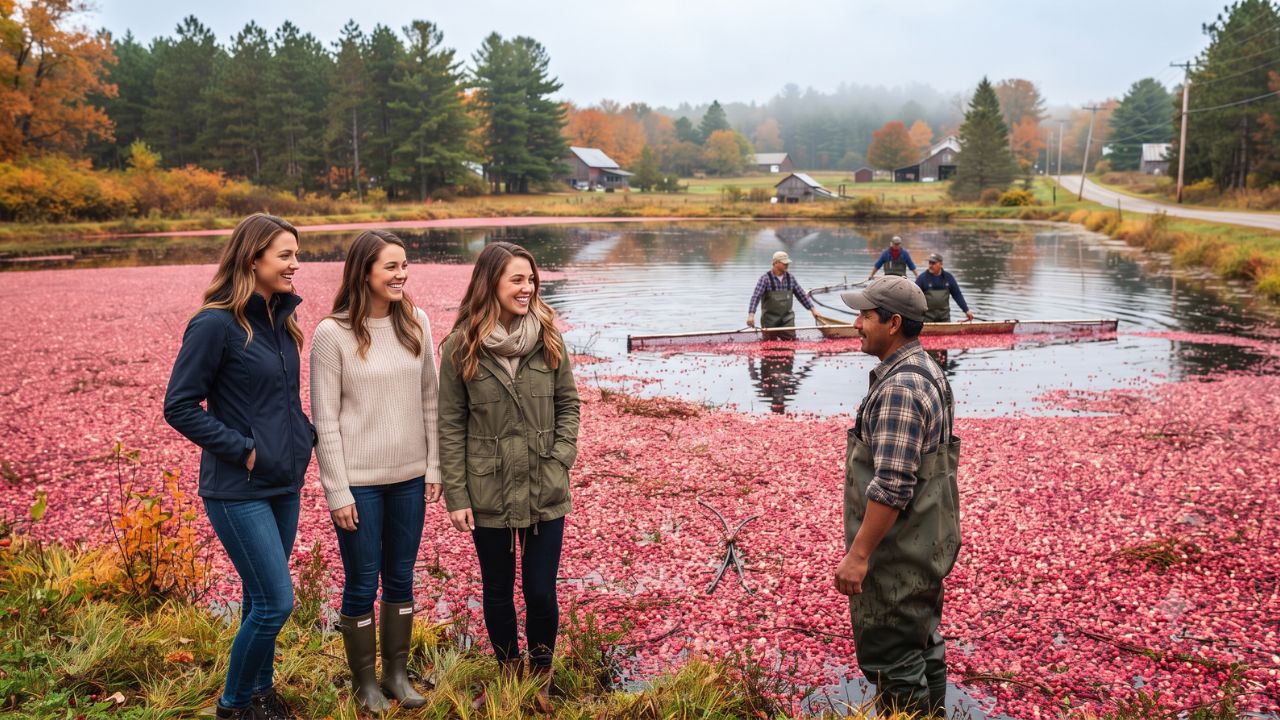
Contrary to widespread belief, cranberries never grow underwater—rather, four microscopic internal air chambers cause the ripe ruby fruit to float to the water's surface when growers intentionally flood their sandy glacial beds during a brief four-week autumn harvest window. From the expansive peatlands of central Wisconsin to the maritime bogs of Cape Cod and the rugged shores of the Pacific Northwest, this agricultural ritual transforms quiet rural lowlands into brilliant crimson seas. While traditional autumn tourism centers on passive foliage drives, the cranberry harvest provides an immersive look into an authentic native North American food system where travelers can don chest waders and step directly into floating fields of fruit.
The Geography of North America's Crimson Harvest
Wisconsin stands as the undisputed heart of commercial cranberry production, cultivating more than 60% of the entire United States crop. The state's harvest begins in late September and continues through late October, centering along the scenic 50-mile Cranberry Highway that meanders from Wisconsin Rapids through Warrens—widely recognized as the Cranberry Capital of Wisconsin. Tracing ancient glacial lakebeds bordered by amber tamarack trees, the self-drive route connects independent family-owned marshes with local sorting facilities and processing plants.
In Warrens and Wisconsin Rapids, working farms offer tractor-drawn wagon tours that guide visitors along elevated dikes separating flooded beds. Further north in the lake districts of Eagle River, Three Lakes, and Manitowish Waters, cranberry cultivation blends into pine forests, offering tranquil harvest viewing alongside pristine freshwater lakes promoted by Travel Wisconsin.
Along the Atlantic coast, Massachusetts preserves the historic origins of commercial cultivation. Centered across the sandy soils and scrub pine forests of Cape Cod, bogs operated by generational growers harvest from mid-September through early November. Guided educational tours explain how glacial kettle bogs were adapted into commercial cultivation beds during the early 19th century, pairing agricultural history with coastal seafood traditions as mapped by the Cape Cod Chamber of Commerce.
In southern New Jersey, the historic village of Whitesbog preserves the heritage of the Pine Barrens cranberry and cultivated blueberry industries. From mid-to-late September into early October, visitors explore preserved workers' cottages, sample regional provisions, and observe harvesting across working historic bogs surrounded by protected pitch pine woodlands.
What Makes the Floating Harvest Biologically and Geographically Unique
The visual spectacle of the floating harvest is the direct result of botanical engineering and precision hydrological management.
Cranberry vines (Vaccinium macrocarpon) are woody perennial plants that thrive exclusively in acidic, layered soils composed of peat, gravel, and sand. Because hand-harvesting dense ground vines is labor-intensive, growers employ "wet harvesting" for processing berries. Fields are flooded with roughly 18 inches of clean water, after which motorized water reels gently agitate the vines. The natural buoyancy created by the berry's internal air pockets causes millions of ripe fruits to detach and bob to the surface, where floating yellow booms corral the harvest toward conveyor pumps.
Along the Pacific coastline, maritime microclimates support vibrant community festivals. In Pacific County, Washington, the towns of Westport and Grayland host the Cranberry Harvest Festival on 10 and 11 October 2026, featuring working bog tours, a community cook-off, and agricultural research exhibits. Further south along the rugged coastline of southern Oregon, the town of Bandon has celebrated its annual Cranberry Festival continuously since 1947, merging coastal sea stack sightseeing with agricultural heritage.
Across Canada, harvest tourism takes an exceptionally hands-on format highlighted by Destination Canada. In Langley, British Columbia, farms like Riverside Cranberries invite travelers to slip into waterproof waders for the "cranberry plunge," wading chest-deep among floating berries near the historic Fort Langley Cranberry Festival on 10 October 2026. In Québec, Saint-Louis-de-Blandford hosts the Canneberge en fête from 1 to 18 October 2026 with guided tractor-wagon excursions, while Bala in Ontario's Muskoka region hosts the Bala Cranberry Festival from 16 to 18 October 2026, combining marsh wading with tastings of regional cranberry wines.
Comprehensive Directory: North American Cranberry Harvest Regions 2026
The table below outlines key harvest destinations, 2026 operating windows, signature experiences, and local festival dates across the United States and Canada:
| Destination & Region | Country | 2026 Peak Harvest Window | Signature Visitor Experience | Key Locations & Festival Dates |
|---|---|---|---|---|
| Central Wisconsin | USA | Late Sept – Late Oct | 50-mile Cranberry Highway, wagon tours, wader walks | Warrens, Wisconsin Rapids (Largest US crop) |
| Northern Wisconsin | USA | Early Oct – Late Oct | Northwoods lake & marsh tours, local tasting rooms | Manitowish Waters, Eagle River, Three Lakes |
| Cape Cod, Massachusetts | USA | Mid-Sept – Early Nov | Historic kettle bog walks, maritime farm tours | Harwich, Plymouth, Wareham (Peaking in October) |
| Pine Barrens, New Jersey | USA | Mid-Sept – Early Oct | Historic village tours, Pine Barrens ecology walks | Whitesbog Historic Village (Cranberry & blueberry lore) |
| Westport & Grayland, WA | USA | Early Oct – Late Oct | Working bog tours, museum exhibits, night parade | Cranberry Harvest Festival (10–11 October 2026) |
| Bandon, Oregon | USA | September – Mid-Oct | Coastal harvest parades, artisan markets, food fairs | Bandon Cranberry Festival (Historic tradition since 1947) |
| Langley, British Columbia | Canada | Late Sept – Mid-Oct | Supervised chest-wader cranberry plunge & farm tours | Fort Langley Cranberry Festival (10 October 2026) |
| Saint-Louis-de-Blandford, QC | Canada | 1–18 October 2026 | French-Canadian wagon tours through crimson fields | Canneberge en fête (Quebec's major growing hub) |
| Bala, Muskoka, Ontario | Canada | Late Sept – Mid-Oct | Marsh tours, cranberry wine tastings, artisan market | Bala Cranberry Festival (16–18 October 2026) |
Visitor Insider Tips
Experiencing the floating harvest safely and smoothly requires careful seasonal timing and respect for active farm operations:
- Reserve Wader Immersion Slots Weeks Early: Popular hands-on experiences like the cranberry plunge in Langley, BC, or Warrens, Wisconsin, cap participant numbers strictly to protect water quality and vine health. Reserve timed tickets online well in advance of your October travel dates.
- Understand Wet vs. Dry Harvest Fruit: If buying fresh whole cranberries to take home for cooking, look for "dry-harvested" berries. While wet-harvested berries are scooped from flooded beds and sent directly for juicing or freezing, dry-harvested berries are gently combed dry from vines, giving them a firmer skin and longer refrigerated shelf life.
- Check Daily Farm Schedules Before Driving: Because flooding and harvesting depend entirely on daily berry sugar levels, rainfall, and morning frost, individual bed schedules fluctuate. Check social media updates or phone ahead to farm visitor desks the morning of your trip.
- Wear Mud-Resistant Footwear and Warm Layers: Autumn mornings in Wisconsin marshes and Canadian bogs frequently hover near freezing before midday sun warms the fields. Dress in waterproof boots, wool socks, and wind-resistant outer jackets to navigate muddy access dikes.
Cultural and Environmental Context
Cranberry agriculture relies on a delicate closed-loop wetland hydrological balance. Bogs require an abundant supply of clean freshwater for spring frost protection and autumn flooding; growers channel water through interconnected reservoir networks, filtering and recycling it back into native wetlands without chemical discharge.
Indigenous communities across North America, including the Ojibwe and Wampanoag nations, harvested wild cranberries (sasemineash) for centuries before European settlement, utilizing the antioxidant-rich fruit for natural medicine, textile dye, and pemmican provisions. Modern sustainable growers maintain up to ten acres of supporting natural upland forest and marshland for every cultivated acre, preserving crucial buffer zones that support native pollinators, migratory waterfowl, and endangered wetland flora.
FAQ: Visiting the Autumn Cranberry Harvest 2026
What is the best month to see floating cranberries?
October is the peak month across all major North American growing regions, with the most active flooding and harvesting taking place during the first three weeks of the month.
Do visitors need advance reservations for cranberry marsh tours?
Yes. Because most marshes are private commercial farming operations, guided tours and wader experiences in Wisconsin, Massachusetts, and Canada require advance online booking.
Where is the 50-mile Cranberry Highway located?
The Cranberry Highway spans approximately 50 miles across central Wisconsin, running between Wisconsin Rapids and Warrens along highways 173 and 54.
Can travelers walk directly into the flooded cranberry beds?
Only at certified agritourism farms that provide sanitized chest waders and supervised access, such as select operations in Langley (BC), Bala (Ontario), and Warrens (Wisconsin).
Wading into a sea of floating crimson berries against a backdrop of crisp autumn forests reveals one of North America’s most extraordinary seasonal traditions—a living harvest where water, history, and community come together.
Related Travel Guides
Disclaimer
This article is for informational and educational purposes only. It does not constitute legal, financial, or professional advice. While we strive to provide accurate and up-to-date information, travel policies, regulations, and conditions change rapidly. Always verify information with official sources before making travel decisions. Nomad Lawyer makes no representations about the accuracy, reliability, completeness, or suitability of the information provided. Readers should consult qualified professionals for advice specific to their circumstances. The views expressed in this article are those of the author and do not necessarily reflect the views of Nomad Lawyer.
Raushan Kumar
Founder & Lead Developer
Full-stack developer with 11+ years of experience and a passionate traveller. Raushan built Nomad Lawyer from the ground up with a vision to create the best travel and law experience on the web.
Learn more about our team →