
Flights Cancelled Swept the Gulf Region as Jeddah, Ammam and More Airports Record 70 Cancellations and 490 Delays
Gulf aviation hubs face operational bottlenecks with 490 delays and 70 cancellations across Dubai, Jeddah, Riyadh, Abha, and Amman on September 14, 2026.

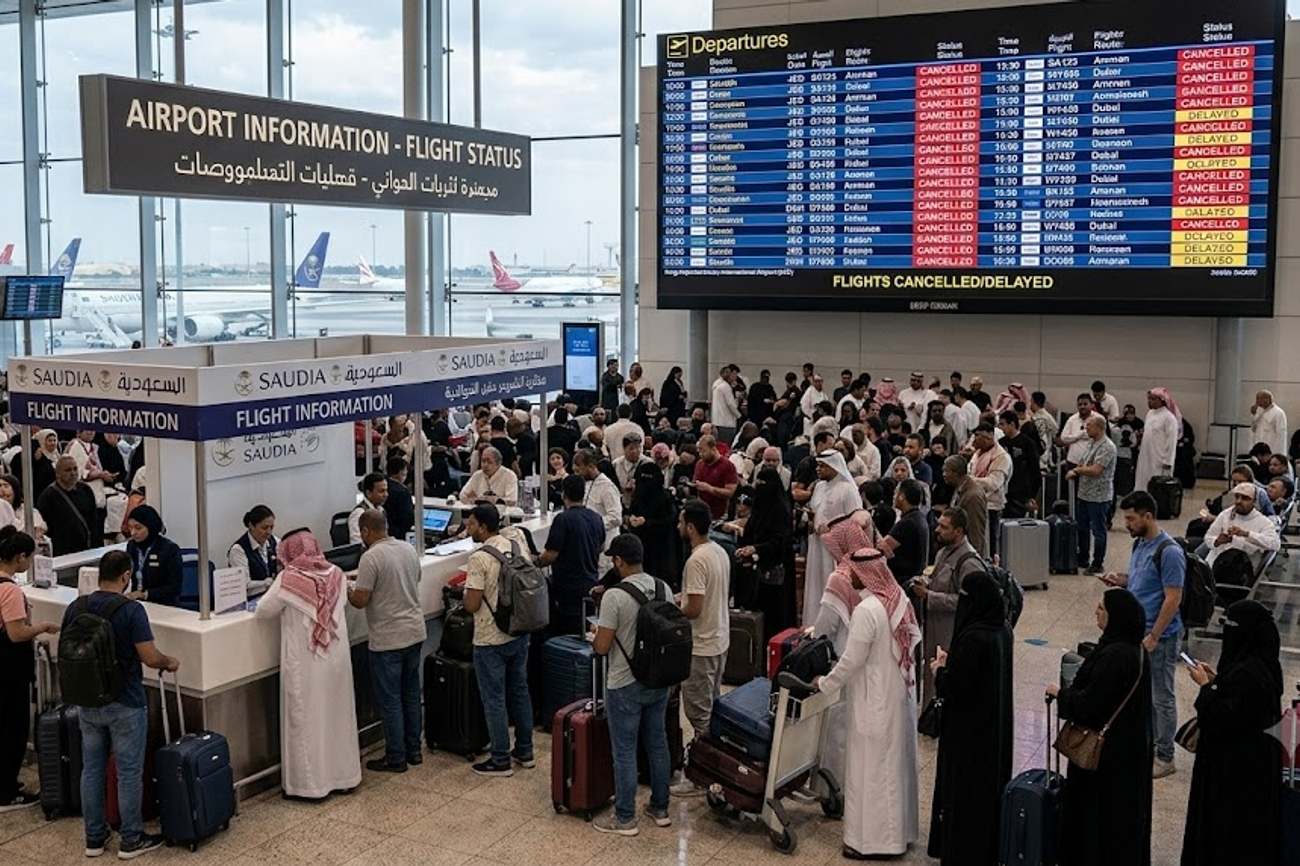
Image generated by AI
While the Arabian Peninsula operates as the world's premier intercontinental crossroads linking Europe, Africa, and Asia, sudden operational bottlenecks across the Gulf triggered 490 flight delays and 70 cancellations on September 14, 2026. Verified aviation logs captured at 2:41 pm ET (10:42 pm Gulf Standard Time) confirmed widespread schedule modifications that rippled across flagship megahubs and regional desert terminals alike. From the sprawling transit lounges of Dubai and Jeddah to regional outposts in the Asir mountains, tens of thousands of travelers faced missed connections, prolonged gate waits, and rescheduled itineraries as airlines recalibrated flight rotations to absorb compounding network strain.
The Gulf Corridor Squeeze: Analyzing 560 Flight Disruptions Across Major Hubs
The operational friction recorded across the Gulf underscores how tightly synchronized modern long-haul aviation has become. When aircraft rotations stumble at major connecting nodes, the disruption propagates across time zones. Leading the disruption tallies was Dubai International Airport (DXB), which recorded 132 delays and 11 cancellations, totaling 143 compromised flights. As the planet's busiest international terminal, even modest holding patterns at Dubai quickly cascade into missed long-haul bank departures heading toward North America, Western Europe, and Australasia.
In neighboring Saudi Arabia, aviation infrastructure handled equally intense operational turbulence across both national gateways and secondary airfields:
- King Abdulaziz International Airport (JED) in Jeddah: Registered 109 delays and 15 cancellations, creating 124 disrupted flights across domestic trunk routes and international pilgrim corridors.
- King Khalid International Airport (RUH) in Riyadh: Logged 85 delays and 9 cancellations, producing 94 affected flight movements across Saudi Arabia's diplomatic and commercial center.
- King Fahd International Airport (DMM) in Dammam: Handled 45 delays and 1 cancellation, reflecting eastern province energy sector travel flows.
- Abha Regional Airport (AHB): Emerged with one of the most severe cancellation ratios in the region, logging 27 delays alongside 21 cancellations as carriers trimmed high-altitude regional routes to protect primary trunk schedules.
- Regional Saudi Outposts: Gizan Regional Airport (GIZ) recorded 4 cancellations with 0 delays, while Najran Domestic Airport (EAM) documented 4 cancellations and 0 delays.
Across the wider Arabian Gulf and Levant, parallel stresses unfolded. In the UAE, Sharjah International Airport posted 37 delays and 2 cancellations, totaling 39 disruptions. Kuwait International Airport registered 35 delays and 2 cancellations, while Queen Alia International Airport in Amman, Jordan recorded 20 delays and 1 cancellation.
Airline fleets absorbed substantial operational pressure. Flag carrier Saudia recorded the heaviest volume impact, logging 25 cancellations (a 4% cancellation rate) and 55 delays (a 10% delay rate). Low-cost regional carrier FlyDubai recorded 4 cancellations (1% cancellation rate) and 32 delays (10% delay rate). Sharjah-based Air Arabia registered 2 cancellations (0% cancellation rate) alongside 28 delays, marking a 12% delay rate—the highest delay percentage among analyzed carriers. Meanwhile, Royal Jordanian recorded 1 cancellation (0% cancellation rate) and 6 delays (4% delay rate), and Kuwait's Jazeera Airways saw 1 cancellation (1% cancellation rate) and 1 delay (1% delay rate).
What Makes Gulf Transit Hubs Different
Aviation terminals across the Gulf are unlike typical transit facilities in the West; they are designed as self-contained micro-cities operating continuously on 24-hour cycles. Because long-haul banks arrive in massive waves around midnight and dawn, airports like Dubai, Jeddah, and Riyadh are structured around deep cultural hospitality. Travelers can wander past palm-lined interior arcades, step into tranquil multi-faith prayer rooms, or refresh in luxurious arrival lounges offering hot showers and sleep pods.
Stepping beyond the security perimeter reveals profound cultural depth. In Jeddah, transit voyagers who experience overnight layovers can venture into the historic Al-Balad district, recognized by the UNESCO World Heritage Centre for its coral-stone merchant houses and hand-carved teakwood roshan balconies. In Riyadh, travelers discover the earthen citadel of At-Turaif in Diriyah, the ancestral birthplace of the Saudi state, before ascending modern architectural icons like Kingdom Centre.
In Jordan, Queen Alia International Airport acts as the stepping-stone to ancient Nabataean trade routes. In Amman, rolling limestone hills reveal Roman amphitheaters, vibrant spice souks, and street vendors serving fresh mint tea and warm plates of pistachio-dusted knafeh, supported through cultural heritage initiatives led by the Jordan Tourism Board. Meanwhile, in the southern Saudi highlands of Asir, Abha's airport leads directly to cool juniper forests, terraced mountain farms, and the historic stone village of Rijal Almaa.
Visitor Insider Tips
Navigating unexpected flight delays and connection bottlenecks across the Gulf requires local savvy, airport knowledge, and flexible travel strategies.
- Protecting Connection Windows: When booking multi-segment flights through Dubai, Riyadh, or Jeddah during peak travel seasons, avoid tight 90-minute layovers. Build in a minimum layover window of three to four hours. A three-hour cushion ensures you can comfortably absorb a 45-minute gate hold without missing your onward international departure.
- The Al-Balad Layover Escape: If facing an extended delay exceeding eight hours at Jeddah's King Abdulaziz Airport, utilize Saudi Arabia's stopover visa to exit the terminal. Take a licensed airport taxi directly to historic Al-Balad. Savor traditional cardamom-infused gahwa coffee, fragrant dates, and freshly baked motabaq flatbreads in courtyard cafes while exploring historic merchant streets.
- Airport Lounges and Free Sleep Pods: In Dubai International Airport's Terminal 3, look for designated quiet zones fitted with ergonomic snooze chairs located on the upper levels away from primary shopping concourses. Alternatively, purchase lounge day-passes via mobile apps to secure private shower suites and hot buffet dining during multi-hour flight postponements.
- Digital Monitoring Beyond Departure Boards: In large Gulf terminals, physical departure monitors can update slowly during cascading disruptions. Keep airline mobile applications open with push notifications enabled, and cross-reference your inbound aircraft’s tail number using real-time flight tracking platforms to anticipate departure delays before gates are announced.
- Carrier Rebooking Etiquette: If your flight is among the cancellations—such as the 21 flights removed at Abha or the 25 at Saudia—approach service desks calmly and courteously. Traditional Arabic hospitality (karam) places immense value on polite, respectful interaction. Inquiring with warm greetings like "As-salamu alaykum" and addressing desk supervisors respectfully often expedites hotel accommodation vouchers and priority rebooking onto alternate regional sectors.
Cultural and Environmental Context
The extraordinary growth of Gulf aviation reflects a strategic national commitment to transform fossil-fuel economies into global tourism and cultural hubs. Under expansive modernization blueprints like Saudi Vision 2030 and the UAE Tourism Strategy 2031, promoted by Visit Saudi, these nations are investing billions into sustainable infrastructure, high-speed regional rail networks, and heritage conservation.
However, operating massive airport terminals in extreme desert climates presents formidable environmental challenges. Air-conditioning expansive glass concourses, managing aircraft ground emissions, and desalinating millions of gallons of municipal water require innovative sustainability solutions. Regional carriers are responding by investing in next-generation fuel-efficient aircraft fleets, adopting solar-powered airport ground vehicles, and expanding carbon-offset programs.
At the same time, regional aviation plays a vital role in preserving cultural lifelines. Domestic routes connecting Riyadh with mountain communities like Abha and desert oasis towns like Najran and Gizan ensure that rural artisans, agricultural producers, and heritage communities remain tied to national prosperity. By understanding the intricate mechanics of this vast transit web, travelers can navigate flight interruptions with patience, recognizing that behind the departure screens lies a dynamic civilization bridging antiquity and the future.
FAQ: Navigating Gulf Flight Disruptions 2026
What caused the widespread flight disruptions across Gulf airports on September 14, 2026? Operational bottlenecks, network schedule adjustments, and compounding aircraft rotation delays caused 490 delays and 70 cancellations across major UAE, Saudi, Kuwaiti, and Jordanian hubs.
Which Gulf airport experienced the highest number of flight disruptions? Dubai International Airport (DXB) recorded the highest volume with 143 total disruptions, comprising 132 delays and 11 cancellations across international long-haul and regional routes.
How should passengers handle missed connections in Jeddah or Riyadh? Contact airline customer service desks immediately for rebooking vouchers, verify whether you qualify for a Saudi transit visa, and request complimentary airline hotel accommodations if delays exceed eight hours.
What rights do travelers have when Gulf flights are delayed or canceled? Passengers are entitled to meals, refreshments, and rebooking on the next available flight. For overnight delays, airlines typically provide hotel accommodation and ground transportation.
Beneath the soaring glass arches of the desert's greatest crossroads, every unexpected delay is an invitation to witness the timeless grace of Arabian hospitality.
Related Travel Guides
Disclaimer
This article is for informational and educational purposes only. It does not constitute legal, financial, or professional advice. While we strive to provide accurate and up-to-date information, travel policies, regulations, and conditions change rapidly. Always verify information with official sources before making travel decisions. Nomad Lawyer makes no representations about the accuracy, reliability, completeness, or suitability of the information provided. Readers should consult qualified professionals for advice specific to their circumstances. The views expressed in this article are those of the author and do not necessarily reflect the views of Nomad Lawyer.
Preeti Gunjan
Contributor & Community Manager
A passionate traveller and community builder. Preeti helps grow the Nomad Lawyer community, fostering engagement and bringing the reader experience to life.
Learn more about our team →