
Flight Chaos Across Asia as Middle East Airspace Restrictions Trigger Mass Cancellations
Flight chaos across Asia intensifies as Middle East airspace restrictions spark cascading cancellations and delays at major hubs. Over 800 flights delayed in 24 hours affecting Mumbai, Delhi, and Southeast Asian airports in April 2026.

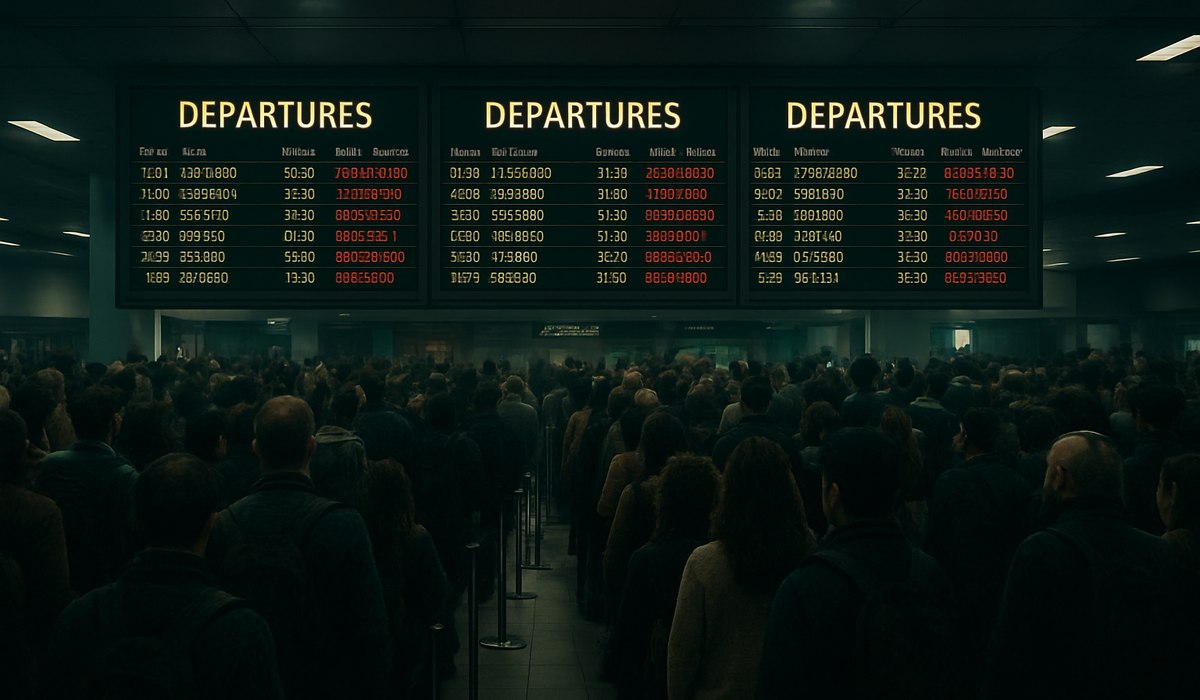
Image generated by AI
Breaking: Hundreds Stranded as Flight Chaos Across Asia Intensifies
Widespread disruptions are unfolding across Asia's busiest airports as Middle East airspace restrictions continue triggering a domino effect of cancellations and delays. Over the past 24 hours, more than 800 flights faced delays while at least a dozen were canceled outright at major hubs including Mumbai, Delhi, Singapore, Bangkok, Dubai, and Beijing. The cascading disruptions have left hundreds of passengers scrambling to rebook flights, navigate missed connections, and endure unexpected overnight stays at crowded airport terminals. This latest wave of flight chaos across the region underscores the fragility of Asia's air travel infrastructure when geopolitical tensions restrict critical transit corridors.
Fresh Disruptions Hit India's Busiest Gateways
India's primary international airports in Mumbai and Delhi are bearing the brunt of current disruptions, with tightly packed schedules collapsing under the weight of rolling delays and last-minute cancellations. Airport data and local media reports confirm that at least a dozen international flights were scrubbed within a 24-hour window, while more than 800 additional services experienced significant delays across these two financial and political capitals.
This represents the second major wave in recent weeks. Just weeks prior, Middle East tensions had already forced over 140 international cancellations across Indian airports, compelling airlines to suspend Gulf corridor services and implement complex rerouting strategies. Current schedule updates from major carriers show additional recovery flights being added on selective days, yet regular rotation patterns remain unpredictable, creating irregular departure and arrival waves at both Mumbai and Delhi.
Indian carriers have issued repeated advisories urging passengers to verify flight status before departing for airports and to anticipate extended rerouting and holding periods on long-haul westbound services. Many of the newly affected flights involve westbound routes that must navigate a complex patchwork of West Asian airspace closures, directly contributing to flight chaos across affected corridors.
Westbound Routes Bear the Brunt of Restrictions
Westbound services connecting Asia to Europe and the Middle East are experiencing disproportionate disruption due to mandatory airspace restrictions over parts of West Asia. Airlines operating these routes face difficult choices: accept extended flight times via longer detours, reroute through alternate hubs, or suspend services entirely.
The operational challenge extends beyond simple route adjustments. Crew duty time limits, fuel requirements for longer detours, and aircraft positioning logistics create cascading complications that ripple through airline networks. FlightAware tracking data shows visible clusters of late departures and arrivals, with isolated cancellations particularly pronounced during evening and early morning departure waves when Asia-Europe and Asia-Middle East services are heavily concentrated.
At Bangkok Suvarnabhumi, Singapore Changi, and Beijing Capital, carriers have implemented extended suspensions or capacity cuts on traditional Dubai and West Asia routes. These moves eliminate key interchange points, forcing complex rescheduling that ultimately compounds delays throughout the broader regional network.
Ripple Effects Beyond Direct Cancellations
The impact of flight chaos across Asia extends far beyond passengers booked on canceled flights. Missed onward connections, crew rotation challenges, and aircraft being out of position create secondary delays that amplify through domestic networks. A single canceled flight in one time zone can trigger a cascade of disruptions throughout an airline's daily schedule.
Dubai International Airport, historically a linchpin connecting Europe, Africa, and Asia, remains under unusual operational strain. Recent industry reports document that regular schedules through Dubai, Abu Dhabi, and Doha are not fully restored, with ad hoc services and limited relief flights replacing normal high-frequency rotations.
This reduced Gulf hub capacity directly impacts Asian airports where passengers depend on these connections for Europe and North America travel. Travelers currently transiting Gulf hubs experience longer journey times, involuntary extended layovers, and last-minute rerouting via Istanbul or European alternatives. Capacity constraints on alternate routes have pushed airfares higher and reduced seat availability, with some carriers adding extra frequencies to major Asian cities to partially offset lost Gulf connections.
Because Gulf hubs function as critical interchange points for travelers originating in India, Southeast Asia, and China, any reduction in their throughput rapidly translates into congested check-in areas, overwhelmed transfer desks, and full standby lists at downstream Asian airports—even when local weather and infrastructure conditions are normal.
Outlook for Air Travel Recovery
Recovery timelines remain uncertain. Aviation analysts note that restoration of full westbound capacity depends on resolution of Middle East geopolitical tensions affecting airspace availability. In the interim, airlines are implementing adaptive scheduling strategies while passengers face extended journey times and reduced flight availability.
Recent advisory updates from major international carriers suggest a gradual return to normal operations over the coming weeks, contingent on sustained airspace access improvements. However, the scale and speed of recovery will directly impact whether flight chaos across Asia gradually subsides or intensifies further. Travelers should monitor FAA advisories and airline announcements for real-time status updates on affected routes and recovery efforts.
Key Data Summary
| Metric | Details |
|---|---|
| Flights Delayed (24 hrs) | 800+ across major Asian hubs |
| Flights Canceled (24 hrs) | 12+ at primary gateways |
| Most Affected Airports | Mumbai, Delhi, Singapore, Bangkok, Dubai, Beijing |
| Previous Cancellations (Recent Weeks) | 140+ across Indian airports |
| Primary Cause | Middle East airspace restrictions |
| Most Impacted Route Types | Westbound services (Asia to Europe/Middle East) |
| Passenger Impact Areas | Missed connections, reroutes, extended layovers |
| Alternate Routing Hubs | Istanbul, European transition points |
| Operational Status | Partial capacity, gradual recovery expected |
| Crew Impact | Duty time violations, rotation challenges |
What This Means for Travelers: Action Checklist
The flight chaos across Asia demands proactive passenger engagement. Here's what you should do immediately:
-
Verify your flight status before leaving for the airport by checking your airline's website or calling customer service directly.
-
Monitor real-time flight tracking through FlightAware to receive alerts about delays or cancellations affecting your specific flight.
-
Review rebooking options offered by your airline, including alternate dates, routes, or partner carriers that may avoid affected airspace corridors.
-
Understand your passenger rights under regulations—check US DOT requirements for compensation, meal vouchers, and accommodation when cancellations occur.
-
Book refundable tickets when possible to maximize flexibility if flight chaos disrupts your planned itinerary.
-
Arrive earlier than normal for airport check-in to account for potential queuing delays at congested terminals.
-
Document all expenses related to disruptions (meals, hotels, transportation) as these may be reimbursable under airline compensation policies.
-
Contact your airline immediately if your flight is canceled to explore rebooking options before call centers become overwhelmed.
Frequently Asked Questions
Which Asian airports are most affected by current flight chaos? Mumbai, Delhi, Singapore, Bangkok, and Beijing are experiencing the most significant disruptions. Both Mumbai and Delhi have reported 12+ cancellations and 800+ delays within 24-hour periods due to westbound service impacts from Middle East airspace restrictions.
What routes are most likely to be canceled or delayed? Westbound services from Asia to Europe and the Middle East face the highest disruption risk. Routes transiting through Dubai, Abu Dhabi, and Doha are particularly affected, with airlines implementing capacity cuts and extended suspensions on these corridors.
Disclaimer
This article is for informational and educational purposes only. It does not constitute legal, financial, or professional advice. While we strive to provide accurate and up-to-date information, travel policies, regulations, and conditions change rapidly. Always verify information with official sources before making travel decisions. Nomad Lawyer makes no representations about the accuracy, reliability, completeness, or suitability of the information provided. Readers should consult qualified professionals for advice specific to their circumstances. The views expressed in this article are those of the author and do not necessarily reflect the views of Nomad Lawyer.
Raushan Kumar
Founder & Lead Developer
Full-stack developer with 11+ years of experience and a passionate traveller. Raushan built Nomad Lawyer from the ground up with a vision to create the best travel and law experience on the web.
Learn more about our team →