
Flight Chaos Across Asia as Middle East Airspace Closures Trigger Cascading Cancellations
Flight chaos across Asia intensifies as Middle East airspace restrictions force hundreds of cancellations and delays at major hubs in 2026. Mumbai, Delhi, Singapore, and Bangkok report widespread disruptions affecting travelers and exposing regional aviation vulnerability.

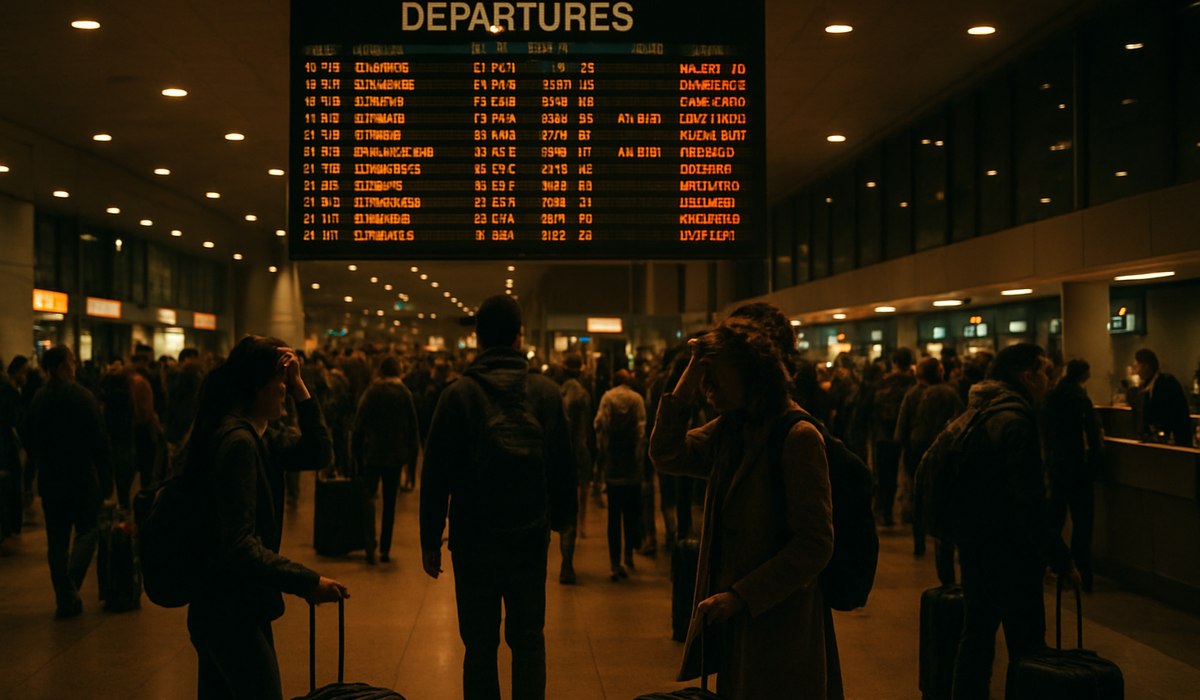
Image generated by AI
Hundreds Stranded as Flight Chaos Across Asia Deepens
Flight chaos across Asian airports intensified dramatically on April 19, 2026, as geopolitical tensions in the Middle East triggered widespread cancellations and delays affecting travelers at India's busiest international gateways, Southeast Asian hubs, and Chinese airports. More than 800 flights experienced delays while at least a dozen were outright canceled across Mumbai, Delhi, Singapore, Bangkok, Dubai, and Beijing within a single 24-hour window. The cascading disruption stems from mandatory airspace restrictions over contested regions, forcing airlines to implement costly reroutes that strain crew schedules, fuel budgets, and passenger connections across Asia's already-fragile aviation network.
Fresh Disruptions Hit India's Busiest Gateways
India's primary international aviation hubs in Mumbai and Delhi bore the brunt of this latest wave of disruptions. Airport data and local media reports confirm that both cities experienced rolling delays affecting over 800 passengers, with cancellations concentrated on westbound services bound for Europe and North America. The timing proves particularly painful—this disruption follows similar chaos merely weeks earlier, when Middle East tensions triggered more than 140 international cancellations across Indian airports alone.
Indian carriers issued urgent advisories recommending passengers verify flight status before departing for terminals and prepare for extended rerouting times on long-haul sectors. Airlines' recent schedule updates reveal sporadic recovery flights operating on some days, while regular rotations remain significantly reduced on others. This irregular pattern creates unpredictable travel conditions and complicates planning for business travelers and leisure visitors alike. The flight chaos across these gateways demonstrates how quickly geopolitical events translate into operational breakdown at ground level, affecting everything from check-in queues to aircraft positioning.
Westbound Services Navigate Patchwork of Airspace Closures
Airlines operating westbound routes from Asian origination points now face a fragmented airspace landscape requiring complex flight plan modifications. Rather than utilizing direct corridors through contested Middle Eastern regions, carriers must implement southern routing variations that add flight hours, increase fuel consumption, and compress crew duty windows. These mandatory detours create what industry analysts describe as a "patchwork of restrictions"—a disjointed network of open and closed airspace that defies standardized operational planning.
The strategic importance of this disruption cannot be overstated: westbound services represent premium revenue streams for Asian carriers, connecting high-value business and premium leisure passengers to Europe and North America. Each cancellation or delay directly impacts airline profitability while simultaneously degrading the travel experience for customers. External authoritative sources like the FAA provide updated airspace information, though many regional airlines struggle to maintain real-time compliance with rapidly-evolving restrictions. Passengers booking westbound itineraries should anticipate additional journey time buffers and expect potential last-minute routing changes.
Cascading Impact: Missed Connections and Crew Challenges
The ripple effects of flight chaos across Asia extend far beyond directly-affected passengers. When a single long-haul service experiences cancellation, secondary operational disruptions unfold across airline networks through missed connections, crew rotation conflicts, and aircraft being out of optimal positioning. A delayed inbound flight from Europe arriving into Dubai three hours late directly impacts the next scheduled departure, creating compound delays that propagate through Southeast Asian hubs like Singapore and Bangkok.
Crew duty time limitations prove particularly problematic during this crisis. Flight attendants and pilots operate under strict regulatory maximum flight-hour requirements. Longer reroutes consume additional duty time, reducing crew availability for subsequent flights and forcing airlines to cancel services due to insufficient staffing rather than actual aircraft unavailability. For passengers, this means a single slot disruption can eliminate multiple downstream flights across a 12-24 hour period. Travel industry analysts emphasize that these cascading impacts disproportionately affect connecting passengers who depend on tight hub-and-spoke timing—exactly the operational model that defines Asian aviation's vulnerability to geopolitical shock.
Airlines Implement Recovery Flights Amid Irregular Schedules
In response to mounting capacity shortages, major carriers have commenced adding supplementary recovery flights on select routes and days, though scheduling remains unpredictable. Airlines operating through Gulf hubs—Dubai, Abu Dhabi, and Doha—continue running significantly reduced frequencies compared to pre-crisis norms. This capacity constraint creates a domino effect: fewer available seats force yield management systems to prioritize premium passengers, relegating economy ticket holders to increasingly crowded standby lists.
Some carriers have implemented strategic redeployment, adding extra frequencies on high-demand Asian city pairs to partially compensate for lost Gulf connections. However, these additions rarely match the capacity lost through reduced hub throughput. Passengers flying through alternative transit points like Istanbul or European gateways experience longer overall journey times and involuntary extended layovers. Real-time flight tracking via FlightAware remains essential for monitoring airline recovery plans and understanding actual versus scheduled operations during this disruption period.
Data Summary: Flight Chaos Across Asia by the Numbers
| Metric | Impact | Status |
|---|---|---|
| Total flights delayed (24 hours) | 800+ | Ongoing |
| Confirmed cancellations | 12+ confirmed | Active |
| Primary affected airports | Mumbai, Delhi, Singapore, Bangkok, Beijing, Dubai | Current |
| Westbound services impacted | Majority of cancellations | Estimated 70-80% |
| Previous disruption cancellations (3 weeks prior) | 140+ at Indian airports alone | Historical context |
| Typical crew duty time extension | 2-4 additional hours per routing | Operational strain |
| Alternate routing price premium | 15-25% fare increase reported | Market impact |
| Average passenger delay duration | 6-18 hours with layover extensions | Typical scenario |
What This Means for Travelers: Your Action Checklist
Flying through Asian hubs or connecting via Middle East gateways requires proactive management. Follow these steps to navigate the current disruption:
-
Verify flight status 48 hours before departure by visiting your airline's website or using real-time tracking on FlightAware
-
Request waiver transfers immediately if your flight cancels—don't wait for airline callback; contact customer service directly to secure alternative routings before seats fill
-
Build 4+ hour connection buffers into itineraries involving Gulf hubs; tight connections face genuine risk of disruption
-
Confirm crew scheduling with your airline, as many cancellations stem from staffing conflicts rather than aircraft unavailability
-
Pack essential medications and documents in carry-on baggage to mitigate risks if overnight delays occur
-
Know your passenger rights under Department of Transportation and international regulations for compensation eligibility—visit US DOT for detailed guidance
-
Monitor airspace restriction updates through aviation authorities; changing conditions sometimes enable schedule restoration with minimal advance notice
-
Consider travel insurance covering airline operational disruptions, not merely personal circumstances
-
Accept that rerouting may increase total journey time by 8-12 hours; set realistic expectations rather than expecting standard routing
-
Document all communication with airline staff regarding cancellations, rebookings, and any out-of-pocket expenses for potential compensation claims
Frequently Asked Questions
Q: Can I get a full refund if my flight is canceled due to Middle East airspace restrictions?
A: Refund eligibility depends on your ticket type, airline policy, and passenger location. Passengers departing from European Union countries have strong legal protections under EU261 regulations. US-origin passengers have fewer automatic rights but may qualify for vouchers or rebookings. Contact your airline immediately with booking reference and passport details. Check [US DOT](https://www.transportation
Disclaimer
This article is for informational and educational purposes only. It does not constitute legal, financial, or professional advice. While we strive to provide accurate and up-to-date information, travel policies, regulations, and conditions change rapidly. Always verify information with official sources before making travel decisions. Nomad Lawyer makes no representations about the accuracy, reliability, completeness, or suitability of the information provided. Readers should consult qualified professionals for advice specific to their circumstances. The views expressed in this article are those of the author and do not necessarily reflect the views of Nomad Lawyer.
Preeti Gunjan
Contributor & Community Manager
A passionate traveller and community builder. Preeti helps grow the Nomad Lawyer community, fostering engagement and bringing the reader experience to life.
Learn more about our team →