
Fighter Mishap Pune: Su-30MKI Hard Landing Shuts Runway, Disrupts Domestic Flights
A Sukhoi Su-30MKI fighter jet's hard landing at Pune International Airport forced runway closure overnight, triggering widespread flight diversions and cancellations across India's domestic network in April 2026.

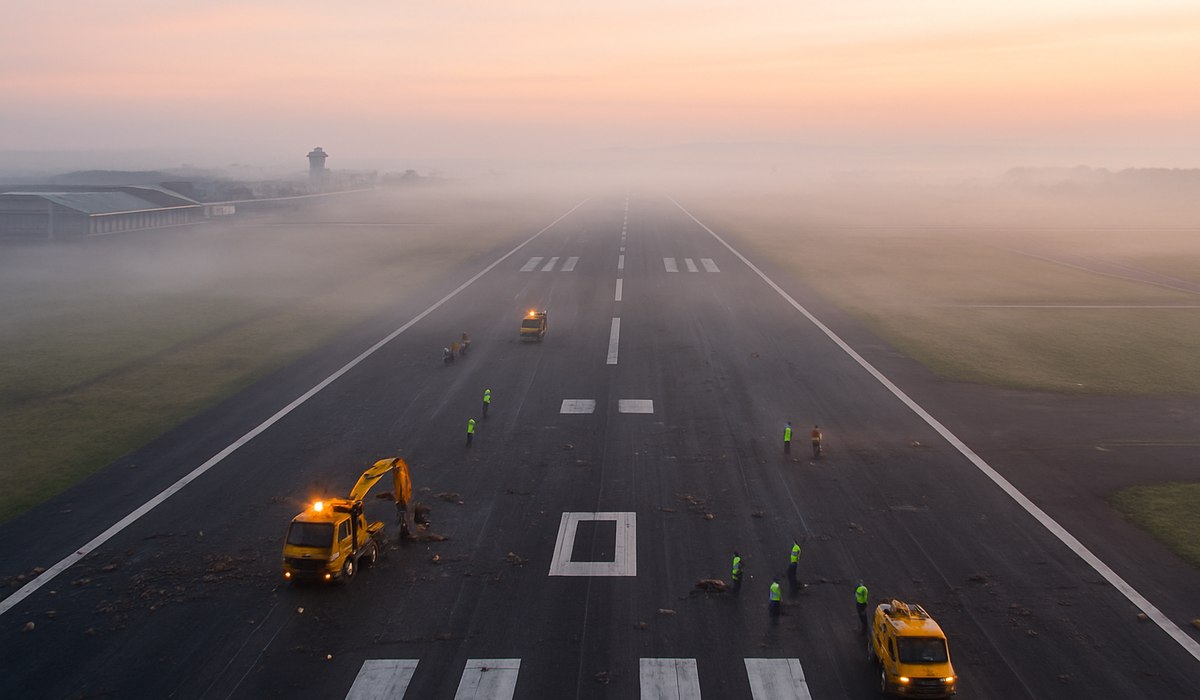
Image generated by AI
Indian Air Force Fighter Jet Mishap at Pune Triggers Airport Shutdown and Network-Wide Disruptions
A Sukhoi Su-30MKI fighter jet operated by the Indian Air Force experienced a hard landing failure at Pune International Airport on Friday, April 17, 2026, at approximately 10:25 p.m., forcing an emergency runway closure that cascaded disruptions across India's domestic aviation network. The aircraft, returning from a training sortie, encountered apparent landing gear complications and engaged the runway's arrester barrier, immobilizing the fighter jet on the single operational runway at the joint civil-military airfield. The incident left the runway unavailable throughout the overnight hours, prompting mass flight cancellations, diversions to alternate airports, and stranding hundreds of passengers across major Indian cities. The Indian Air Force confirmed the aircrew's safety and reported no civilian infrastructure damage, but the disabled fighter jet's position necessitated a complete operational shutdown while recovery teams assessed the runway surface and cleared the aircraft.
Hard Landing Triggers Emergency Closure at Pune's Dual-Use Airfield
The fighter mishap Pune occurred when the Su-30MKI approached the main runway during late evening operations. Military reports indicate the aircraft experienced an undercarriage malfunction during the landing sequence, forcing the pilot to employ emergency arrester systems to bring the fighter to a halt on the tarmac. The immobilized jet blocked the entire runway, making all subsequent jet operations impossible at the facility.
Pune International Airport operates as a dual-use facility, sharing infrastructure between civilian terminal operations and Lohegaon Air Force Station. The airport's single runway configuration means any closure impacts both military and commercial operations simultaneously. With the damaged fighter jet occupying the landing surface and requiring technical assessment before recovery could begin, airport authorities declared the runway temporarily unavailable for all operations through the night.
Ground crews worked systematically to position recovery equipment and clear debris while Indian Air Force engineers evaluated the aircraft's condition. The recovery process extended beyond initial estimates, forcing airport management to maintain the runway shutdown status throughout the critical late-night and early-morning banking windows when the majority of domestic traffic typically operates through Pune.
Check real-time flight status impacts via FlightAware and monitor ongoing disruptions to your itinerary.
Nationwide Ripple Effect on Domestic Flights and Passenger Operations
The closure of Pune's runway created an immediate vacuum in India's domestic flight scheduling, particularly affecting the western India corridor. Flight diversions multiplied as aircraft approaching Pune received holding instructions and were directed toward alternate airports including Mumbai, Hyderabad, and Bengaluru. Major carriers including Air India, IndiGo, SpiceJet, and Vistara faced cascading operational challenges as they struggled to accommodate unexpected diversions while managing crew duty-time restrictions and aircraft positioning.
Airlines operating evening and overnight services from major metros like Delhi, Mumbai, and Bengaluru toward Pune discovered they could neither complete scheduled arrivals nor dispatch planned departures. Mid-boarding announcements informed passengers of cancellations and diversions, creating confusion across multiple terminals simultaneously. Social media posts documented long queues at airline counters as customer service teams processed rebooking requests, issued refunds, and arranged emergency accommodation for stranded travelers.
The disruption extended beyond Pune-specific routes. Aircraft diverted from Pune required reassignment to alternate missions, disrupting the rotation schedules those planes were scheduled to operate on Saturday morning and afternoon. This multiplier effect meant passengers with seemingly unrelated bookings—connecting flights through aircraft that had been repositioned due to the diversions—also experienced delays and cancellations.
Mumbai's Bombay High Airport and Hyderabad's Rajiv Gandhi International Airport absorbed significant unscheduled traffic surges. Ground handling infrastructure at these already-busy facilities faced strain accommodating additional passengers with minimal notice. Border control and baggage systems operated at peak capacity as diversions compressed into narrow time windows.
Airport Recovery and Operations Timeline
Recovery operations commenced immediately following the hard landing. Military recovery teams positioned specialized equipment to safely extract the immobilized Su-30MKI from the runway surface. Runway inspection protocols required complete visual and technical assessment before the Indian Directorate General of Civil Aviation could authorize civilian operations resumption.
By Saturday morning, April 18, recovery crews had cleared the primary obstruction, but comprehensive runway inspections continued through mid-morning hours. Airport management issued provisional estimates suggesting resumption of civilian operations by late morning, though full scheduling normalization would require several additional hours to absorb the aircraft and crew positioning backlog created overnight.
Airlines began issuing revised schedules reflecting the delayed runway availability. Saturday afternoon services operated with residual delays as the system absorbed aircraft returns, crew repositioning, and the morning's cancellation overhang. By Saturday evening, Pune International Airport approached normal operational cadence, though some Sunday morning services still reflected the previous evening's disruptions.
The Federal Aviation Administration's guidance on runway incident protocols provides context for understanding similar operational procedures followed by Indian aviation authorities.
Passenger Impact and Compensation Framework
Hundreds of travelers experienced disruptions ranging from minor delays to overnight stranding at unfamiliar airports. Passengers diverted to Mumbai or Hyderabad faced uncertainty regarding onward connections, accommodation arrangements, and rebooking timelines. Airlines provided hotel vouchers where operations extended beyond minimum rest periods, though capacity constraints at downtown hotels near alternate airports created additional challenges.
Refund and compensation requests flooded airline customer service channels throughout Saturday. Indian civil aviation regulations mandate specific compensation levels for flight cancellations and significant diversions, though compensation amounts vary based on flight duration and disruption cause classification. Passengers holding tickets on Air India, IndiGo, Vistara, and other affected carriers became eligible for either rebooking on next-available flights or full refunds depending on their preference.
The U.S. Department of Transportation's air consumer protection framework offers international context for passenger rights, though Indian carriers operate under the Ministry of Civil Aviation's domestic regulations. Travelers should verify specific compensation eligibility with their booking confirmation and applicable airline policies.
Key Data: Fighter Mishap Pune and Operational Impact
| Metric | Details |
|---|---|
| Incident Aircraft | Sukhoi Su-30MKI fighter jet, Indian Air Force |
| Incident Time | Friday, April 17, 2026, approximately 10:25 p.m. |
| Incident Location | Pune International Airport main runway |
| Runway Closure Duration | Approximately 12+ hours overnight through mid-morning April 18 |
| Primary Issue | Landing gear malfunction; aircraft engaged arrester barrier |
| Runway Capacity | Single runway facility; dual civil-military use |
| Crew Status | Safe; no injuries reported |
| Airport Infrastructure | No civilian facilities damaged; fighter jet recovered without incident escalation |
| Affected Airlines | Air India, IndiGo, SpiceJet, Vistara, and regional carriers |
| Primary Affected Routes | Delhi-Pune, Mumbai-Pune, Bengaluru-Pune, Hyderabad-Pune, Chennai-Pune |
| Diversions Destinations | Mumbai (Bombay High Airport), Hyderabad (Rajiv Gandhi International) |
| Recovery Timeline | Primary obstruction cleared by Saturday morning; runway inspections continued; civilian operations resumed late morning April 18 |
Traveler Action Checklist for Flight Disruption Response
If your flight was affected by the fighter mishap Pune runway shutdown, follow these numbered steps to protect your travel plans and financial interests:
- Check your flight status immediately using [Flight
Disclaimer
This article is for informational and educational purposes only. It does not constitute legal, financial, or professional advice. While we strive to provide accurate and up-to-date information, travel policies, regulations, and conditions change rapidly. Always verify information with official sources before making travel decisions. Nomad Lawyer makes no representations about the accuracy, reliability, completeness, or suitability of the information provided. Readers should consult qualified professionals for advice specific to their circumstances. The views expressed in this article are those of the author and do not necessarily reflect the views of Nomad Lawyer.
Raushan Kumar
Founder & Lead Developer
Full-stack developer with 11+ years of experience and a passionate traveller. Raushan built Nomad Lawyer from the ground up with a vision to create the best travel and law experience on the web.
Learn more about our team →