
Explosive Drone Threat Forces Flight Suspensions at Leipzig/Halle Airport in Germany 2026
Security operations at Leipzig/Halle Airport were triggered after an explosive drone was discovered in a restricted cargo area, leading to flight cancellations and diversions.

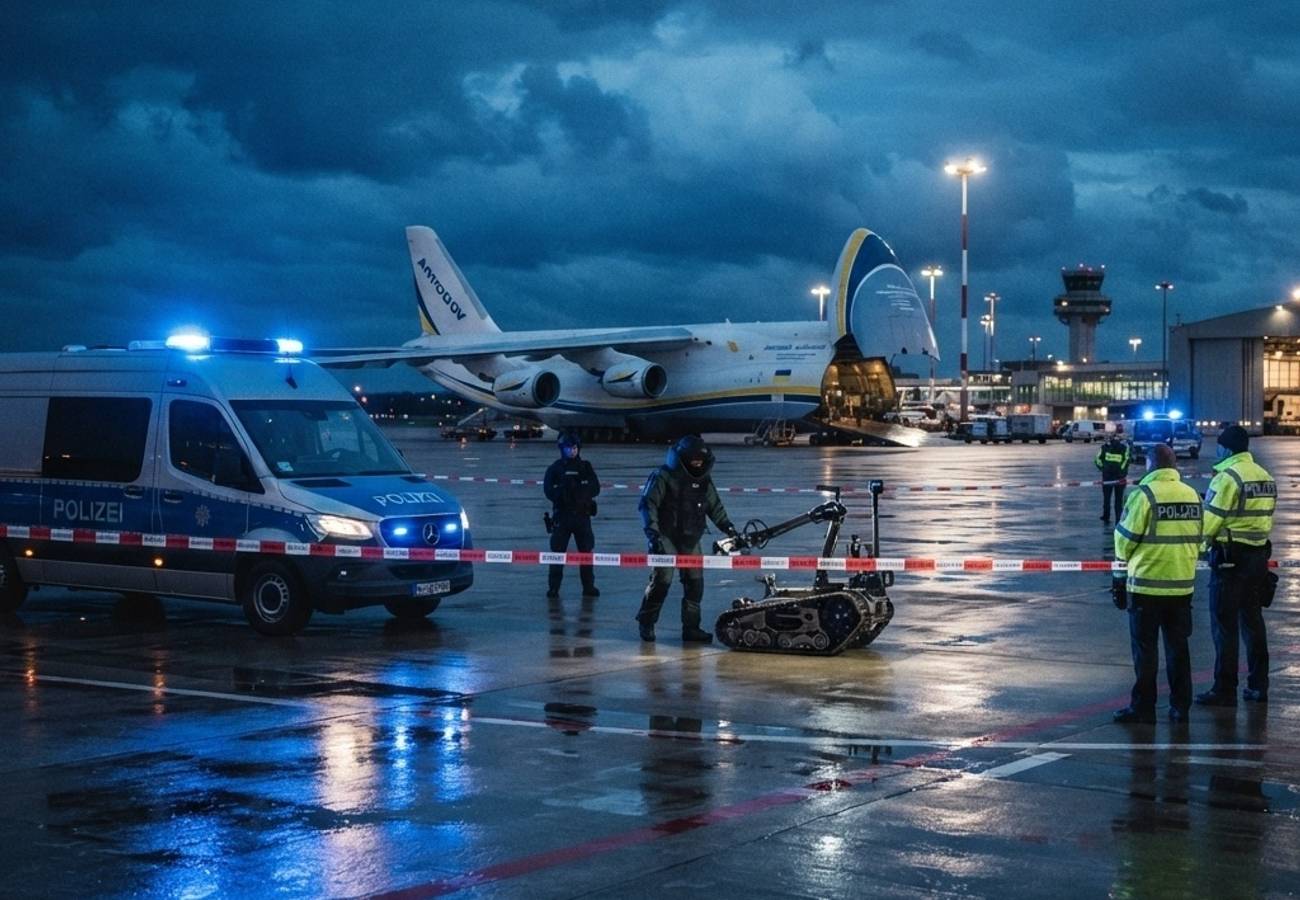
Image generated by AI
[Leipzig, August 6, 2026] — A high-security alert paralyzed operations at Leipzig/Halle Airport (LEJ) after an employee discovered an explosive-laden drone within a restricted cargo zone, forcing the immediate suspension of flights and the deployment of bomb disposal units.
The incident sent shockwaves through Germany's aviation sector, as the discovery took place in one of the most sensitive operational areas of the facility. Authorities immediately sealed off the restricted cargo section, initiating a large-scale security operation to neutralize the device and investigate the breach of protected airspace.
Emergency Response to Explosive Device Discovery
The security breach unfolded when a staff member identified a suspicious unmanned aerial vehicle (UAV) located inside the restricted cargo section of Leipzig/Halle Airport. Reports indicate the drone was positioned in close proximity to active cargo operational zones, specifically near an area utilized by a Ukrainian Antonov aircraft.
Upon discovery, airport management activated emergency protocols, leading to the rapid deployment of police units and specialized security teams. The situation escalated when initial assessments confirmed the drone was equipped with an explosive device, posing a direct threat to personnel and aircraft.
To mitigate the risk, bomb disposal experts were brought in to manage the scene. Using a specialized disposal robot, technicians were able to safely inspect the UAV and remove the detonator. Officials later confirmed that the device was successfully neutralized and that no passengers, employees, or aircraft were harmed during the operation.
Operational Paralysis at Leipzig/Halle Airport
The detection of the explosive device led to a total temporary halt of flight operations. This shutdown affected both scheduled passenger services and critical cargo movements, as security teams conducted a comprehensive sweep of the affected sectors to ensure no secondary devices were present.
The suspension of activities caused immediate ripple effects across the region:
- Flight Cancellations: Multiple departures and arrivals were scrubbed from the schedule.
- Diversions: Aircraft already in the air were redirected to alternative German airports to avoid the closed airspace.
- Logistics Delays: As a primary European freight hub, the closure disrupted international supply chains and time-sensitive cargo shipments.
Leipzig/Halle is recognized as one of the busiest cargo gateways in Europe. Because it serves as a central base for global logistics and supports specialized transport missions—including those for Ukrainian aviation—any operational downtime has significant implications for international trade and diplomatic logistics.
DHL Cargo Aircraft Encounter Adds Complexity
While security teams were managing the drone site, a separate but temporally linked incident occurred involving a DHL cargo aircraft. Reports indicate that a DHL plane encountered an unidentified object shortly after the initial airport disruptions.
The aircraft managed to land safely at another German airport, where subsequent inspections revealed minor structural damage. Aviation investigators are currently analyzing whether this object was a second drone or a related piece of debris. While authorities have not yet officially confirmed a direct link between the explosive drone and the DHL aircraft encounter, the possibility of multiple UAVs operating near the hub has heightened the level of alarm among security officials.
Federal Investigation into Security Breach
German prosecutors and specialist security agencies have launched a formal investigation into the origin and intent of the drone. The primary focus of the probe is to determine how a device carrying explosives managed to penetrate the high-security perimeter of a protected aviation facility.
The investigation is currently focusing on four critical vectors:
- Technical Analysis: Examining the drone's construction and the sophistication of its guidance system.
- Flight Path Reconstruction: Attempting to identify the launch location and the trajectory used to enter the restricted zone.
- Explosive Composition: Analyzing the chemical makeup of the detonator and payload to trace potential sources.
- Pattern Recognition: Checking for links to other security incidents involving drones at critical infrastructure sites across Europe.
No suspects have been named, and no specific group has claimed responsibility for the incident. However, the case is being treated as a severe threat to national infrastructure.
The Strategic Vulnerability of Cargo Hubs
The incident underscores the unique vulnerabilities of cargo-centric airports. Unlike passenger terminals, which have concentrated security checkpoints, cargo hubs like Leipzig/Halle operate across vast areas with 24/7 activity and massive volumes of freight moving in and out.
The airport's role in supporting Ukrainian cargo aviation, particularly the use of large Antonov aircraft, adds a layer of geopolitical significance to its security. Any disruption here does not just affect travel; it affects the flow of critical aid and strategic materials across the continent.
Escalating Global Drone Threats to Aviation
This event is not an isolated occurrence but part of a growing global trend of unauthorized drone activity near airports. The accessibility of sophisticated UAV technology has created a new frontier of risk for aviation authorities.
Small drones can cause catastrophic failures if ingested into aircraft engines or can disrupt flight paths by forcing ground stops. In response, airports worldwide are shifting their investment toward counter-drone technology, including:
- Advanced Radar Systems: Capable of detecting small, low-flying objects.
- Signal Jamming: Technology designed to sever the link between a drone and its operator.
- Enhanced Perimeter Surveillance: Using AI-driven cameras to spot unauthorized launches.
The rapid neutralization of the threat at Leipzig/Halle prevented a potential disaster, but the breach proves that current security perimeters may be insufficient against evolving UAV threats.
Related Travel Guides
Disclaimer
This article is for informational and educational purposes only. It does not constitute legal, financial, or professional advice. While we strive to provide accurate and up-to-date information, travel policies, regulations, and conditions change rapidly. Always verify information with official sources before making travel decisions. Nomad Lawyer makes no representations about the accuracy, reliability, completeness, or suitability of the information provided. Readers should consult qualified professionals for advice specific to their circumstances. The views expressed in this article are those of the author and do not necessarily reflect the views of Nomad Lawyer.
Raushan Kumar
Founder & Lead Developer
Full-stack developer with 11+ years of experience and a passionate traveller. Raushan built Nomad Lawyer from the ground up with a vision to create the best travel and law experience on the web.
Learn more about our team →