
Waterway Crisis: Low River Levels Disrupt European Cruise Tourism
A severe summer drought pushes the Rhine, Danube, Moselle, and Main Rivers to critical lows, forcing cancellations and ship swaps.

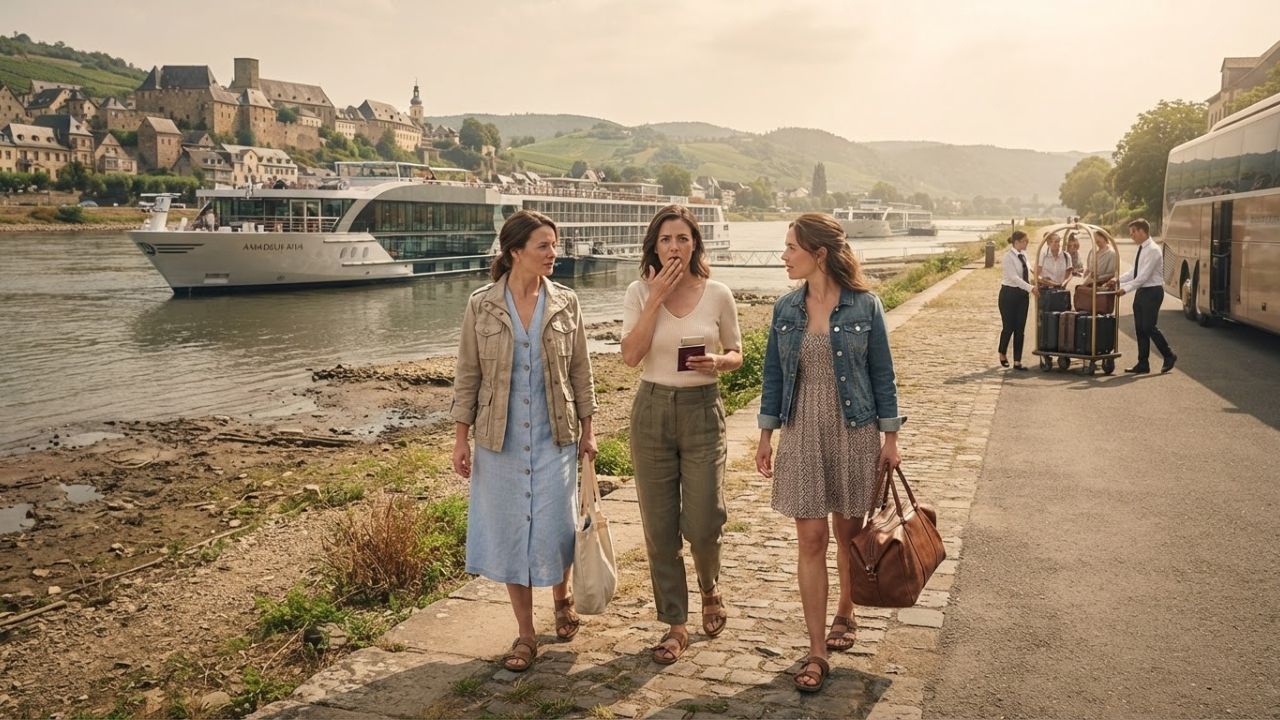
Image generated by AI
Record low water levels across Europe's major rivers—including the Rhine, Danube, Moselle, and Main—have triggered travel disruptions for summer 2026, forcing operators to execute cancellations, ship swaps, and coach transits.
European river cruising is facing operational challenges due to extreme heatwaves and severe drought conditions across Central and Eastern Europe. These dry spells have reduced water levels, turning what was once a relaxed holiday experience into an operationally complex task for travel operators. This reduction in river depth is closely linked to the winter season's low snowpack in the European Alps, which serves as the primary regional water source for major Central European rivers during summer melt periods.
For the visitor, the real impact is the potential disruption to planned itineraries, with some stretches of water becoming too shallow to support standard passenger vessels. Hydrological departments, such as the German Federal Institute of Hydrology (BfG) and the European Commission Drought Observatory, have reported that a difference of only 10 to 20 centimeters in river clearance can block ship transits. This forces cruise operators to prioritize safety and rapidly adapt their travel plans to avoid grounding risks, ensuring that passenger safety remains the paramount operational concern.
Critical Bottlenecks Along the Rhine and Danube Rivers
The current dry spell has impacted major river networks across Germany, Austria, Hungary, and Romania:
- The Danube River: Sections of the river have dropped to around 30-year lows. Navigational challenges are especially acute along the route between Regensburg and Passau in Germany, and near Budapest, Hungary, where larger vessels struggle to navigate shallow stretches.
- The Rhine River: The critical Kaub gauge area in Germany, situated between Koblenz and Rüdesheim, remains a critical bottleneck. Cruisers require sufficient depth to pass this sensitive section, forcing lines to monitor gauge levels daily. When the Kaub water level drops below 40 centimeters, most large cabin ships can no longer cross safely, forcing operators to halt sailing or enact ship swaps.
- The Moselle and Main Rivers: These connecting routes, which link historic cities and vineyards, have also experienced low water clearance, causing scheduling delays that impact the wider Rhine-Main-Danube canal network.
Emergency Strategies: Ship Swaps and Itinerary Adjustments
To minimize the impact on passenger vacations, cruise lines are deploying active contingency systems rather than resorting to immediate cancellations:
- The Ship Swap Method: Viking River Cruises utilizes identical sister ships positioned on opposite sides of a shallow bottleneck. Passengers are transferred by private luxury motorcoach around the dry section and board the matching sister ship on the other side, continuing their journey with identical cabin layouts and transferred luggage. This method allows travelers to continue their vacation with minimal interruption, as the onboard crew, menus, and cabin styles are completely synchronized.
- Shallow-Draft Vessels: Operators like AmaWaterways utilize specialized shallow-draft ships designed to navigate lower water clearances, adjusting itineraries as needed.
- Hybrid Cruise-Land Touring: Lines like Tauck and Scenic combine cruise segments with coach transportation and luxury hotel stays to replace blocked river passages, preserving the sightseeing itinerary.
Fleet Adaptations and Passenger Contingency Operations
For routes where alternative arrangements are impossible, operators are implementing cancellation and rebooking policies. Riviera Travel has cancelled 10 European river departures and modified six itineraries, offering passengers 100% cash refunds, rebookings for 2026 or 2027, or transfers to unaffected rivers like the Douro in Portugal, or the Seine and Rhône in France.
Other lines, including Uniworld, have cancelled selected sailings while offering flexible options. Cruisers are advised not to cancel voluntarily before receiving official updates, as doing so may trigger booking penalties. Instead, lines are monitoring conditions closely and issuing staged updates to booked guests at 14 days, 7 days, and 72 hours before departure, ensuring transparent communication. This helps travelers and travel booking agents make informed choices regarding their trip without facing unexpected surprises at the pier.
Environmental Footprints and Community Impacts of Low Water Levels
The low-water crisis highlights the connection between riverine tourism and local economies. Cities like Passau, Regensburg, Vienna, and Budapest rely on cruise visitors to support local businesses, including hotels, restaurants, museums, and retailers.
At the same time, operators are increasing their focus on ecological footprint reduction, recognizing that low river levels place stress on fragile riverbed ecosystems. Supporting eco-tourism initiatives and respecting local environmental guidelines helps protect these historic waterways. By coordinating with regional conservation authorities, the cruise industry can manage passenger flows responsibly during dry spells. This includes using low-emission shore power while docked and coordinating with local wildlife bodies to avoid disturbing nesting waterbirds along shallow mudflats.
Destination Expert Insider Tips for Passau Port Calls
To help travelers experience the historical heritage of Passau (the "City of Three Rivers") safely and responsibly during low-water transits, local destination specialists recommend the following insider tips:
- Time Your Visit for Shoulder Months: To experience Passau with fewer crowds and more comfortable walking weather, choose the shoulder months of March to May or September to November. During these periods, the local temperature is highly comfortable, and hotel rates in the city are significantly lower.
- Explore St. Stephen’s Cathedral Respectfully: Dom St. Stephan features the world's largest cathedral organ with 17,974 pipes. Entrance is free, but visitors must respect cathedral etiquette by maintaining silence, dress appropriately with covered shoulders and knees, and avoiding photos during active religious services.
- Wear Cobblestone-Ready Footwear: Passau's Old Town is famous for its cobblestone streets and steep walks, such as the path leading to the Veste Oberhaus fortress. Wear comfortable, supportive walking shoes, carry a reusable water bottle, and bring an umbrella for unpredictable Bavarian weather.
- Use the City Bus Network Effectively: While the Old Town is highly walkable, public buses operated by Stadtwerke Passau connect outer districts and the main train station. Buy your ticket directly from the driver upon boarding, and use real-time transit apps to track schedules.
- Support Local Riverside Cafes: During ship swaps or boarding delays, explore the cafes around Residenzplatz. Order a cup of coffee and ask for the house cake or local Bavarian pastries to support the city's independent business operators directly, helping sustain Passau's local economy, regional bakeries, and family-owned restaurants during slow low-water tourism periods.
Long-Term Resiliency Planning for Riverine Cruise Operations
The long-term outlook for European river cruising depends on the industry's ability to adapt to climate patterns. Similar to the severe drought of 2018, the 2026 low-water crisis has accelerated investments in climate-resilient fleet designs.
By designing shallow-draft hulls, expanding identical sister-ship fleets for ship swaps, and utilizing advanced weather monitoring, operators can ensure that river travel remains a viable and luxury experience. Collaborating with regional environmental agencies and local port authorities ensures that cruising supports coastal economies, protects sensitive riverbed habitats, and maintains the safety and comfort of global travelers along Europe's historic waterways. Furthermore, river cruise lines are working with European water management authorities to support sustainable river dredging and canal lock optimizations that balance shipping navigation with the preservation of natural river dynamics.
Related Travel Guides
Disclaimer
This article is for informational and educational purposes only. It does not constitute legal, financial, or professional advice. While we strive to provide accurate and up-to-date information, travel policies, regulations, and conditions change rapidly. Always verify information with official sources before making travel decisions. Nomad Lawyer makes no representations about the accuracy, reliability, completeness, or suitability of the information provided. Readers should consult qualified professionals for advice specific to their circumstances. The views expressed in this article are those of the author and do not necessarily reflect the views of Nomad Lawyer.
Kunal K Choudhary
Co-Founder & Contributor
A passionate traveller and tech enthusiast. Kunal contributes to the vision and growth of Nomad Lawyer, bringing fresh perspectives and driving the community forward.
Learn more about our team →