
European Tourism Under Strain as Oil Prices Spike Across Key Destinations
Rising oil prices are driving up travel costs across Europe. Diesel and petrol spikes in Poland and Greece threaten ferry, flight, and road tourism spending.

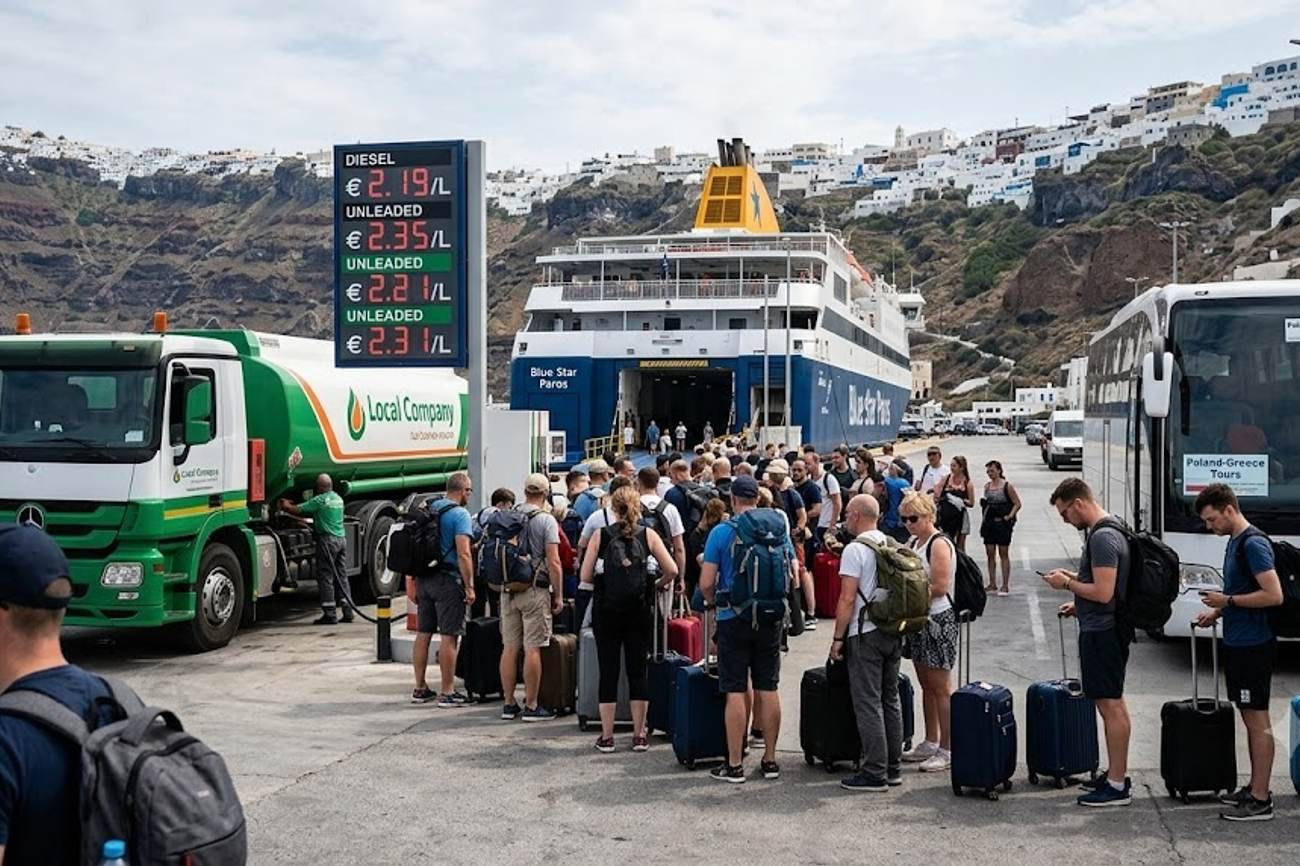
Image generated by AI
Energy Costs Threaten European Travel Budgets
A sharp rise in crude oil prices, driven by geopolitical instability in the Middle East, is creating significant economic pressure on the European tourism sector. The volatility is manifesting as a direct increase in operating costs for airlines, cruise lines, and road transport providers, potentially squeezing consumer spending.
Recent data from Eurostat reveals that fuel and lubricant prices for personal transport within the European Union climbed 16.9% year-on-year as of July 2026. On a monthly basis, petrol prices rose by 4.7% and diesel by 4.3%, creating a ripple effect across the entire tourism ecosystem.
The impact extends beyond the pump, affecting critical infrastructure including airport transfers, rental car fleets, and the supply chains that sustain hotels and restaurants.
Poland and Greece Face Steepest Short-Term Hikes
Poland has become a primary hotspot for fuel inflation. The country recorded the highest monthly increases in the EU, with petrol jumping 17.2% and diesel rising 13.4%. This surge directly threatens the viability of coach tourism and long-distance bus services, as well as domestic travel to the Baltic coast and mountain regions.
Greece is facing similar pressures, with diesel prices climbing 12.1% in one month. Given the nation's reliance on maritime transport, this spike is particularly critical. The ferry networks connecting the mainland to hubs like Santorini, Mykonos, Crete, and Rhodes are highly sensitive to marine fuel costs, which may lead to higher ticket prices for island-hopping travelers.
Broader Regional Impacts on Mobility
The fuel crisis is not isolated to Eastern and Southern Europe; it is affecting major source markets and transit hubs:
- Germany: As a primary source of European tourists, Germany's diesel and petrol hikes (12.7% and 11% respectively) may reduce discretionary spending on holidays.
- Spain: A 7.1% monthly increase in petrol is impacting airport transfers and rental car costs, particularly in the Balearic and Canary Islands.
- Italy: Rising costs are putting pressure on Mediterranean cruise operations and domestic ferry networks.
- Northern Europe: The Netherlands and Finland have seen massive yearly increases of 22% and 20.5% respectively, complicating logistics and aviation supply chains.
Fuel Price Surge by Country (July 2026)
| Country | Fuel Price Increase | Primary Tourism Impact |
|---|---|---|
| Poland | Diesel +13.4%, Petrol +17.2% (Monthly) | Road travel, coach tourism, domestic costs |
| Germany | Diesel +12.7%, Petrol +11% (Monthly) | Transport operators, travel spending |
| Greece | Diesel +12.1% (Monthly) | Island tourism, ferries, rental cars |
| Spain | Petrol +7.1% (Monthly) | Tourism mobility costs |
| Romania | Fuel +24.2% (Yearly) | Transport and travel expenses |
| Lithuania | Fuel +22.9% (Yearly) | Logistics and supply costs |
| Bulgaria | Fuel +22.2% (Yearly) | Travel operating expenses |
| Netherlands | Fuel +22% (Yearly) | Shipping, aviation, logistics |
| Finland | Fuel +20.5% (Yearly) | General transport costs |
| Italy | Fuel +12.5% (Yearly) | Cruise, ferry, and transport pressure |
| Ireland | Fuel +3.2% (Yearly) | Aviation exposure |
Key Takeaways
- Transport Sensitivity: Tourism is uniquely vulnerable to oil shocks because it relies on high-fuel activities: flights, cruises, ferries, and rental cars.
- Regional Hotspots: Poland and Greece are currently experiencing the most aggressive monthly price spikes.
- Operational Strain: Beyond ticket prices, hotels face indirect costs through more expensive food deliveries and staff transportation.
- Consumer Risk: Sustained price hikes in major source markets like Germany could lead to a reduction in overall holiday bookings.
FAQ
How do rising oil prices affect the average tourist? Travelers may see higher prices for airline tickets, ferry crossings, and car rentals. Additionally, the cost of "on-the-ground" experiences, such as guided coach tours, is likely to increase.
Which European destinations are most at risk? Island-heavy destinations like Greece and Spain are most vulnerable due to their reliance on ferries and rental vehicles for tourist mobility.
Why are some countries seeing yearly increases while others see monthly? Some nations, like Romania and Lithuania, are experiencing long-term inflationary trends (yearly), while Poland and Greece are facing acute, short-term shocks (monthly) due to current geopolitical volatility.
Related Travel Guides
Disclaimer
This article is for informational and educational purposes only. It does not constitute legal, financial, or professional advice. While we strive to provide accurate and up-to-date information, travel policies, regulations, and conditions change rapidly. Always verify information with official sources before making travel decisions. Nomad Lawyer makes no representations about the accuracy, reliability, completeness, or suitability of the information provided. Readers should consult qualified professionals for advice specific to their circumstances. The views expressed in this article are those of the author and do not necessarily reflect the views of Nomad Lawyer.
Raushan Kumar
Founder & Lead Developer
Full-stack developer with 11+ years of experience and a passionate traveller. Raushan built Nomad Lawyer from the ground up with a vision to create the best travel and law experience on the web.
Learn more about our team →