
Europe Flight Chaos: 55 Cancellations, 1,086 Delays Hit April Network
Fifty-five flight cancellations and 1,086 delays crippled European aviation on April 12, 2026, with Moscow, London, Munich and Copenhagen bearing the brunt of cascading network disruptions.

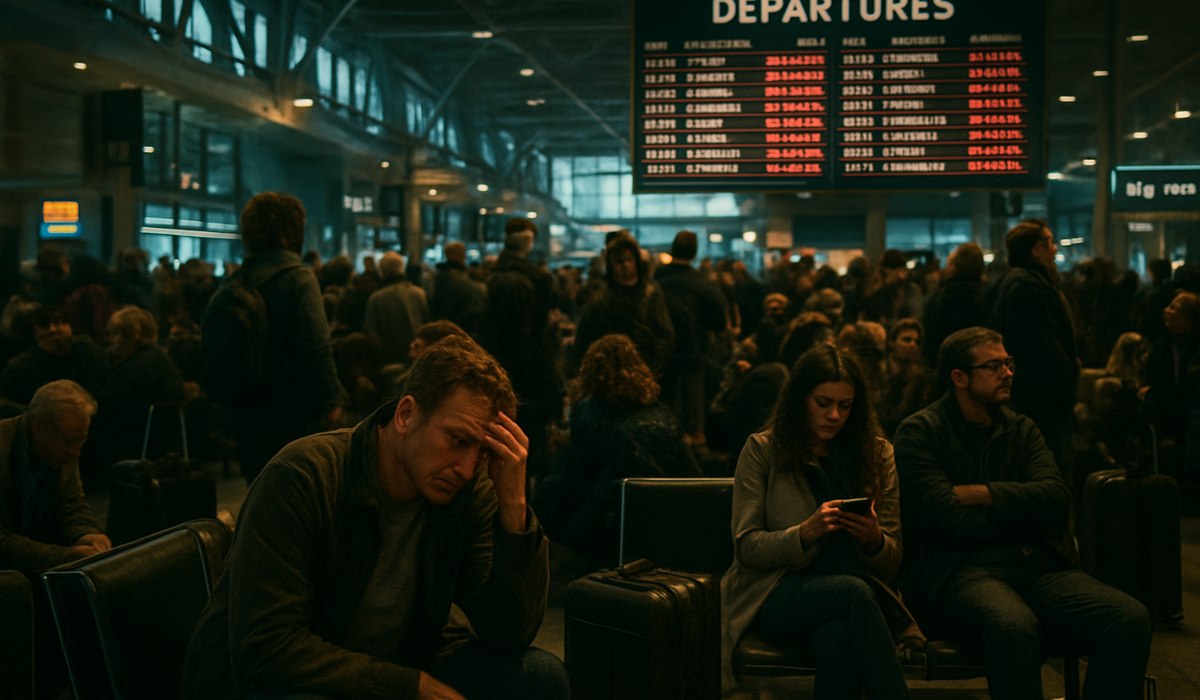
Image generated by AI
Europe Flight Chaos Paralyzes Major Aviation Hubs
Fifty-five cancellations and 1,086 delays swept across European aviation today, with Moscow, London, Munich, and Copenhagen experiencing the most severe disruptions. The April 12 meltdown signals another volatile day in early spring aviation, as interconnected European flight networks proved vulnerable to cascading operational failures. Airlines including Rossiya, KLM, SAS, and ITA Airways reported significant schedule pressure, leaving thousands of passengers stranded or facing substantial delays on both intra-European and intercontinental routes.
The Numbers: 55 Cancellations and 1,086 Delays Hit Europe
Early April continues its pattern of elevated volatility across European airspace. Today's operational data reveals a snapshot of disruption that extends far beyond isolated incidents at single airports. The 55 outright cancellations represent flights withdrawn from service entirely, while the 1,086 delayed movements indicate flights that departed or arrived significantly behind schedule.
This ratio—roughly 20 cancellations for every 1,000 operations—demonstrates that while European networks maintain resilience against catastrophic shutdowns, the accumulation of small delays creates exponential problems downstream. Aircraft running late cannot deplane passengers, refuel, and board new travelers on schedule. Crew members miss their assigned rotations. Connecting passengers lose their onward flights. Within hours, a single delayed aircraft cascades into dozens of secondary cancellations across the network.
The disruption pattern reflects both systemic and temporary factors: congested airspace during peak travel windows, tight turnaround schedules at major hubs, and seasonal weather still affecting spring operations across northern and central Europe.
Which Airlines and Hubs Were Most Affected
Moscow's aviation infrastructure faced exceptional strain, with Sheremetyevo, Domodedovo, and Vnukovo airports all reporting backed-up departure queues. Rossiya Airlines, which operates dense frequency on domestic Russian routes, experienced particularly visible impacts. The airline's high-utilization model—maximizing aircraft turnarounds—leaves minimal buffer when ground handling delays or air traffic control holds occur.
London's airports continued their role as European disruption epicenters. Heathrow, Gatwick, and smaller London facilities handle peak departure waves during early morning and evening bank windows. Even 15-minute ground delays multiply across 200+ daily movements. England's contribution to today's 1,086 delayed flights represented a substantial portion, with spillover into transatlantic connection banks affecting North American-bound passengers.
Munich emerged as a focal point for central European delays. Germany's second-largest hub operates as a critical transfer point for eastern, northern, and southern European connections. Seasonal weather, combined with busy transfer traffic and staffing challenges on the ground, created compounding operational friction. The hub's tight ground-handling windows left no recovery margin.
Copenhagen served as the pressure point for Scandinavian operations. SAS relies heavily on the Danish capital as a northern European hub. Crew scheduling challenges and congested departure sequences made schedule recovery nearly impossible once delays began accumulating. Passengers attempting same-day connections across multiple northern European cities faced the highest rebooking complexity.
KLM operations suffered ongoing sensitivity to airspace congestion and schedule compression originating from Amsterdam Schiphol, while ITA Airways and several European low-cost carriers navigated packed peak schedules with minimal turnaround redundancy.
The Cascade Effect: How One Hub's Delays Ripple Across the Network
Europe's airline network operates as an interconnected ecosystem where delays don't remain localized. A 45-minute departure delay in Moscow doesn't end in London—it continues to Copenhagen, affects onward flights to Stockholm, and cascades into Frankfurt connections. This cascading principle explains why 1,086 delays originated from operational failures at just four major hubs.
Modern airline scheduling maximizes aircraft utilization by designing tight connections between flights. An aircraft arriving 30 minutes late cannot deplane passengers, refuel, clean, restock catering, and board new passengers within the standard 45-minute turnaround window. That aircraft now departs 30 minutes late, impacting its next route. If that next route involves passengers connecting to a third flight, those passengers miss their connection, triggering rebooking costs, hotel accommodations, and compensation claims.
Hub airports amplify this effect exponentially. Munich handles 1,200+ daily movements, with substantial portions representing connections. One delayed inbound flight from Berlin affects 200+ connecting passengers who now miss their Rome, Barcelona, or Istanbul flights. Suddenly, that single Berlin-Munich delay becomes five or six secondary cancellations as airlines cancel low-load connections they cannot fill from standby passengers.
Real-time flight tracking via FlightAware reveals this cascade pattern clearly. Delays in morning windows (6 AM–10 AM) propagate into evening disruptions (6 PM–11 PM) as aircraft work through their daily rotations. Pressure accumulates rather than dissipates.
What This Signals About Early April Aviation Volatility
April disruption patterns across 2026 suggest structural challenges beyond seasonal weather. The combination of elevated passenger demand (Easter holidays, spring break travel), constrained crew availability (ongoing post-pandemic staffing gaps at some carriers), and tight airport slot allocations creates a fragile equilibrium.
Industry observers note that European airspace coordination remains vulnerable to minor disruptions. Unlike North American aviation, where Federal Aviation Administration traffic management can redistribute aircraft across massive geographic distances, European airspace involves 50+ national air traffic control providers with varying capacity policies. A weather delay in one airspace sector cannot easily reroute into adjacent sectors.
Additionally, several European airports operate near or at slot capacity during peak windows. London Heathrow, Munich, and Copenhagen cannot absorb displaced aircraft from minor disruptions. When delays occur, they accumulate vertically (stacking aircraft in holding patterns) rather than horizontally (rerouting). This operational reality means April volatility will likely continue through mid-month, with particular sensitivity during peak travel windows.
The FAA and European Union Aviation Safety Agency coordinate on transatlantic operations, but divergent slot allocation philosophies create choke points during busy periods. Nomad lawyers and remote workers relying on European connectivity should anticipate continued disruption risk through mid-April.
Traveler Action Checklist
If your European flight occurs during April peak windows, implement these protective measures:
-
Check flight status before departure – Visit FlightAware 2 hours before departure to confirm your flight remains scheduled and review real-time airport conditions.
-
Arrive 3 hours early for international flights – Extended security queues and ground delays compound during disruption periods; arriving early provides rebooking flexibility if your flight experiences changes.
-
Verify your airline's disruption policies – Contact customer service to understand compensation eligibility, hotel accommodation terms, and rebooking guarantees before you travel. Document everything in writing.
-
Rebook proactively for connections – If your first flight experiences a 30+ minute delay, immediately contact your airline to secure a standby seat on the next available connection rather than waiting for an automated rebooking.
-
Carry essential items in your personal bag – Checked luggage may not make delayed connections; maintain medication, valuables, and critical documents in your carry-on.
-
Know your passenger rights – The U.S. Department of Transportation provides Air Consumer Protection guidelines; EU passengers entitled to EU261 compensation should document delays and maintain boarding passes.
-
Stay flexible on rebooking – During disruptions, accepting alternative routing (even if it adds 3–4 hours) often succeeds better than insisting on your original flight, which may remain delayed or cancelled.
Key Data:
Disclaimer
This article is for informational and educational purposes only. It does not constitute legal, financial, or professional advice. While we strive to provide accurate and up-to-date information, travel policies, regulations, and conditions change rapidly. Always verify information with official sources before making travel decisions. Nomad Lawyer makes no representations about the accuracy, reliability, completeness, or suitability of the information provided. Readers should consult qualified professionals for advice specific to their circumstances. The views expressed in this article are those of the author and do not necessarily reflect the views of Nomad Lawyer.
Preeti Gunjan
Contributor & Community Manager
A passionate traveller and community builder. Preeti helps grow the Nomad Lawyer community, fostering engagement and bringing the reader experience to life.
Learn more about our team →