
Europe Shifts to High-Speed Rail as Rising Fuel Costs and Climate Goals Target Short-Haul Flights in 2026
Rising fuel prices and aggressive climate targets are driving a massive modal shift toward high-speed rail across Europe, led by Germany's network expansion.

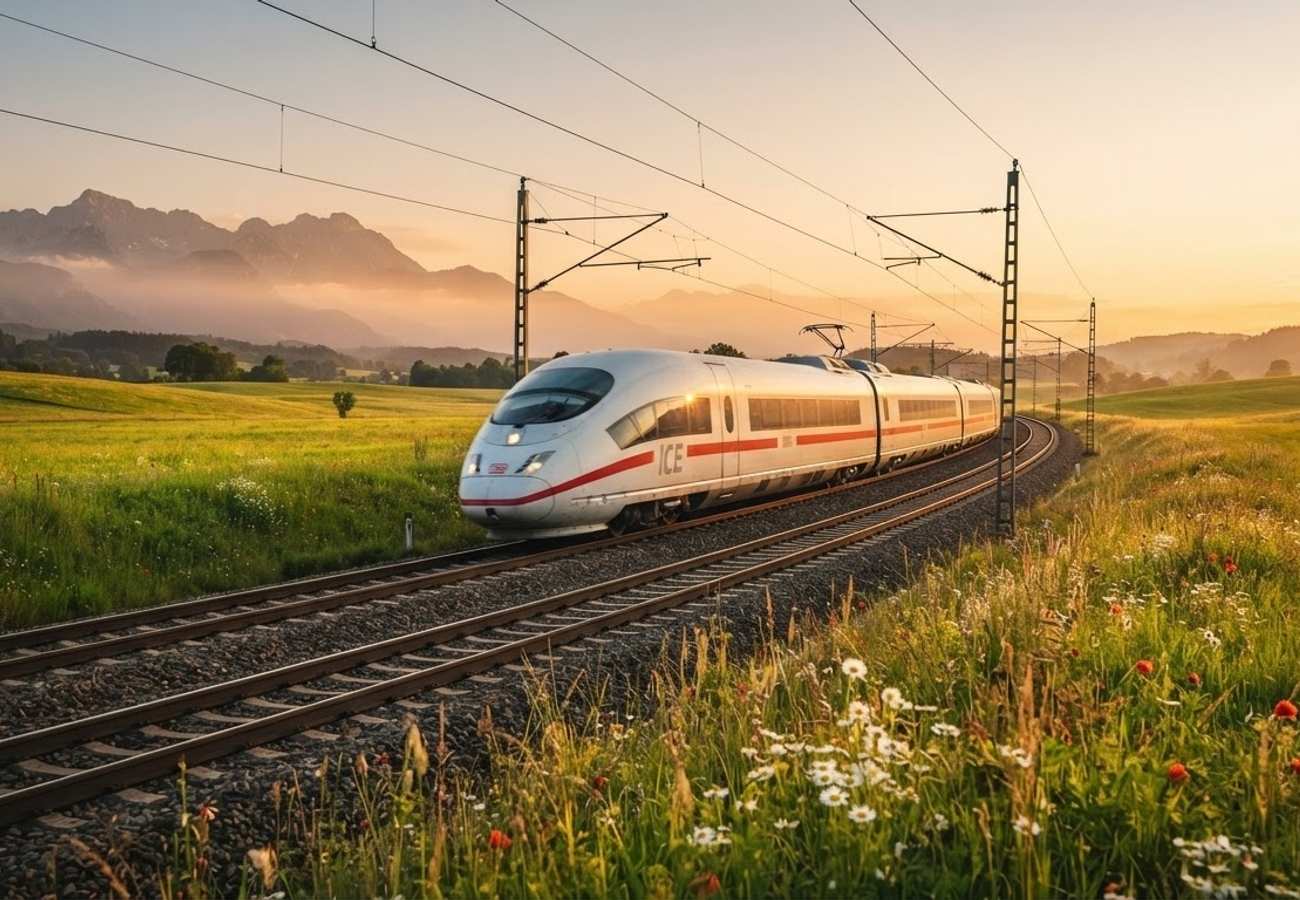
Image generated by AI
Surging fuel expenses and stringent climate mandates are forcing a fundamental redesign of European mobility, with Germany and its neighbors aggressively scaling high-speed rail to replace short-haul aviation and private vehicle use.
The European transport landscape is currently undergoing a systemic transition. As the cost of aviation fuel and petrol climbs, the economic logic that once favored the "low-cost carrier" model is eroding. This shift is not merely a matter of consumer preference but is being driven by institutional policy and a desperate need to meet decarbonization targets.
Fuel Volatility and the Carbon Equation
The economic catalyst for this transition is the rising cost of energy. While aviation has seen a rapid recovery in passenger volumes since the pandemic, the environmental cost has become unsustainable. According to the European Environment Agency, road transport continues to be the primary source of greenhouse gas emissions in the region. In stark contrast, emissions from domestic rail within the European Union have actually decreased since 1990, despite a significant increase in total transport activity.
Data from transport NGOs reveals a staggering efficiency gap: per passenger kilometer, European trains typically emit approximately five times less carbon dioxide equivalent than aircraft on similar routes. This disparity is prompting a regulatory environment where short-haul flights are increasingly viewed as redundant. Industry reports suggest that banning flights on routes where robust rail alternatives exist could drastically lower long-distance mobility emissions without sacrificing regional connectivity.
Germany's Strategic Rail Integration
Germany has positioned itself as the epicenter of this rail revival. The InterCity Express (ICE) network, capable of speeds up to 300 km/h, serves as the primary artery for both north-south and east-west traffic across the continent. Deutsche Bahn has reported a steady increase in demand for both regional and long-distance services, noting that traditional long-distance coach services are losing ground to the efficiency of rail.
A pivotal part of this strategy is the "Deutschlandticket." This flat-fare monthly pass for local and regional transport has fundamentally altered commuter behavior. While the ticket does not extend to the high-speed ICE services, the Federal Transport Ministry indicates that it has significantly boosted ridership and reduced reliance on private cars for daily transit. By simplifying the "first and last mile" of a journey, the ticket encourages travelers to pair regional transit with separate long-distance rail bookings.
The market is also seeing an influx of private competition. Operators like FlixTrain have expanded their footprints on major intercity corridors. By utilizing fast, conventional rolling stock, these private entities are competing on price with both the state-run Deutsche Bahn and budget airlines, offering a third alternative for the cost-conscious traveler.
EU Infrastructure and Cross-Border Connectivity
The European Commission is currently executing an updated high-speed rail action plan designed to integrate fragmented national networks into a unified, seamless system. Through the Trans-European Transport Network (TEN-T) proposals, the EU aims to significantly slash travel times between major hubs by 2030, with some routes expected to be shortened by several hours.
A primary objective is upgrading lines to a minimum speed of 200 km/h and closing critical infrastructure gaps. One of the most anticipated improvements is the corridor between Berlin and Copenhagen. Current data shows the journey takes roughly seven hours; however, ongoing infrastructure projects in Denmark and Germany are expected to bring that time down to approximately four hours.
Similar expansions are occurring across the continent:
- Spain: Renfe has launched high-speed AVE services connecting Barcelona to Toulouse, effectively bridging the Pyrenees.
- Italy & Austria: New high-speed and fast intercity links are being developed to connect Northern Italy and Central Europe.
- France: Increased investment in Mediterranean and Atlantic corridors is aimed at capturing the regional air traffic market.
The Resurgence of Night Trains
Beyond the 300 km/h prestige lines, there is a calculated revival of overnight rail. The European Environment Agency has noted a spike in interest for sleeper services, as passengers seek to avoid the time-consuming procedures of airport security and check-ins while minimizing their carbon footprint.
New and revived routes now link major capitals including Paris, Vienna, Berlin, and Rome. These services are positioned as direct competitors to regional flights, particularly when the total "door-to-door" travel time is calculated. However, this sector faces steeper challenges than high-speed rail. Recent reports from France indicate ongoing disputes regarding subsidy levels and the high operational costs of maintaining sleeper carriages compared to the lean economics of low-cost aviation.
Despite these financial hurdles, research commissioned by European institutions suggests a clear threshold: when a high-speed or fast intercity connection keeps the total journey time under three hours, rail becomes the dominant choice for a substantial portion of former aviation passengers.
Redefining the Travel Experience
The transition to a rail-centric Europe is as much about psychology as it is about steel and electricity. Consumer surveys indicate that the primary barriers to rail adoption are not speed, but the complexity of booking cross-border tickets. Travelers are increasingly demanding unified ticketing systems that allow them to compare and book journeys across different national operators with the same ease as a single airline flight.
From a financial perspective, the structural advantage of rail is widening. As aviation faces tighter carbon taxes and volatile fuel markets, rail's reliance on a decarbonizing electrical grid provides a long-term cost stability that aircraft cannot match.
For the modern traveler, this means the "flight-first" mentality for any journey under 500 kilometers is rapidly disappearing. The combination of Germany's policy experiments, Spain's grid expansion, and the EU's overarching connectivity goals is creating a region where the train is no longer the slow alternative, but the primary choice.
The era of the short-haul flight is fading as Europe bets its future on the rails.
Related Travel Guides
Disclaimer
This article is for informational and educational purposes only. It does not constitute legal, financial, or professional advice. While we strive to provide accurate and up-to-date information, travel policies, regulations, and conditions change rapidly. Always verify information with official sources before making travel decisions. Nomad Lawyer makes no representations about the accuracy, reliability, completeness, or suitability of the information provided. Readers should consult qualified professionals for advice specific to their circumstances. The views expressed in this article are those of the author and do not necessarily reflect the views of Nomad Lawyer.
Preeti Gunjan
Contributor & Community Manager
A passionate traveller and community builder. Preeti helps grow the Nomad Lawyer community, fostering engagement and bringing the reader experience to life.
Learn more about our team →