
Aviation Updates: Etihad Unleashes Massive 494-Seat A380 on Tokyo Route to Shield Premium Travelers from Asian Transit Travel Chaos
Desperate to protect luxury passengers from severe regional hub disruptions, Etihad has deployed its massive A380 directly into Tokyo Narita.

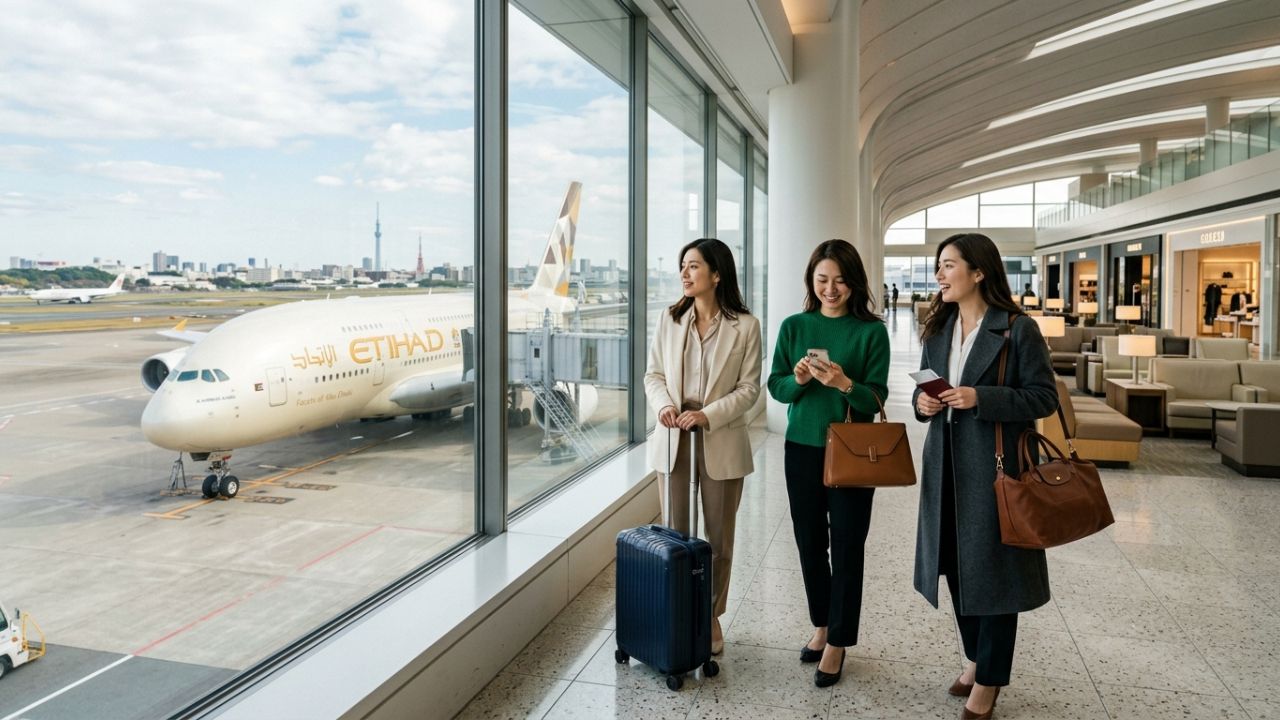
Image generated by AI
Aviation Updates: Etihad Unleashes Massive 494-Seat A380 on Tokyo Route to Shield Premium Travelers from Asian Transit Travel Chaos
As incredibly severe terminal gridlock and massive airspace congestion completely suffocate secondary transit hubs linking the Middle East to East Asia, Etihad Airways is actively executing a massive structural pivot to aggressively shield high-yield passengers from terrifying regional travel chaos.
While incredibly exhausted global passengers desperately navigate an incredibly brutal summer defined by rolling flight cancellations and severe, localized airport disruptions, a massive, highly strategic operational shift is actively unfolding across the incredibly lucrative UAE-Japan corridor. According to the absolute latest breaking airline news, Etihad Airways has officially triggered a monumental, paradigm-shifting transformation of Asian mobility. In a desperate bid to ensure that severe, localized regional hub gridlock does not completely destroy the premium passenger experience, the Abu Dhabi-based mega-carrier has formally launched its massive Airbus A380 superjumbo directly onto the highly contested Tokyo Narita route.
This highly critical aircraft deployment, which officially commenced operations on June 18, 2026, explicitly positions Etihad as a dominant force in transcontinental travel optimization. By aggressively introducing this 494-seat behemoth onto the daily schedule connecting Abu Dhabi International Airport with Japan’s busiest international gateway, the airline is directly combating the massive travel chaos that routinely plagues luxury travelers forced into agonizing, multi-stop Asian itineraries. Because traditional mega-hubs frequently suffer from severe air traffic control restrictions and terminal saturation leading to massive, unannounced delays, this direct superjumbo gateway serves as an absolute lifeline. It completely bypasses the terrifying logistical nightmares that strand thousands of passengers navigating the volatile Middle East to Pacific aviation network.
Aviation Updates: Insulating the Premium Asian Corridor
This massive, highly structural shift in transcontinental transit perfectly illustrates the intense, incredibly fragile nature of modern international mobility.
According to highly detailed, official aviation updates, this strategic A380 deployment is explicitly designed to massively enhance direct premium capacity while aggressively easing terrifying operational pressure on limited global gateways. The activation of Etihad’s eighth A380 strengthens critical air connectivity at an incredibly volatile time when airlines are frantically attempting to rebalance luxury networks. Because connecting flights through third-party hubs frequently suffer from severe security bottlenecks and sudden flight cancellations, the sheer availability of massive, highly segmented aircraft directly bridging the UAE and Japan completely transforms the passenger experience. By actively deploying this incredibly vital commercial capacity, Etihad actively shields its highly vulnerable corporate and luxury leisure passengers from the terrifying threat of sudden, localized logistical breakdowns that routinely destroy expensive Asian itineraries.
Section-Wise Breakdown: Navigating the Global Mega-Hubs
The sudden, massive evolution of these critical transit routes actively impacts several incredibly distinct, highly sensitive regional and international aviation sectors.
The Abu Dhabi Transit Fortress
At the absolute core of this massive operational pivot is the strategic dominance of Abu Dhabi International Airport. Operating as Etihad's primary global interchange fortress, the facility handles massive widebody traffic connecting Europe, Africa, and East Asia. Because secondary European connecting hubs are increasingly crippled by rolling travel chaos stemming from airspace saturation, funneling Japanese outbound traffic directly through Abu Dhabi explicitly guarantees a unified, highly reliable transit model. This massive network optimization allows passengers departing Tokyo to seamlessly access global financial centers without ever touching another congested, disruption-prone European terminal.
The Tokyo Narita Strategy
The ultimate destination for this highly strategic launch heavily targets the absolute most critical business and tourism corridors in Japan. Tokyo Narita remains one of the most strategically valuable aviation markets in Asia, heavily driven by strong inbound tourism and high-value outbound business traffic. By heavily deploying the massive A380 into Narita, Etihad actively guarantees a highly reliable, massively efficient transcontinental experience. This strategic allocation ensures highly efficient slot utilization at a notoriously congested airport, completely bypassing the severe logistical nightmares typically associated with operating multiple smaller, delay-prone frequencies.
Flight Details and Verified Disruption Bypass Matrix
To fully understand the exact structural parameters of this massive operational shift and how the A380's capacity successfully navigates complex regional congestion, the following matrix explicitly details the operational mandate and seating configuration.
Confirmed Etihad A380 Disruption Bypass Matrix
| Superjumbo Operational Metric | Capacity & Scheduling Details | Premium Passenger Impact |
|---|---|---|
| Launch Date | Officially commenced on June 18, 2026. | Immediate structural relief for massive summer Asian transit demand. |
| Operational Schedule | Departs AUH: 21:25 (Arr: 12:45). Departs NRT: 18:00 (Arr: 00:20). | Daily rotations ensuring highly predictable, disruption-proof overnight transit. |
| Total Aircraft Capacity | 494 highly segmented seats. | Massive volume specifically engineered to completely absorb surging corporate demand. |
| Ultra-Luxury: The Residence | 3-room private suite (living room, bedroom, shower). | Debuts in Japan, offering the absolute ultimate airborne sanctuary from terminal panic. |
| First & Business Class | 9 First suites & 70 Business seats (upper deck). | Elite privacy heavily avoiding legacy airport disruptions. |
| Economy & Amenities | 415 upgraded Economy seats, The Lobby lounge, High-speed Wi-Fi. | Ensures complete connectivity and comfort even during extreme operational delays. |
Data explicitly reflects the massive, highly structural operational shift designed to flawlessly execute luxury passenger decentralization, directly forcing legacy transit hubs to reevaluate their regional dominance.
Passenger Impact: The Escape from Asian Gridlock
For the highly demanding passengers actively engaged in this massive UAE-Japan mobility shift, traditional, highly congested regional transfer structures are frequently viewed as completely terrifying.
The massive 494-seat A380 significantly improves long-term travel convenience for thousands of incredibly exhausted corporate executives and high-net-worth tourists. Instead of relying absolutely solely on deeply congested, highly unpredictable connecting aircraft—where sudden political restrictions and massive flight cancellations can completely ruin a journey—travelers now gain a highly secure, incredibly efficient ultra-luxury access point. By actively utilizing this massive aircraft, particularly groundbreaking products like The Residence, passengers completely bypass the terrifying, anxiety-inducing reality of severe, rolling airport disruptions inside foreign transit terminals, significantly reducing their physical fatigue and heavily improving their onboard productivity.
Industry Analysis: The Economics of Superjumbo Resurgence
Aviation structural analysts strictly point out that this massive, multi-national operational shift perfectly illustrates the extreme, highly vital importance of heavily optimized flagship aircraft deployment.
Aviation data explicitly indicates that massive national carriers like Etihad are absolutely desperate to secure high-yield luxury revenue to actively combat the terrifying reality of regional transit saturation. Industry observers strongly view this A380 deployment as the absolute ultimate catalyst for broader Asia-Middle East connectivity. When international gate slots are tightly constrained by legacy hub congestion, introducing an entirely direct, high-capacity premium route completely destroys the reliance on fragile connecting networks. According to global aviation experts observing this phenomenon, this is no longer about simply adding seats; it is about completely controlling premium travel flows. By aggressively establishing this operational foundation, Etihad absolutely ensures that it maintains a highly lucrative grip on the Tokyo corridor, completely insulating its most valuable passengers from the unpredictable delays that violently plague competitor networks.
Conclusion: A Highly Insulated International Future
The massively evolving infrastructure dynamics directly defining Tokyo's integration into the Etihad global network violently reflect a much broader, highly critical structural transformation currently dominating how Middle Eastern aviation is physically structured in 2026.
Rather than violently forcing massive international traffic through deeply congested, highly restricted regional hubs, the Etihad aviation network is incredibly increasingly functioning as a highly capitalized, strategically flexible ecosystem. As the airline aggressively utilizes this massive A380 deployment to permanently alter its Japanese capacity, travelers actively navigating the incredibly busy Asian sector must absolutely remain highly vigilant. To actively survive potential travel chaos during this massive summer phase, passengers must aggressively monitor all breaking aviation updates, actively utilize these newly established massive direct flights, and perfectly understand that escaping modern airport disruptions fundamentally requires booking ultra-luxury, high-capacity itineraries the exact second they are commercially available.
Key Takeaways
- Massive Superjumbo Deployment: Etihad Airways has officially launched its eighth Airbus A380 directly onto the Abu Dhabi–Tokyo Narita route.
- Launch Timeline: The highly anticipated 494-seat aircraft officially commenced daily operations on June 18, 2026.
- Ultra-Luxury Sanctuary: The legendary three-room private suite, The Residence, debuts in Japan, offering an absolute escape from terminal congestion.
- Premium Segmentation: The upper deck features 9 First Class suites and 70 Business Class seats, guaranteeing elite isolation during severe airport disruptions.
- Bypassing Congestion: The massive direct capacity is explicitly engineered to massively reduce absolute reliance on deeply congested, disruption-prone connecting hubs, effectively preventing severe travel chaos.
- Passenger Survival Strategy: High-yield corporate and luxury travelers are strictly advised to aggressively book this massive A380 route to completely avoid the severe flight cancellations and massive security gridlock associated with standard Asian regional transits.
Related Travel Guides
Massive UAE Visa Bombshell: Strict New 30-Day Escape Window Announced
Travel Chaos Cripples Spain as Iberia and Ryanair Suffer 1,079 Delays
Disclaimer
This article is for informational and educational purposes only. It does not constitute legal, financial, or professional advice. While we strive to provide accurate and up-to-date information, travel policies, regulations, and conditions change rapidly. Always verify information with official sources before making travel decisions. Nomad Lawyer makes no representations about the accuracy, reliability, completeness, or suitability of the information provided. Readers should consult qualified professionals for advice specific to their circumstances. The views expressed in this article are those of the author and do not necessarily reflect the views of Nomad Lawyer.
Preeti Gunjan
Contributor & Community Manager
A passionate traveller and community builder. Preeti helps grow the Nomad Lawyer community, fostering engagement and bringing the reader experience to life.
Learn more about our team →