
Erdödy Castle in Kerestinec Reopens Near Zagreb After €13 Million Restoration, Bringing Centuries of Croatian History Back to Life
Erdödy Castle in Kerestinec Reopens Near Zagreb After €13 Million Restoration, Bringing Centuries of Croatian History Back to Life

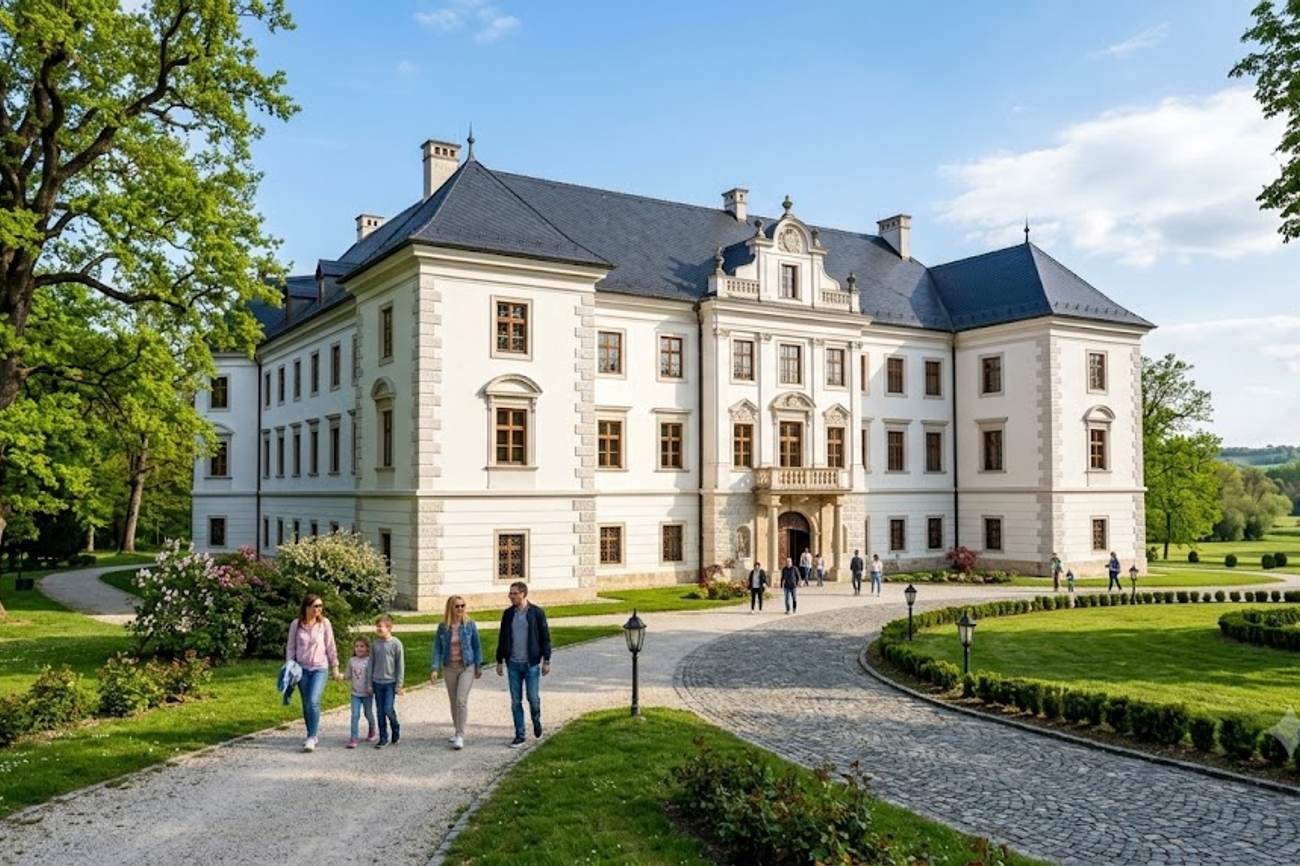
Image generated by AI
While most visitors to Croatia flock to the coastal walls of Dubrovnik, a massive €13 million restoration project just 11 miles from Zagreb has revived a fortress that served as both a Renaissance stronghold and a WWII internment camp. The Erdödy Castle, which officially reopened its doors on September 14, 2026, is not a static museum but a living cultural hub where the local community now learns music and borrows books within walls that once housed the Yugoslav People's Army.
The Renaissance Revival of Sveta Nedelja
The reopening of Erdödy Castle marks a strategic shift in how Croatia manages its inland heritage. Rather than treating these structures as dormant monuments, the state is experimenting with "active revitalization." The castle has been transformed into a multi-use facility where the schedule changes daily, offering a rotating calendar of educational and recreational programs. This isn't just about tourism; it is about civic integration. The complex now houses a new music school for children and a public library, ensuring that the building remains occupied and maintained by the people of Sveta Nedelja.
This project was a massive undertaking that began in May 2022, spanning three years of intensive labor. The funding was a collaborative effort, drawing from the state budget, Croatia’s National Recovery and Resilience Plan, and the European Union Solidarity Fund. Much of this urgency stemmed from the need for post-earthquake reconstruction following the 2020 disasters in Zagreb and Petrinja. The restoration wasn't merely cosmetic; it involved deep structural stabilization, energy renovations, and the modernization of building services to make a 16th-century fortress viable for 21st-century public use.
What Makes Erdödy Castle Different
Unlike many European castles that are restored to a single "golden age," Erdödy Castle preserves its architectural scars and layers. It began in the early 16th century as a noble manor, but by the 1560s through 1576, Count Petar II Erdödy transformed it into a fortified Renaissance residence. This era left the castle with its signature two-story profile and four cylindrical corner towers, designed for a time when security was a primary concern for the aristocracy.
As the military threats of the region faded by the 18th century, the fortress evolved into a Baroque residential palace. A notable addition from this period is the Chapel of the Blessed Virgin Mary, added to the southern wing in 1735. The building continued to shift in the 19th century, though it suffered significant damage during the Great Zagreb Earthquake of 1880.
The most poignant difference here is the honesty of the restoration. The site does not shy away from its darker 20th-century chapters. In 1941, the castle was utilized as an internment camp by the Ustaše regime. Later, it served as barracks for the Yugoslav People’s Army and the Croatian Army. By integrating these histories—from noble luxury to wartime confinement—the castle serves as a physical timeline of Croatian political volatility.
One of the most stunning discoveries during the 2022–2026 restoration was the uncovering of scagliola decorations. This specialized technique uses colored plaster to mimic marble, reflecting the high-society ambitions of the 19th-century residents. Conservators chose to preserve these layers rather than strip them away, allowing visitors to see the evolution of taste and wealth through the walls themselves.
Visitor Insider Tips
To experience Erdödy Castle without the crowds, avoid the official opening anniversary dates and instead visit on a Tuesday or Wednesday. Since the castle now operates as a community center, these mid-week days offer a more authentic glimpse into the local rhythm, as you'll see students attending the music school and residents using the library.
When visiting, do not spend all your time inside the walls. The restoration included a comprehensive landscaping of the surrounding park and moat. Walk across the reconstructed facsimile of the northern entrance bridge; it provides the best perspective for photographing the castle's defensive architecture. For those staying in Zagreb, the 11-mile trip is best handled via a rental car or a local ride-share, as public transport to Sveta Nedelja is less frequent than the city's internal networks.
The restored Erdödy Castle serves as a premier cultural hub in the Zagreb County, offering visitors a deep dive into the region's aristocratic heritage. Travelers can plan their visit and explore nearby attractions through the Official Zagreb Tourist Board, which provides comprehensive guides on local logistics and sightseeing.
Regarding etiquette, remember that the castle is now a functioning school and library. Keep noise levels low in the southern wing near the chapel and the library zones. If you are visiting during a concert or theatrical performance, check the local Sveta Nedelja community boards for dress codes, though "smart casual" is generally the standard for these events.
For a deeper dive into the region's history, I recommend checking the Official Croatia Tourism portal for updated event calendars, as the castle's daily programs are often updated seasonally.
Cultural and Environmental Context
The restoration of Erdödy Castle is a case study in how heritage can drive regional development. By investing €13 million into a site just outside the capital, the Croatian government is attempting to decentralize tourism, pulling visitors away from the saturated center of Zagreb and into the Sveta Nedelja region. This prevents "overtourism" in the city while providing economic stimulus to smaller municipalities.
Environmentally, the project focused on "energy renovation," a critical step for old stone structures that are notoriously difficult to heat and cool. By integrating modern energy systems into a 16th-century shell, the project demonstrates that historical preservation does not have to come at the cost of environmental inefficiency.
Furthermore, the castle is recognized by the Croatian Ministry of Culture as a protected cultural monument. This status ensures that any future modifications must respect the architectural layers of the 16th, 18th, and 19th centuries. The inclusion of archaeological investigations during the restoration process means that the site is treated as a scientific record as much as a tourist attraction. For those interested in the broader context of European fortifications, the UNESCO World Heritage Centre provides excellent parallels to how similar Renaissance forts across the continent have been adapted for modern civic use.
FAQ: Visiting Erdödy Castle 2026
What is the best time to visit? Visit during the weekday mornings to avoid the weekend crowds and to see the music school and library in active use. Spring and autumn offer the best weather for exploring the moat and park.
How do I get there from Zagreb? The castle is located 11 miles from Zagreb. The most efficient way to reach Sveta Nedelja is via a rental car or a taxi/ride-share service, which takes approximately 20 to 30 minutes.
Is it safe for solo travelers? Yes, the area is very safe. The castle is a public cultural center with staff and students present throughout the day, and the surrounding park is well-lit and maintained.
What should I see first? Start with the reconstructed northern entrance bridge for the best views, then head inside to see the 19th-century scagliola marble-imitation walls and the 1735 Chapel of the Blessed Virgin Mary.
A fortress that once kept people out now opens its doors to everyone.
Tags: Sveta Nedelja, Erdödy Castle, Croatia Travel 2026, Zagreb Region Tourism, Renaissance Architecture Croatia
Related Travel Guides
- Malaysia’s Penang Hotel Industry Faces Tough New Challenge As Airbnb Boom Changes Traveller Choices
- South Africa Is Now on the Path to Unlock a Great New Club Med Opportunity for Family Tourism
- Uzbekistan Unlocks New Travel Era With High Speed Tashkent Nukus Train Cutting Journeys and Connecting Regions
Disclaimer
This article is for informational and educational purposes only. It does not constitute legal, financial, or professional advice. While we strive to provide accurate and up-to-date information, travel policies, regulations, and conditions change rapidly. Always verify information with official sources before making travel decisions. Nomad Lawyer makes no representations about the accuracy, reliability, completeness, or suitability of the information provided. Readers should consult qualified professionals for advice specific to their circumstances. The views expressed in this article are those of the author and do not necessarily reflect the views of Nomad Lawyer.
Raushan Kumar
Founder & Lead Developer
Full-stack developer with 11+ years of experience and a passionate traveller. Raushan built Nomad Lawyer from the ground up with a vision to create the best travel and law experience on the web.
Learn more about our team →