
Egypt Positions Luxor as Upper Egypt Medical Tourism Hub With 522 Hospital Beds and Advanced Care
Egypt Positions Luxor as Upper Egypt Medical Tourism Hub With 522 Hospital Beds and Advanced Care

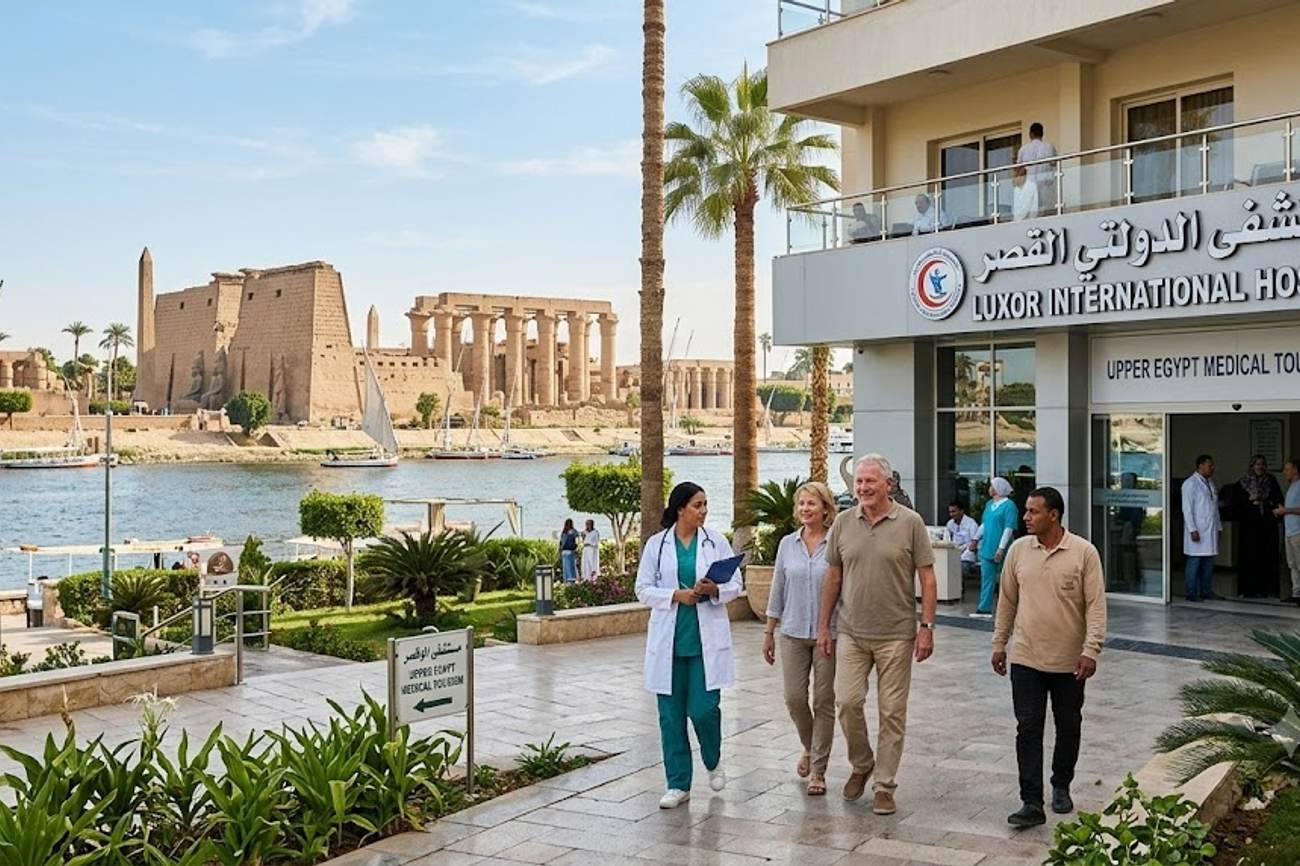
Image generated by AI
[Luxor, August 2026] — Upper Egypt is pivoting toward a high-revenue medical tourism model, deploying a combined 522-bed healthcare infrastructure to attract international patients to the city of Luxor. The strategic expansion, centered on the Luxor International Medical Complex and Karnak International Hospital, marks a shift from traditional archaeological tourism toward specialized clinical services and complex surgical interventions.
The initiative is part of a nationwide push by the Egyptian government to diversify economic revenue and establish credible healthcare hubs outside of Cairo. By leveraging existing tourist flows and integrating new digital patient-management systems, Egypt aims to capture a larger share of the African, Gulf, and European medical markets. This transition is supported by the Ministry of Tourism and Antiquities, which reports a surge in overall visitor arrivals, providing a ready-made pipeline of international travelers who can now combine leisure with medical treatment.
The Infrastructure Trigger
The catalyst for this shift is the operationalization of two massive facilities designed to handle both routine and critical care. During a January 2026 inspection by Prime Minister Mostafa Madbouli, the government formalized the roles of these institutions as the primary engines for medical tourism in the region.
The Luxor International Medical Complex serves as the regional referral center for advanced cases. It boasts a capacity of 373 beds, including 57 dedicated intensive-care (ICU) beds. The facility is not merely for wellness or elective cosmetics; it is equipped for high-stakes procedures including open-heart surgery, bone-marrow transplantation, bone-deformity surgery, and gastrointestinal oncology endoscopy. The complex also provides essential diagnostic tools such as CT and MRI scanners and specializes in burn treatment and bronchoscopy.
Complementing this is Karnak International Hospital, which provides 149 beds, 39 of which are for intensive care. The hospital is geared toward immediate clinical needs and specialized chronic care, housing 44 dialysis machines, 10 neonatal incubators, and seven full operating rooms. Recent expansions have added 18 ICU beds and a fully operational oncology unit and emergency department.
Affected Travelers, Airlines and Logistics
The rollout of these services impacts several distinct demographics, ranging from high-acuity patients to leisure travelers.
| Affected Group | Impact Detail | Key Facility/Service |
|---|---|---|
| International Patients | Access to specialized surgery and oncology in a tourist hub | Luxor International Medical Complex |
| European/Gulf Travelers | Ability to integrate medical procedures with leisure trips | Karnak International Hospital |
| Regional Residents | Improved access to complex referrals (heart/bone marrow) | Luxor International Medical Complex |
| Medical Logistics Providers | New demand for medical-specific transport and lodging | Tour4Cure Platform |
The scale of operation is already evident in the data. The Luxor International Medical Complex has delivered over 1.5 million medical services since its inception, with more than 34,000 surgical procedures completed. This volume indicates that the infrastructure is already absorbing significant patient loads before the full marketing push for international medical tourism begins.
Practical Traveler Advisory and Strategic Insights
For the average traveler or prospective medical patient, this development transforms Luxor from a "sightseeing-only" destination into a functional healthcare destination. The most immediate change is the launch of the Tour4Cure digital platform in August 2026.
This platform serves as a centralized concierge for the "patient journey." Instead of coordinating independently with doctors and hotels, travelers can now manage registration, provider selection, travel logistics, and post-treatment follow-up through a single digital interface. The pilot phase of this system has already processed approximately 250 cases.
Furthermore, the quality of care has been standardized. On May 19, 2026, the General Authority for Healthcare Accreditation and Regulation (GAHAR) granted initial accreditation to the Luxor International Medical Complex. Because GAHAR standards are recognized by the International Society for Quality in Health Care, foreign patients and their insurance providers have a verified benchmark for safety and clinical excellence.
For tourists already visiting the Valley of the Kings or Karnak Temple, the presence of Karnak International Hospital provides a critical safety net. The hospital is specifically designed to handle foreign visitors, offering emergency care and specialist consultations that meet international expectations, reducing the need for emergency medical evacuations to Cairo or abroad.
The Commercial Trajectory
Egypt is not treating these hospitals as isolated assets but as part of a broader economic engine. The Egypt Healthcare Authority reports that medical tourism revenue has already increased by 37% year-on-year, surpassing US$10 million. Nearly 42,000 foreign patients have already been treated across authority-managed hospitals.
This growth is occurring against a backdrop of record-breaking general tourism. In 2025, Egypt welcomed nearly 19 million tourists, a 21% increase over 2024. Charter flight traffic increased by 32% during that same period. By integrating medical services into this existing flow, Egypt avoids the high cost of building a brand from scratch. Luxor and Aswan are already global names; adding "Medical Hub" to that identity is a strategic move to increase the average spend per visitor and extend the length of stay.
The government's focus is now shifting toward scaling the Tour4Cure platform to target specific markets in Africa and Europe, where the cost-to-quality ratio of Egyptian healthcare is expected to be a primary draw.
FAQ: Luxor Medical Tourism 2026
What is the Tour4Cure platform? It is a government-launched digital portal that manages the entire medical tourism experience, including doctor selection, travel arrangements, hotel bookings, and post-operative follow-ups for international patients.
What specialized surgeries are available in Luxor? The Luxor International Medical Complex offers advanced procedures including open-heart surgery, bone-marrow transplants, bone-deformity corrections, and gastrointestinal oncology endoscopy.
Is the healthcare in Luxor accredited for international patients? Yes. The Luxor International Medical Complex received accreditation on May 19, 2026, from GAHAR, whose standards are recognized by the International Society for Quality in Health Care.
How many beds are available for medical tourists in Luxor? There is a combined capacity of 522 beds between the Luxor International Medical Complex (373 beds) and Karnak International Hospital (149 beds).
Egypt is effectively rebranding its ancient monuments as the backdrop for modern medicine.
Related Travel Guides
- Uzbekistan Unlocks New Travel Era With High Speed Tashkent Nukus Train Cutting Journeys and Connecting Regions
- South Africa Is Now on the Path to Unlock a Great New Club Med Opportunity for Family Tourism
- Malaysia’s Penang Hotel Industry Faces Tough New Challenge As Airbnb Boom Changes Traveller Choices
Disclaimer
This article is for informational and educational purposes only. It does not constitute legal, financial, or professional advice. While we strive to provide accurate and up-to-date information, travel policies, regulations, and conditions change rapidly. Always verify information with official sources before making travel decisions. Nomad Lawyer makes no representations about the accuracy, reliability, completeness, or suitability of the information provided. Readers should consult qualified professionals for advice specific to their circumstances. The views expressed in this article are those of the author and do not necessarily reflect the views of Nomad Lawyer.
Kunal K Choudhary
Co-Founder & Contributor
A passionate traveller and tech enthusiast. Kunal contributes to the vision and growth of Nomad Lawyer, bringing fresh perspectives and driving the community forward.
Learn more about our team →