
American Airlines Tire Blowout at Chicago O'Hare Triggers Emergency Response and Runway Delays in 2026
An American Airlines flight experienced multiple tire blowouts upon landing at Chicago O'Hare International Airport, prompting a full-scale emergency response and temporary operational disruptions.

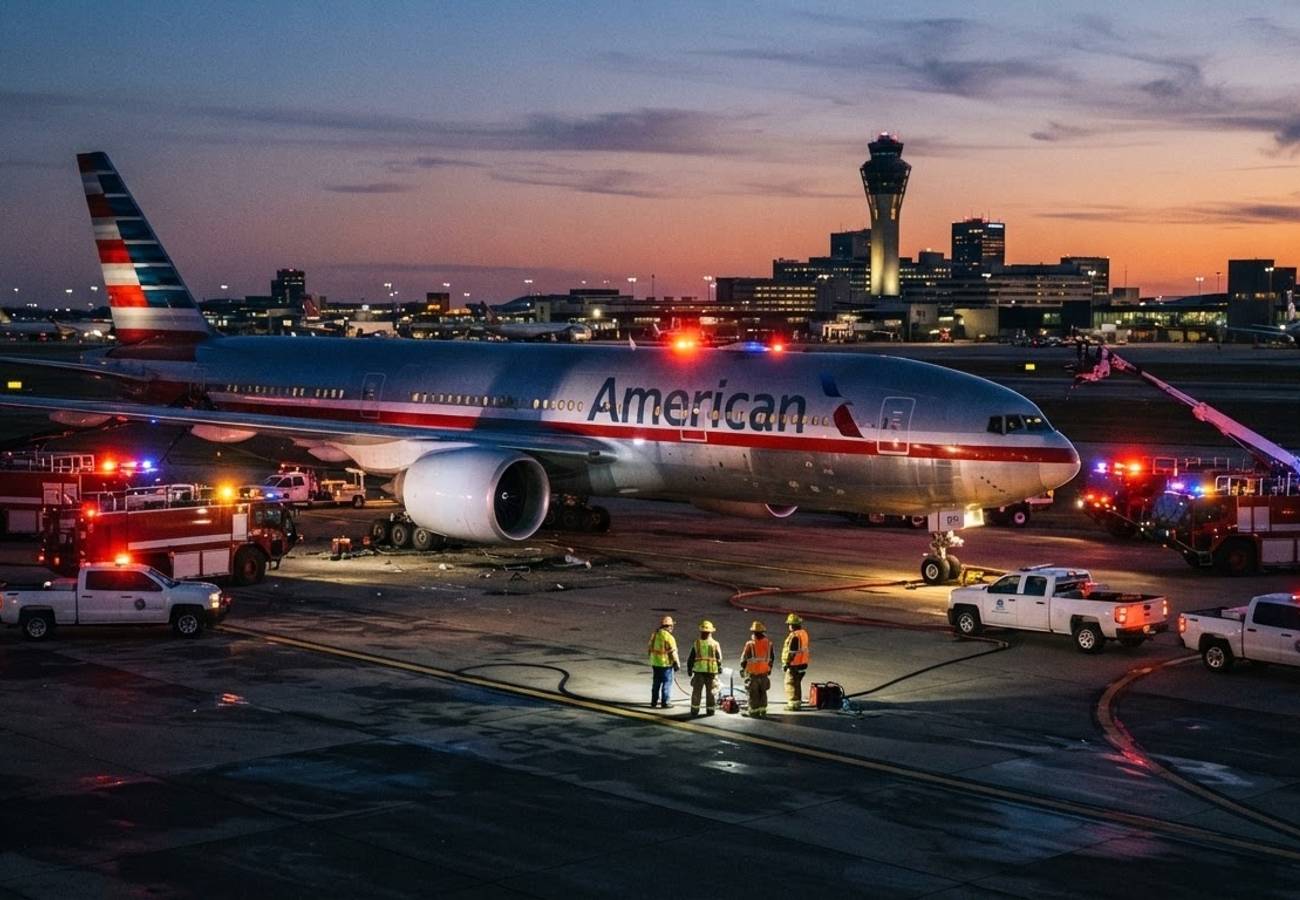
Image generated by AI
Emergency vehicles surrounded an American Airlines aircraft at Chicago O’Hare International Airport after the jet reported multiple blown tires upon landing, triggering a safety response and runway inspections that disrupted evening operations.
The incident occurred during a period of high evening traffic at O’Hare, one of the busiest aviation hubs in the United States. Upon touchdown, the aircraft experienced a tire-related failure, bringing the plane to a stop on the runway or an adjacent taxiway. This prompted the immediate deployment of airport rescue and firefighting (ARFF) units, fire trucks, and various support vehicles.
Passengers on board reported a "firm landing" followed by braking that felt heavier than usual. While the sight of emergency vehicles surrounding the fuselage caused alarm among observers and passengers in nearby aircraft, the response followed standard precautionary protocols. No emergency evacuations via slides were required, and no injuries or fires were reported.
Incident Breakdown: Key Facts
- Location: Chicago O’Hare International Airport (ORD).
- Carrier: American Airlines.
- Primary Issue: Multiple blown tires upon landing.
- Emergency Response: Full deployment of fire trucks and airport rescue units.
- Passenger Experience: Reports of abnormal braking and a prolonged stationary wait on the airfield.
- Operational Impact: Temporary runway closures for debris inspection and localized taxiway congestion.
Standard Response Protocols for Landing Gear Failures
Our analysis of aviation safety procedures indicates that any report of suspected tire or brake failure during approach triggers an elevated readiness state. The visible scale of the response at O'Hare—often appearing dramatic on social media—is a routine safety measure designed to mitigate the following risks:
- Wheel Fires: Friction from a blowout can lead to overheating and ignition.
- Runway Excursions: Loss of tire pressure can compromise directional control.
- Brake Overheating: Responders monitor temperatures to prevent catastrophic failure.
Once the aircraft is stationary, ground crews perform a visual assessment for smoke or leaks. If damage is confirmed, cooling hoses and specialized tow vehicles are utilized to move the aircraft clear of active surfaces.
Runway Inspections and Operational Ripple Effects
A critical component of the aftermath is the "FOD walk" (Foreign Object Debris inspection). When tires fail, they often leave fragments of rubber and metal on the pavement. At a high-volume hub like O'Hare, these fragments pose a severe risk to other aircraft.
Airport crews must traverse the affected runway to ensure all debris is removed before resuming normal operations. While there is no evidence of a prolonged shutdown, the incident caused a visible queue of aircraft and forced some flights to hold at gates or on the tarmac due to rerouted traffic and constrained taxi routes.
Why This Matters: Industry Implication
For travelers and aviation analysts, this incident highlights the extreme stress placed on landing gear at primary hubs. The fact that aviation observers noted similar tire issues involving both American and United aircraft at O’Hare on the same day suggests a need to examine external variables, such as runway surface conditions or recent weather-related wear.
From a logistical perspective, this event demonstrates the fragility of hub operations. A single localized mechanical failure on a runway can create a "ripple effect," delaying dozens of unconnected flights. For passengers, this underscores the importance of monitoring real-time airfield activity rather than relying solely on gate screens, as taxiway congestion often precedes official delay announcements.
Forward Outlook
The precise cause of the tire failures will be determined through internal reviews by American Airlines and airport authorities. Market trends suggest an increasing scrutiny of maintenance cycles for high-frequency short-haul fleets. While modern aircraft are designed with redundant braking systems and multiple tires per strut to maintain control during a blowout, the frequency of these reports may prompt a broader review of tire durability standards for heavy-traffic hubs.
A routine safety response prevents a potential catastrophe.
Related Travel Guides
Disclaimer
This article is for informational and educational purposes only. It does not constitute legal, financial, or professional advice. While we strive to provide accurate and up-to-date information, travel policies, regulations, and conditions change rapidly. Always verify information with official sources before making travel decisions. Nomad Lawyer makes no representations about the accuracy, reliability, completeness, or suitability of the information provided. Readers should consult qualified professionals for advice specific to their circumstances. The views expressed in this article are those of the author and do not necessarily reflect the views of Nomad Lawyer.
Preeti Gunjan
Contributor & Community Manager
A passionate traveller and community builder. Preeti helps grow the Nomad Lawyer community, fostering engagement and bringing the reader experience to life.
Learn more about our team →