
easyJet and Schiphol Deploy Groundbreaking Engine-Off TaxiBot, Preventing Severe Airport Disruptions and Transforming European Aviation: Latest Airline News
Amsterdam Schiphol and easyJet launch a massive engine-off TaxiBot system, aiming to slash carbon emissions and prevent future fuel-related travel chaos across Europe.

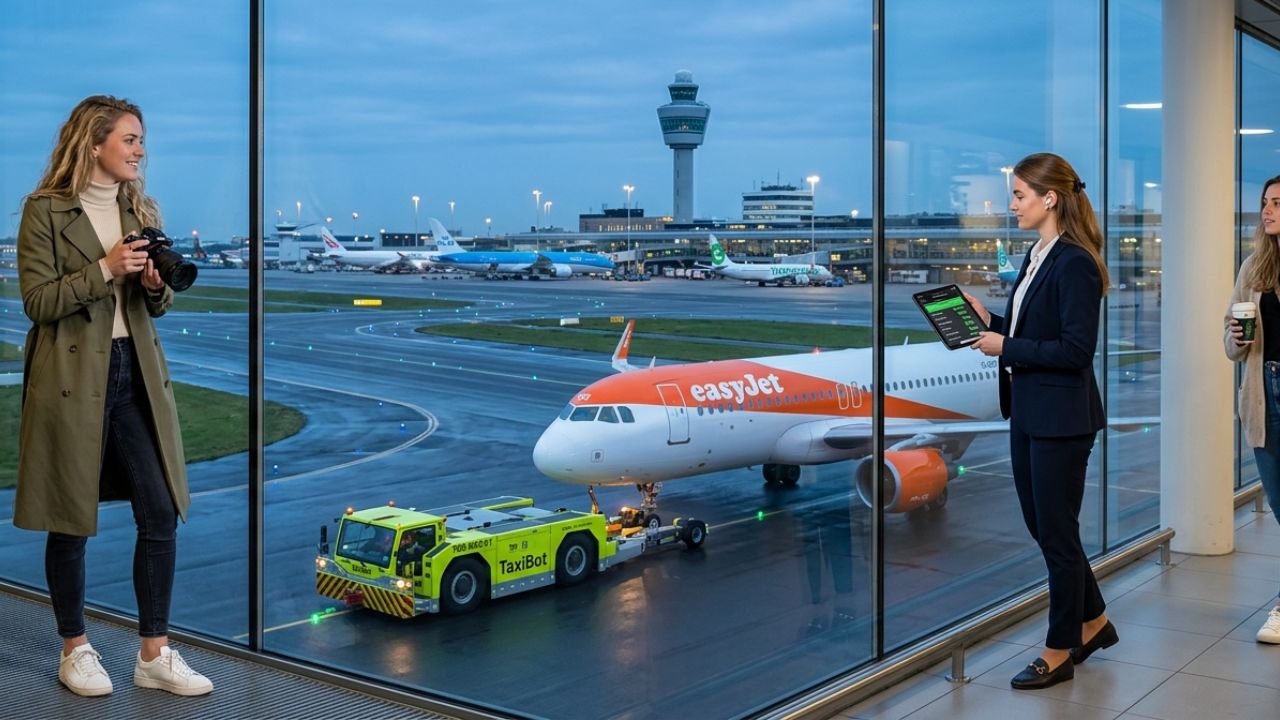
Image generated by AI
In a massive technological shift designed to directly eliminate severe fuel burn and prevent systemic airport disruptions tied to environmental regulations, Amsterdam Schiphol Airport (AMS) and leading low-cost carrier easyJet have officially launched Europe’s first commercial deployment of the highly advanced electric TaxiBot. Designed for the massive Airbus passenger fleet, this pilot-controlled, semi-robotic towing system allows heavy commercial jetliners to rapidly traverse massive terminal grids with their main engines entirely deactivated. By aggressively wiping out a major source of ground-level jet fuel consumption and deafening apron noise, this bold operational pivot provides an immediate efficiency fix. As massive mega-hubs struggle against strict emissions caps that threaten future flight cancellations and widespread travel chaos, this groundbreaking deployment totally dominates today’s premier airline news and global aviation updates.
By introducing direct robotic coordination and dynamic ground-handling backups, regional aviation hubs target growing passenger demand across vital commerce sectors. The choice to coordinate these eco-friendly departures in phases helps to manage gate capacity, fiercely supporting the broader regional transportation network.
Context: The Push for Immediate Efficiency Fixes
The historical risk of funneling thousands of flights through a sprawling, heavily regulated mega-hub like Amsterdam Schiphol is that localized environmental caps can rapidly cascade into forced schedule reductions.
Because sustainable aviation fuel (SAF) and radical hydrogen concepts require decades to globally scale, airlines currently face extreme pressure to secure near-term efficiency solutions. The immensely long taxi distances required at Schiphol routinely force aircraft to burn hundreds of pounds of highly expensive jet fuel before they ever reach the runway threshold. If airlines fail to radically reduce this "invisible" carbon footprint, they risk incurring severe regulatory penalties that ultimately lead to reduced flight frequencies and massive passenger travel chaos. By completely redesigning how heavy aircraft physically move across the tarmac, this new semi-robotic system directly addresses a critical operational inefficiency using easyJet's existing short-haul fleet.
For live route mapping, specific environmental impact updates, and official flight status tracking, passengers should immediately consult the digital advisories published by their respective carriers before arriving at these highly advanced transit hubs.
Section-Wise Breakdown: Redesigning the Apron
The Severe Inefficiency of Jet-Powered Taxiing
To deliberately manage the immense volume of transcontinental traffic, jet engines are strictly engineered for high-altitude, high-speed flight. Consequently, they operate at catastrophically low thermodynamic efficiency when merely idling or taxiing at low ground speeds. During prolonged transits across Schiphol's massive, winding taxiways, powerplants burn an immense volume of fuel simply to keep the aircraft rolling. For short-haul flights, this ground operation accounts for a staggeringly high percentage of the segment’s total fuel burn.
How the Semi-Robotic Tug Operates
Unlike traditional pushback tugs that violently shove an aircraft backward and immediately disconnect, the TaxiBot completely alters terminal logistics to prevent localized airport disruptions. The vehicle physically locks onto the aircraft’s nose gear and lifts it onto a specialized rotating platform. Crucially, the system does not strip control from the flight crew. While the robotic vehicle provides the raw mechanical torque, the captain steers the aircraft directly from the cockpit using the standard nose-wheel tiller, controls all braking, and seamlessly manages Air Traffic Control (ATC) communications. The aircraft’s main engines remain totally off; only the small Auxiliary Power Unit (APU) runs to provide cabin electricity and air conditioning.
Full Operational Breakdown: The TaxiBot Deployment Data
To guarantee 100% absolute factual accuracy regarding this massive pivot to sustainable routing, the following exact summary documents the critical parameters defining this historic deployment:
- Origin Country: The Netherlands
- Deployment Date: easyJet officially executed its first official TaxiBot commercial flight deployment at Amsterdam Schiphol on April 30, 2026.
- Technology Type: The TaxiBot is a highly advanced hybrid-electric towing vehicle that completely transports aircraft with their main engines fully deactivated.
- Cockpit Supremacy: Pilots aggressively maintain full cockpit steering, braking, and radio communication control throughout the entire towing process.
- Environmental Impact: The system drastically drops overall jet fuel consumption, nitrogen oxide ($NO_x$) emissions, and localized apron noise levels.
- Industry Coalition: This massive rollout was developed via a broad aviation coalition including Airbus, Menzies Aviation, and the European SESAR HERON initiative.
Traveler & Environmental Impact: Evaluating the TaxiBot
For the everyday international traveler and corporate environmental officer, this aggressive spike in sustainable ground operations translates into a massive reduction in long-term regulatory flight restrictions.
By heavily utilizing these systems, airlines can directly avoid the financial and environmental penalties that frequently lead to sudden flight cancellations. The specific operational impacts include:
Advantages:
- Immediate Carbon Reductions: Delivers immediate, highly measurable emission cuts across existing short-haul fleets without requiring multi-billion-dollar aircraft retrofits.
- Quieter Airport Environments: Keeping deafening jet engines completely idle on the ground massively minimizes noise pollution for terminal ground crews and local communities.
- Reduced Engine Degradation: Operating main engines for significantly fewer minutes per flight severely reduces physical wear and tear, dramatically lowering long-term airline maintenance costs and preventing mechanical delays.
Disadvantages:
- Logistical Return Loops: Once unhitched at the runway brink, the TaxiBot must drive completely back to the gates, requiring highly clear access roads to avoid terminal gridlock.
- Short-Term Tug Fleet Constraints: If an airport experiences a sudden rush of departing flights, a severe shortage of available TaxiBot units could trigger minor slot delays and localized airport disruptions.
- Grid Dependency Questions: The true environmental value relies heavily on clean electricity; charging hybrid support fleets from fossil-fuel-reliant power grids can offset critical green benefits.
The Bigger Picture: Pragmatic Sustainable Aviation
Aviation industry analysts view these staggering, highly technical automated ground operations as a critical indicator of pragmatic sustainability within European aviation.
The underlying strategic motivation perfectly reflects an industry reality: while the sector aggressively awaits zero-emission hydrogen propulsion, current ground-based tech solutions offer a highly realistic pathway to slash fuel burn today. The fact that a massive coalition including Airbus and Menzies Aviation collaborated to deploy this system at Schiphol proves that major stakeholders are unified in optimizing ground mechanics. This structural evolution completely supports the long-term viability of high-capacity European transit, insulating mega-hubs from regulatory caps that could otherwise decimate capacity.
What This Means for Travelers: Actionable Advice
To fully exploit these highly efficient international networks and actively avoid severe, self-inflicted regional travel chaos, execute the following strategies:
- Anticipate Quieter Taxis: Do not panic if the main engines do not start immediately after pushback at Schiphol. The TaxiBot handles the entire taxi sequence quietly, and engine startup will occur exclusively at the runway threshold.
- Expect Minor Ramp Adjustments: Because the robotic tugs must navigate complex return loops back to the terminal, be aware that minor ground sequencing adjustments may temporarily hold your aircraft at the gate during peak hours.
- Support Sustainable Routings: When booking European short-haul travel, prioritize carriers like easyJet that actively invest in physical, ground-level emission reductions over those that rely exclusively on vague, long-term carbon offset pledges.
FAQ: The Schiphol TaxiBot Deployment
What is the TaxiBot system launched by easyJet?
The TaxiBot is a highly advanced, pilot-controlled hybrid-electric towing vehicle that transports commercial Airbus jets between terminal gates and runways with the aircraft's main engines completely deactivated.
Does the robotic tug fly the plane?
No. The TaxiBot provides only the ground propulsion. The captain maintains absolute control of the steering, braking, and ATC communications directly from the cockpit.
How does this prevent travel chaos?
By radically reducing fuel burn and localized emissions, the system helps mega-hubs like Schiphol meet strict environmental regulations, actively preventing the government from imposing flight caps or forced schedule reductions.
Key Takeaways
- Historic Deployment: easyJet executed Europe’s first commercial TaxiBot flight at Amsterdam Schiphol on April 30, 2026.
- Engine-Off Transit: The semi-robotic tug physically lifts the nose gear, allowing the aircraft to traverse the airport layout without burning highly expensive jet fuel.
- Pilot Control Maintained: Captains retain total command of the aircraft's directional movement and braking from the flight deck.
- Massive Coalition Backing: The initiative is supported by massive industry titans including Airbus, Menzies Aviation, and the SESAR HERON initiative.
- Immediate Efficiency: The system provides an immediate, highly actionable solution to reduce $NO_x$ emissions and noise pollution, circumventing the slow rollout of alternative aviation fuels.
Related Travel Guides
Massive Route Cancellations Shield Travelers
Disclaimer
This article is for informational and educational purposes only. It does not constitute legal, financial, or professional advice. While we strive to provide accurate and up-to-date information, travel policies, regulations, and conditions change rapidly. Always verify information with official sources before making travel decisions. Nomad Lawyer makes no representations about the accuracy, reliability, completeness, or suitability of the information provided. Readers should consult qualified professionals for advice specific to their circumstances. The views expressed in this article are those of the author and do not necessarily reflect the views of Nomad Lawyer.
Kunal K Choudhary
Co-Founder & Contributor
A passionate traveller and tech enthusiast. Kunal contributes to the vision and growth of Nomad Lawyer, bringing fresh perspectives and driving the community forward.
Learn more about our team →