
Dubai Riyadh Cathay Slashes Flights Through May 2026 Amid Geopolitical Crisis
Cathay Pacific suspends all Dubai and Riyadh flights until May 31, 2026, citing Middle East security concerns and fuel costs doubling since February. The pullback signals aviation industry vulnerability to regional conflict.

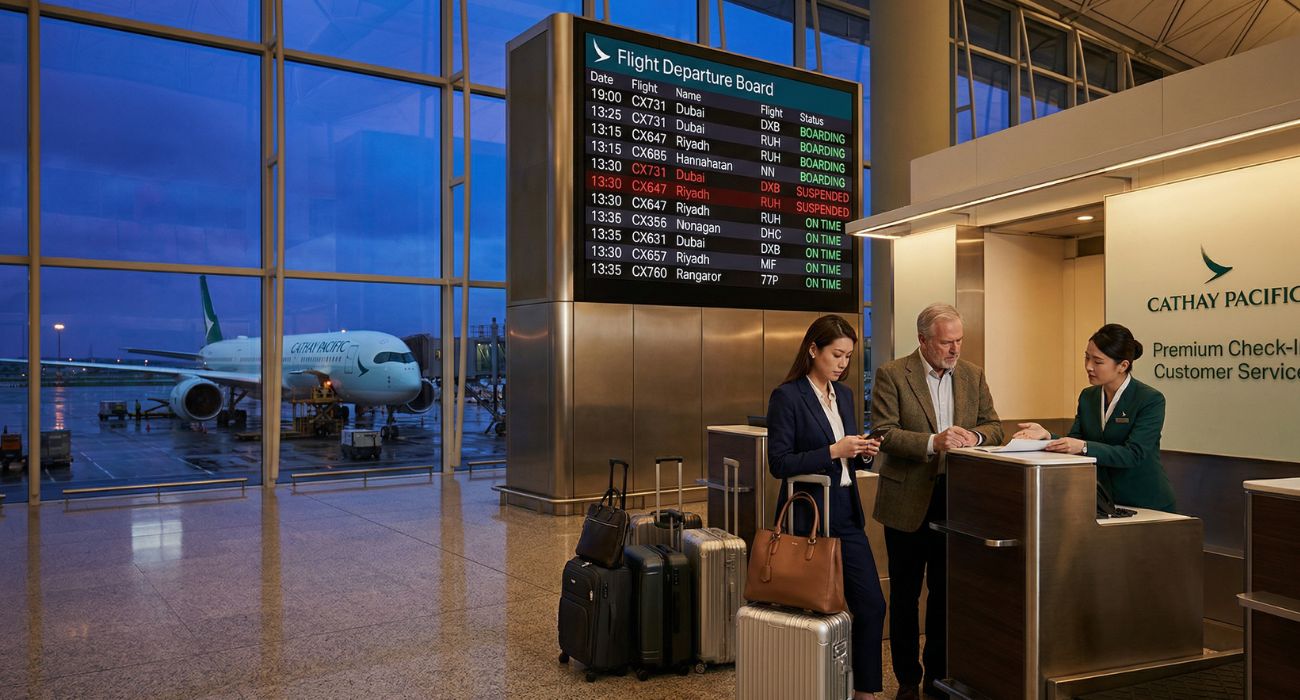
Image generated by AI
Cathay Pacific Halts Middle East Operations Through May 2026
Cathay Pacific has suspended all flights to Dubai and Riyadh until May 31, 2026, responding to escalating geopolitical tensions and skyrocketing jet fuel expenses that have reshaped Middle East aviation connectivity. The Hong Kong-based carrier's extended pullback from two of the region's most critical aviation hubs marks a watershed moment for long-haul operators, revealing how quickly regional conflicts can dismantle months of network expansion efforts. The suspension began with limited March and April cancellations but has now hardened into a five-month operational pause, leaving corporate travelers, leisure passengers, and freight operators scrambling for alternatives.
Cathay Pacific's Extended Middle East Pullback
Cathay Pacific's decision to maintain suspended operations through May 2026 reflects a dramatic reversal of the carrier's growth strategy in the Arabian Peninsula. The airline had aggressively expanded its Dubai and Riyadh presence over the past two years, leveraging Hong Kong's position as an Asian gateway to capture connecting traffic flowing between Asia, Europe, and Africa. Network planning data released in 2025 specifically highlighted Hong Kong-to-Riyadh as a high-potential growth market aligned with Saudi Arabia's Vision 2030 tourism initiatives.
However, the deteriorating security environment and revised risk assessments have forced management to redeploy capacity elsewhere. Internal scheduling documents show that aircraft previously allocated to Dubai and Riyadh services are now rotating through alternative European, Southeast Asian, and South Asian routes perceived as lower-risk. This strategic reallocation underscores how external shocks—beyond operational or financial control—can rapidly destabilize expansion plans.
For Cathay Pacific specifically, the pullback compounds challenges from pandemic recovery and Hong Kong's prolonged travel restrictions. The carrier had invested substantial capital in rebuilding its long-haul fleet and network partnerships. Middle East operations represented a critical component of that recovery, making the current suspension particularly costly.
Impact on Dubai's Hub Status and Regional Connectivity
Dubai International Airport, consistently ranked among the world's busiest aviation hubs, faces unexpected competitive pressure as major carriers reassess their risk exposure. While Emirates, Etihad, and other Gulf-based carriers maintain full operations, the loss of connectivity from Cathay Pacific—and several other Asian and European operators—creates gaps in the network structure that supported Dubai's position as a connecting hub.
The suspension directly affects point-to-point travelers from Hong Kong and reducing the pool of convenient connection options for passengers traveling between Asia and Europe via Dubai. Corporate travel planners must now route business passengers through alternative hubs or accept longer journeys. Freight operators relying on Cathay's cargo capacity face similar disruptions, particularly for time-sensitive shipments and perishable goods.
Regional aviation analysts note that the loss of niche carriers like Cathay signals how concentrated airline capacity has become among Gulf-based operators. When external crises strike, passengers face reduced competition and potentially higher fares on remaining available routes. Check FlightAware for real-time flight availability and alternative routing options through your preferred carrier.
Riyadh's Tourism Ambitions Derailed
Saudi Arabia's aggressive tourism expansion agenda faces unexpected headwinds as international carriers reduce frequency and suspend routes entirely. Riyadh had only recently secured new long-haul links as part of Saudi Vision 2030 initiatives aimed at diversifying the economy beyond oil revenues. Cathay Pacific's Hong Kong route represented exactly the type of premium, high-capacity connectivity that the Kingdom needed to establish itself as a global business and leisure destination.
The suspension disrupts that momentum precisely when Riyadh needed sustained momentum-building frequency. Potential visitors from Hong Kong, Southeast Asia, and connecting points throughout Asia now face inconvenient routing options, extended travel times, and less favorable pricing. Tourism operators and hotel chains that had positioned themselves to capture this emerging connectivity now face significantly softer demand signals.
The broader question facing Saudi Arabia centers on airline confidence: will carriers reinstate routes once the geopolitical situation stabilizes, or will the interruption convince them to redeploy capacity permanently to less volatile markets? Historical precedent from previous Middle East crises suggests that route reinstatement often requires two to three years of sustained stability signals before carriers commit to full-schedule resumption.
Jet Fuel Costs Double as Geopolitical Crisis Disrupts Energy Markets
Simultaneously with the security-driven suspensions, jet fuel prices have roughly doubled since late February 2026, according to International Air Transport Association data and commodity market trackers. Some assessments indicate fuel cost increases of 90–115 percent compared to early-year baselines, reflecting severe supply-chain disruptions around critical chokepoints including the Strait of Hormuz.
The Middle East supplies a disproportionate share of global jet fuel. Regional refinery attacks, export infrastructure damage, and logistical constraints have created a cascading crisis where crude oil prices rise, refinery throughput declines, and refined products become scarce. Airlines must now either absorb massive cost increases or implement fuel surcharges, capacity reductions, and route suspensions.
Unlike European carriers that hedge substantial fuel exposure through forward contracts, many Asia-Pacific airlines maintain higher exposure to volatile spot prices. This structural difference means that Cathay Pacific, alongside regional competitors, faces immediate margin compression across profitable routes. For a carrier already managing post-pandemic debt loads, the fuel shock compounds pressure to reduce capacity in expensive-to-serve markets like Dubai and Riyadh.
Industry cost-analysis data suggests jet fuel typically comprises 25–33 percent of direct operating expenses. A doubling of fuel prices can therefore erase several percentage points of operating margin, pushing marginal routes into loss-making territory almost overnight.
Capacity Redeployment and Corporate Travel Disruptions
Cathay Pacific's redeployed aircraft are now flying increased frequencies on European routes and key Southeast Asian corridors, reflecting management's assessment of which markets offer acceptable risk-adjusted returns. However, this reallocation creates specific pain points for corporate travel managers and multinational enterprises with significant operations in the Gulf.
Companies headquartered in Hong Kong, China, and Southeast Asia that maintain regional offices in Dubai and Riyadh must now:
- Book indirect routing through alternative carriers with longer travel times
- Accept higher ticket costs as alternative carriers lack competition
- Reroute overnight layovers through less convenient hub cities
- Adjust freight and logistics networks designed around Cathay's capacity
For business travel, the suspension effectively extends the region into "inconvenient connectivity" status, making day-trip meetings logistically difficult and increasing travel time costs for executive teams. Over a 13-week suspension period, this compounds to significant operational friction and budget overruns for affected organizations.
Key Data Summary
| Metric | Details |
|---|---|
| Suspension Start Date | Late February 2026 (extended repeatedly) |
| Current Suspension Through | May 31, 2026 |
| Affected Routes | Hong Kong–Dubai, Hong Kong–Riyadh |
| Jet Fuel Price Increase | 90–115% since early 2026 |
| Fuel as Operating Cost % | 25–33% of direct expenses |
| Dubai Hub Impact | Reduced connecting options, competitive pressure |
| Riyadh Tourism Impact | Delayed international connectivity expansion |
| Aircraft Redeployment | To Europe and Southeast Asia routes |
| Typical Fuel Cost Doubling Effect | 2–4% operating margin compression per airline |
| Regional Refinery Disruptions | Strait of Hormuz, Saudi infrastructure attacks |
What This Means for Travelers
Passengers holding Cathay Pacific bookings to Dubai or Riyadh before June 1, 2026, should immediately contact their booking agent or Cathay's customer service to understand rebooking options, refund
Disclaimer
This article is for informational and educational purposes only. It does not constitute legal, financial, or professional advice. While we strive to provide accurate and up-to-date information, travel policies, regulations, and conditions change rapidly. Always verify information with official sources before making travel decisions. Nomad Lawyer makes no representations about the accuracy, reliability, completeness, or suitability of the information provided. Readers should consult qualified professionals for advice specific to their circumstances. The views expressed in this article are those of the author and do not necessarily reflect the views of Nomad Lawyer.
Raushan Kumar
Founder & Lead Developer
Full-stack developer with 11+ years of experience and a passionate traveller. Raushan built Nomad Lawyer from the ground up with a vision to create the best travel and law experience on the web.
Learn more about our team →