
Lufthansa, Delta, United, Air Canada, and European Carriers Scale Back Dubai Routes Amid Airspace and Operational Pressures
Airlines across Europe and North America are tightening long-haul networks to Dubai, forcing passengers from Germany, Fr

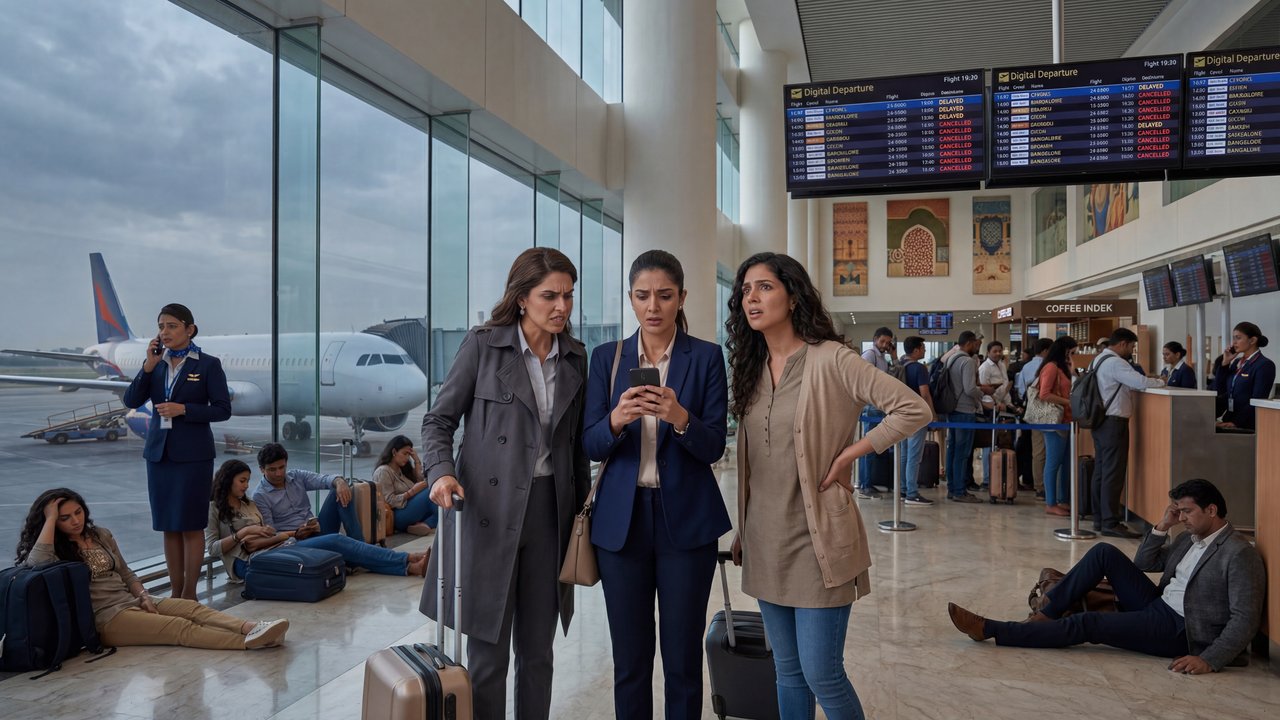
Image generated by AI
A widening recalibration of long-haul aviation networks is reshaping global connectivity to Dubai. Major carriers, including Lufthansa, Air Canada, United Airlines, Air France, Brussels Airlines, and SWISS, are adjusting, suspending, or scaling back Dubai-bound operations. Driven by operational constraints, complex airspace conditions, and the need for greater fleet efficiency, these changes are significantly altering travel for passengers originating from Germany, France, Belgium, Switzerland, the United States, and Canada.
Airlines Prioritize Stability Over High-Frequency Connectivity
The aviation industry is currently navigating a phase of structural compression. Rather than expanding aggressively into all long-haul markets, airlines are prioritizing predictable aircraft rotations, fuel efficiency, and scheduling reliability. Dubai, traditionally a highly competitive international hub, is experiencing a noticeable reduction in direct flight density as carriers reassess operational viability. This shift has resulted in fewer direct options and tighter seat availability across multiple continents.
European Network Rebalancing Led by Lufthansa Group
The Lufthansa Group—comprising Lufthansa, SWISS, and Brussels Airlines—has been at the forefront of restructuring Dubai services. Air France and other European operators are simultaneously aligning their schedules to accommodate longer routing requirements and increased operational complexity. These adjustments represent a coordinated shift across European aviation networks, leading to a thinning of direct connectivity between major European capitals and Dubai.
North American Carriers Adjust Transcontinental Operations
North American airlines are also actively modifying their Dubai-linked services. Delta Air Lines, United Airlines, and Air Canada are responding to extended flight durations, evolving routing structures, and fluctuating operational efficiencies. While passenger demand for Dubai remains robust, airlines are balancing profitability against scheduling reliability. This has resulted in selective suspensions, reduced frequencies, and a growing reliance on connecting hubs, fundamentally altering how travelers move between North America and the Gulf region.
Passenger Impact and Booking Pressure
Travelers originating from Germany, France, Belgium, Switzerland, the United States, and Canada are bearing the brunt of these operational shifts. Reduced direct flight availability has forced a greater dependency on indirect routing, leading to longer journey times and more complex itineraries. With seat inventory limited on the remaining active services, booking pressure has intensified, particularly during peak travel periods. Passengers are increasingly required to book well in advance or accept longer connecting routes through alternative hubs.
Dubai’s Transit Hub Structure Undergoes Visible Adjustment
Dubai remains a critical international transit hub, but its operational structure is visibly shifting. Reduced frequencies from several long-haul carriers are affecting transfer connectivity, particularly for passengers connecting between Europe, North America, and Asia. While core services remain active, the density of flight connections has decreased, altering the efficiency of the traditional transit flows that have historically defined the hub's global strength.
Operational Constraints Drive Conservative Scheduling
Modern aviation networks rely heavily on stable and efficient airspace corridors. When routing complexity increases, airlines must adjust flight paths, often resulting in longer travel times and higher fuel consumption. For Dubai-bound services, these adjustments have introduced additional planning layers that impact scheduling reliability. Consequently, airlines are adopting more conservative scheduling models, prioritizing routes with higher predictability and redistributing capacity across their global networks to mitigate operational uncertainty.
Business and Leisure Travel Patterns Adapt
Both corporate and leisure travelers are adapting to this evolving landscape. Business travelers are extending trip durations and incorporating flexible routing options, while leisure passengers are adjusting travel dates to secure available capacity. Airlines are responding with dynamic pricing models that reflect the tightening of supply, creating a competitive booking environment where flexibility is essential.
| Airline | Status / Action | Details / Dates |
|---|---|---|
| Lufthansa | Route Suspension | Dubai flights suspended; eligible customers offered flexible rebooking or full refund. |
| SWISS | Route Suspension | Dubai flights suspended; eligible customers offered flexible rebooking or full refund. |
| Brussels Airlines | Advisory Notice | Identified Lufthansa and SWISS as the Lufthansa Group carriers suspending Dubai flights. |
| Air Canada | Route Suspension | Flights to and from Dubai remain cancelled through 24 October 2026. |
| United Airlines | Travel Waiver | Waiver covers Dubai journeys with original travel dates between 28 February and 15 June 2026. |
| Air France | Schedule Adjustment | Aligning schedules to reflect longer routing requirements and operational complexity. |
| Delta Air Lines | No Direct Service | Official list does not show a Delta-operated Dubai route; partner connections available. |
Key Takeaways
- Multiple major airlines are scaling back Dubai routes due to airspace complexities and operational constraints, prioritizing efficiency over high-frequency connectivity.
- The Lufthansa Group has explicitly suspended Dubai flights for Lufthansa and SWISS, offering refunds or flexible rebooking.
- Air Canada has cancelled its Dubai flights through 24 October 2026.
- United Airlines has issued a travel waiver for Dubai journeys originally scheduled between 28 February and 15 June 2026.
- Delta Air Lines does not currently operate a direct Dubai route; passengers rely on partner airlines for connectivity.
- Dubai International Airport remains open and operational; adjustments are route-specific and determined by individual carriers.
- Passengers from Germany, France, Belgium, Switzerland, the US, and Canada face reduced direct flight availability, longer travel times, and tighter seat inventory.
FAQ
Why are airlines suspending flights to and from Dubai? Airlines have cited operational reasons, the ongoing situation in the Middle East, and changing airspace conditions. Carriers assess available flight paths, crew requirements, aircraft rotations, and safety conditions before deciding whether a service can operate reliably.
Is Dubai International Airport completely closed? No. Dubai International Airport is not completely closed. These announcements concern particular airlines and routes. Passengers traveling with other carriers must check their specific airline's live flight status, as each company makes separate operational decisions.
Are all the airlines named in the headline suspending direct Dubai flights? Not necessarily. Lufthansa, SWISS, and Air Canada have published clear suspension notices. United issued a travel waiver, which is not automatically an extended route suspension. Delta does not operate a direct Dubai route according to its official destination list, though travelers can reach Dubai via partner airlines.
What should affected Lufthansa and SWISS passengers do? Affected passengers should monitor their bookings, ensure their contact details are current, and review the latest flight status before traveling to the airport. The Lufthansa Group states that eligible customers will be offered flexible rebooking or a full refund for cancelled flights.
What options are available to Air Canada passengers? Air Canada advises affected passengers to review the options linked to their booking. The airline states that flights to and from Dubai remain cancelled through 24 October 2026. Travelers should not go to the airport unless they have a confirmed, operating flight.
Related Travel Guides
Disclaimer
This article is for informational and educational purposes only. It does not constitute legal, financial, or professional advice. While we strive to provide accurate and up-to-date information, travel policies, regulations, and conditions change rapidly. Always verify information with official sources before making travel decisions. Nomad Lawyer makes no representations about the accuracy, reliability, completeness, or suitability of the information provided. Readers should consult qualified professionals for advice specific to their circumstances. The views expressed in this article are those of the author and do not necessarily reflect the views of Nomad Lawyer.
Preeti Gunjan
Contributor & Community Manager
A passionate traveller and community builder. Preeti helps grow the Nomad Lawyer community, fostering engagement and bringing the reader experience to life.
Learn more about our team →