
Dominican Republic Named Guest of Honour at FIT Latin America 2026: Buenos Aires Tourism Summit and Regional Travel Guide

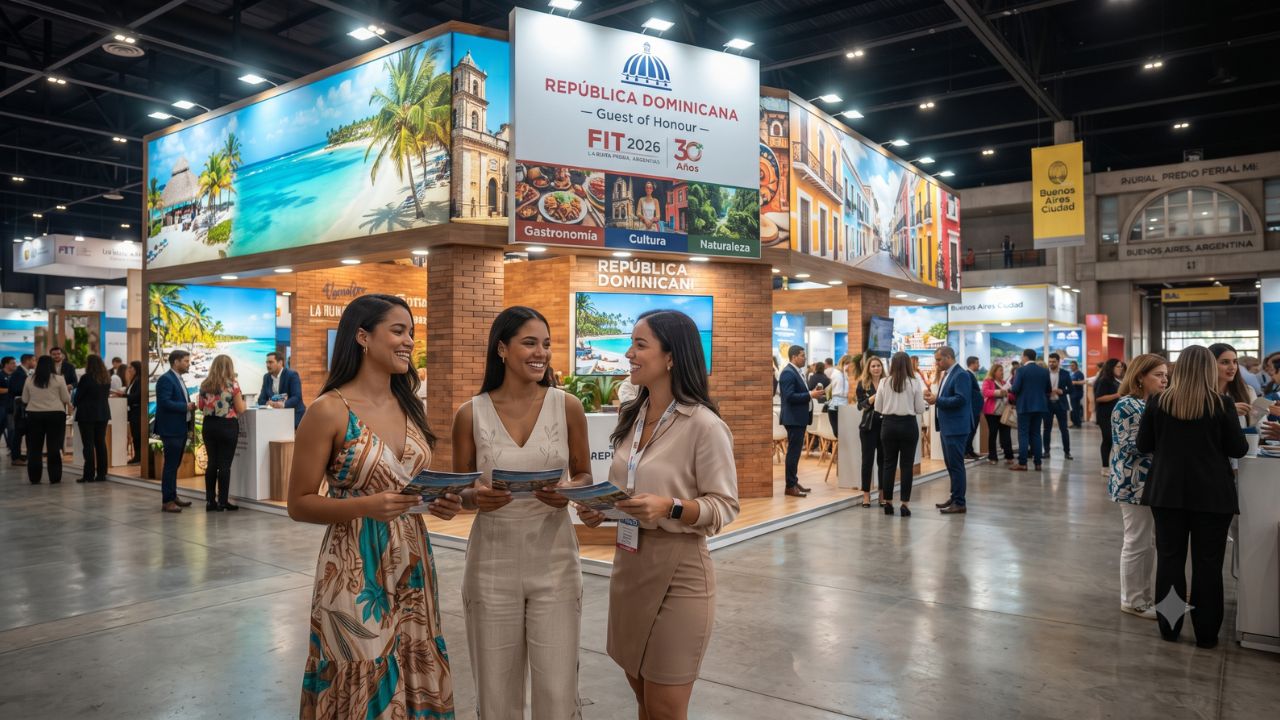
While over 80% of international arrivals to the Dominican Republic head straight to the eastern resort corridor of Punta Cana, the Caribbean nation is utilizing a 400-square-meter immersive showcase in Buenos Aires to reposition its global image around centuries-old mountain coffee estates, UNESCO-listed colonial quarters, and afro-caribbean culinary traditions. Taking center stage as the official Guest of Honour at the landmark 30th anniversary edition of the International Tourism Fair of Latin America (FIT Latin America 2026), the country is connecting directly with South American outbound tour operators, airlines, and independent travel designers to promote regional dispersion across its 31 diverse provinces.
The 30th Anniversary Summit: Redefining Caribbean Travel in Buenos Aires
Hosted in Argentina’s cultural capital, FIT Latin America brings together national tourism boards, commercial airlines, hospitality conglomerates, and experiential outfitters from across the globe. As one of the Southern Hemisphere’s preeminent travel trade platforms, the Buenos Aires gathering provides the Dominican delegation with immediate commercial access to Argentina's high-propensity outbound travel market and wider South American distribution networks.
Rather than relying on conventional beachfront displays, the 400-square-meter national pavilion is designed as an experiential journey through Dominican geography. Live culinary demonstrations showcase signature gastronomic traditions, including mangú with artisanal fried salami, coastal seafood chivo liniero, and cacao tastings from Duarte province. Daily showcases highlight the living rhythms of traditional merengue and bachata—both recognized by UNESCO as Intangible Cultural Heritage—reinforcing that cultural immersion is an indispensable pillar of the modern Caribbean journey.
The timing of this summit aligns with a broader industry evolution across the Americas. South American travelers, particularly from Argentina, Brazil, and Chile, are seeking experiential journeys that blend pristine coastal relaxation with historical discovery, nature conservation, and authentic community engagement. By establishing direct commercial contracts with regional wholesalers in Buenos Aires, Dominican tourism authorities are laying the groundwork for multi-destination packages that pair coastal stays with inland ecological adventures.
What Makes the Dominican Republic's Cultural Fabric Different
Beyond all-inclusive beach enclaves, the Dominican Republic houses the oldest European-established permanent settlement in the Americas. The Colonial City of Santo Domingo, founded in 1498, retains cobblestone streets, coral-limestone fortifications, and the First Cathedral of the Americas (Catedral Primada de América). Exploring these historic blocks reveals intimate art studios, historic courtyards converted into boutique hotels, and independent coffee roasteries serving high-altitude Arabica beans from the Cordillera Central.
The nation's geographical biodiversity is equally distinctive. The island features Pico Duarte, the Caribbean’s highest mountain summit rising 3,087 meters above sea level, surrounded by pine forests and whitewater river gorges in Jarabacoa. To the southwest, the desert-meets-ocean biodiversity of the Jaragua-Bahoruco-Enriquillo Biosphere Reserve offers untouched flamingos lagoons and salt lakes, presenting a dramatic visual contrast to the coconut palm coastlines of Samaná and the eastern shores.
Visitor Insider Tips: Navigating the Dominican Republic Beyond the Resorts
- Explore Santo Domingo's Colonial Zone by Evening Foot: The historic core comes alive after 6:00 PM when temperatures drop and amber street lamps illuminate 16th-century stone facades. Base yourself at a restored boutique casa along Calle Las Damas or Calle El Conde to walk safely to outdoor music plazas and historic dining patios.
- Venture to Samaná for Humpback Whale Encounters: Plan visits between mid-January and late March to witness thousands of North Atlantic humpback whales that migrate to the warm waters of Samaná Bay. Book excursions with licensed local captains operating out of Santa Bárbara de Samaná who adhere to strict marine conservation distances.
- Rent a Four-Wheel-Drive Vehicle for Southwestern Escapes: If exploring the wild beaches of Bahía de las Águilas in Pedernales or the cloud forests of Polo in Barahona, reserve a sturdy SUV. Coastal roads in the southwest traverse rocky terrain where standard compact rental cars are ill-suited.
- Sample Street Gastronomy at Neighborhood Comedores: For lunch, skip international hotel buffets and look for family-run comedores serving La Bandera Dominicana—a traditional midday meal comprising stewed chicken or beef, seasoned red beans, fluffy white rice, and twice-fried plantain tostones.
- Use Metro and Teleférico Lines in Santo Domingo: Avoid notorious morning traffic jams along Avenida 27 de Febrero by taking the modern Santo Domingo Metro and Teleférico cable car system. The transit network costs less than a dollar per ride and provides bird’s-eye vistas of the Ozama River.
Cultural and Environmental Context: Eco-Tourism and Heritage Stewardship
The drive to diversify tourism away from mass-resort enclaves directly supports environmental preservation and economic equity across rural Dominican communities. Intensive coastal development around coral reefs has spurred conservation programs monitored by the Dominican Republic Ministry of Tourism, emphasizing reef restoration, mangrove protection, and restrictions on motorized watercraft near sensitive seagrass beds.
In mountainous interior districts like Constanza and San José de Ocoa, agritourism cooperatives provide sustainable livelihoods through organic strawberry farming, specialty coffee harvesting, and community-guided reforestation treks. Meanwhile, cultural exchanges facilitated by initiatives at FIT Latin America and Visit Argentina emphasize reciprocal knowledge-sharing in urban heritage conservation between Santo Domingo and historic quarters in Buenos Aires like San Telmo. Responsible travelers can directly support local conservation by hiring certified municipal guides, patronizing artisan craft markets, and respecting sensitive national park regulations.
FAQ: Visiting the Dominican Republic 2026
What is the best time of year to visit the Dominican Republic?
December through April offers optimal weather with sunny skies, low humidity, and pleasant tropical breezes, making it ideal for both coastal water sports and mountain trekking adventures.
Do international travelers need an entry visa or tourist card?
Most international visitors do not need a pre-arranged consular visa. The mandatory $10 tourist entry card is automatically bundled into international airline ticket fares, and travelers simply submit a free digital e-ticket customs form online before departure.
How do I travel between Santo Domingo and Punta Cana?
Modern, air-conditioned express coach buses such as Expreso Bávaro operate daily direct services between Santo Domingo and Punta Cana in under two and a half hours via the modern Autovía del Este highway.
Is the Dominican Republic safe for independent travel outside resorts?
Yes. Major transit corridors and tourist zones are well-patrolled by the specialized tourist police force (POLITUR). Standard travel vigilance, using registered taxis or rideshare apps in cities, and securing valuables ensures a trouble-free journey.
From cobblestone colonial alleys to misty mountain valleys, discovering the Dominican Republic beyond its golden sand shores reveals the vibrant soul of the Caribbean.
Related Travel Guides
Disclaimer
This article is for informational and educational purposes only. It does not constitute legal, financial, or professional advice. While we strive to provide accurate and up-to-date information, travel policies, regulations, and conditions change rapidly. Always verify information with official sources before making travel decisions. Nomad Lawyer makes no representations about the accuracy, reliability, completeness, or suitability of the information provided. Readers should consult qualified professionals for advice specific to their circumstances. The views expressed in this article are those of the author and do not necessarily reflect the views of Nomad Lawyer.
Raushan Kumar
Founder & Lead Developer
Full-stack developer with 11+ years of experience and a passionate traveller. Raushan built Nomad Lawyer from the ground up with a vision to create the best travel and law experience on the web.
Learn more about our team →