
Ryanair's Economy Model Generates Per-Passenger Revenue That Rivals Premium Cabin Earnings at Traditional Carriers
Breaking airline news and aviation industry updates for 2026.

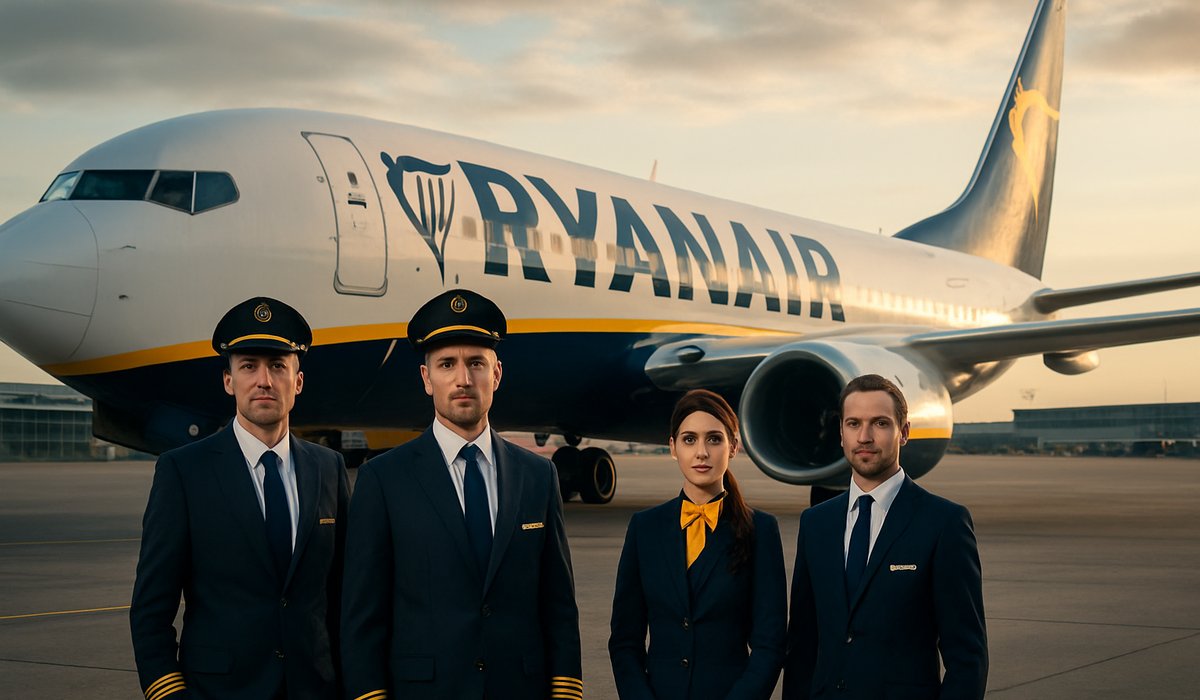
Image generated by AI
Ryanair's Economy Model Generates Per-Passenger Revenue That Rivals Premium Cabin Earnings at Traditional Carriers
The Irish budget airline's aggressive ancillary fee strategy delivers record profitability as full-service competitors struggle with rising operational costs
Record-Breaking Performance Masks a Seismic Shift in Aviation Economics
Ryanair has delivered a watershed moment for the global aviation industry, posting unprecedented financial results that expose a fundamental restructuring of how airlines generate profit. The carrier's latest earnings report reveals not merely a profitable year, but evidence of a business model so efficient that its per-passenger revenue now competes directly with premium cabin yields at traditional full-service airlines—a metric that upends conventional wisdom about aviation economics.
The Dublin-based carrier surpassed 200 million annual passengers for the first time, establishing itself as Europe's dominant low-cost carrier while simultaneously expanding its revenue per traveler faster than its operational expenses. This divergence—where income growth outpaces cost inflation—represents the kind of operational leverage that shareholders reward and competitors fear.
The Ancillary Revenue Engine: Beyond the Base Fare
Ryanair's profitability surge stems fundamentally from its aggressive monetization of services beyond the base ticket price. Baggage charges, seat selections, boarding priority, and ancillary fees create a cascading revenue structure that transforms economy travel into a high-margin proposition. Industry analysis suggests the airline extracts substantially more ancillary revenue per passenger than many traditional carriers generate across their entire economy cabin operations.
This model proves particularly effective during periods of volatile jet fuel prices and geopolitical uncertainty, where legacy carriers absorb cost increases through reduced margins. Ryanair's fee-based architecture provides pricing flexibility that insulates profitability even as energy costs fluctuate.
Structural Advantages Amid Industry Headwinds
While major international airlines grapple with inflation-driven pressures on crew costs, maintenance, and airport fees, Ryanair's operational efficiency remains largely insulated. The carrier's standardized fleet of Boeing 737s, point-to-point route network, and minimal frills approach create cost structures that competitors have proven unable or unwilling to replicate at comparable scale.
The broader aviation industry faces mounting pressure from these dynamics. Traditional carriers—hampered by legacy cost structures, unionized labor agreements, and premium service expectations—struggle to match Ryanair's per-passenger profitability without fundamentally restructuring their business models, a transition neither feasible nor commercially acceptable to their customer bases.
Market Implications and the Future of Aviation Pricing
Ryanair's financial architecture signals a permanent recalibration of airline economics. As fuel costs remain elevated and labor markets competitive, the unbundled model offers superior returns to shareholders while forcing legacy carriers into defensive positioning. Whether other low-cost operators can replicate this success remains uncertain, but the template is now undeniably proven at scale.
FAQ: Ryanair, Airline Fees, and Aviation Economics
How does Ryanair generate more revenue per passenger than traditional airlines? Ryanair employs aggressive ancillary fee monetization—baggage charges, seat selections, and boarding priority—that supplement base fares. This strategy generates per-passenger revenue that rivals or exceeds the premium cabin yields of full-service competitors.
What impact do jet fuel prices have on Ryanair versus traditional airlines? Ryanair's fee-based revenue model provides pricing flexibility to absorb fuel cost volatility without eroding margins. Legacy carriers absorb these costs more directly through reduced profitability, making them more vulnerable to energy price shocks.
Why can't traditional airlines replicate Ryanair's per-passenger profitability? Full-service carriers operate with higher labor costs, legacy infrastructure, premium service expectations, and complex route networks. These structural differences prevent them from achieving Ryanair's operational efficiency at comparable scale.
Is the low-cost airline model sustainable as aviation industry costs rise? Ryanair's recent results suggest sustainability, provided fuel prices stabilize and labor markets remain manageable. However, sustained inflationary pressure could eventually compress even the most efficient carriers' margins.
Will other airlines adopt more aggressive baggage and ancillary fees? Major carriers have incrementally increased ancillary revenue collection, but full-scale adoption of Ryanair's fee structure risks alienating premium customers and damaging brand positioning—a trade-off most legacy carriers consider unacceptable.
Related Travel Guides
-
US Military Aircraft Losses in Iran Campaign Could Cost $7 Billion to Replace
-
Bangladesh Rising Domestic: Airfares Jump Tk1,000 in March 2026
External Resources
Disclaimer
This article is for informational and educational purposes only. It does not constitute legal, financial, or professional advice. While we strive to provide accurate and up-to-date information, travel policies, regulations, and conditions change rapidly. Always verify information with official sources before making travel decisions. Nomad Lawyer makes no representations about the accuracy, reliability, completeness, or suitability of the information provided. Readers should consult qualified professionals for advice specific to their circumstances. The views expressed in this article are those of the author and do not necessarily reflect the views of Nomad Lawyer.
Preeti Gunjan
Contributor & Community Manager
A passionate traveller and community builder. Preeti helps grow the Nomad Lawyer community, fostering engagement and bringing the reader experience to life.
Learn more about our team →