
DHS Proposes Customs Processing Halt Across Denver, Philadelphia, Chicago, Los Angeles, New York City, Newark, Seattle, and San Francisco to Fuel Flight Cancellations and Travel Chaos Risks: New Airline News and Aviation Updates
A reported proposal inside the DHS raises concerns of a customs processing halt at airports serving sanctuary jurisdictions.

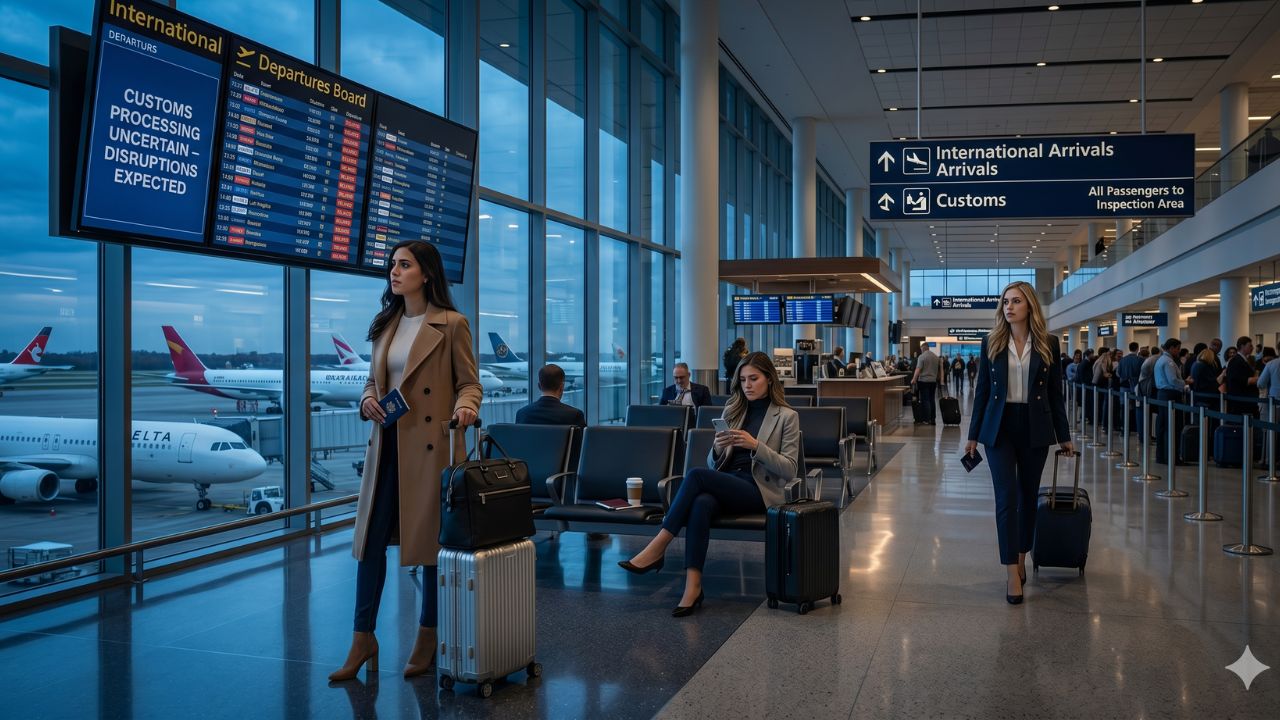
Image generated by AI
In a dramatic policy development that has sent shockwaves through the global aviation and commercial sectors, the Department of Homeland Security (DHS) is reportedly discussing a proposal to potentially limit or halt customs and immigration processing at major international gateways. Published on May 23, 2026, this emerging policy review targets airports located within sanctuary jurisdictions that do not align with federal enforcement priorities. Travel associations are warning that any reduction in Customs and Border Protection (CBP) staffing, cargo clearance, or passport control resources will trigger massive transatlantic flight cancellations, operational bottlenecks, and severe passenger travel chaos across major gateway airports in Denver, Philadelphia, Chicago, Los Angeles, New York City, Newark, Seattle, and San Francisco, highlighting a major dispute in modern airline news and global aviation updates.
Context: A Border Processing Standoff at Gateway Airports
The developing policy proposal has triggered intense debate because international border processing operates as a foundational layer of national transport infrastructure. Discussions reportedly center on whether CBP staffing, passenger entry authorization, and cargo clearance operations should continue at current scales in sanctuary cities.
Airlines and transportation officials are urging caution, emphasizing that major international gateways are deeply interconnected hubs. Any localized reduction in border staffing at one airport could trigger a domino effect of delays, routing adjustments, and flight cancellations across the entire domestic and international aviation network.
Gateway Vulnerabilities and Airport Customs Operation Matrix
To help commercial operators, supply chain managers, and travel coordinators understand the scope of the proposed policy review, the following tables detail the affected hubs and critical airport functions.
Affected Sanctuary Jurisdictions and Gateway Roles
The following table outlines the key U.S. international gateways identified in the reported DHS proposal and their primary operational areas of concern:
| Affected City | International Gateway Role & Capacity | Potential Area of Concern if Processing Changes Occur |
|---|---|---|
| Denver | Central U.S. international connectivity | International arrivals and transfer efficiency |
| Philadelphia | East Coast transatlantic access | Passenger processing continuity |
| Chicago | Major global aviation hub | International passenger and cargo flow |
| Los Angeles | Pacific gateway for global travel | High-volume customs operations |
| New York City | International business and tourism entry | Arrival capacity and traveler throughput |
| Newark | International and regional connector | Customs processing efficiency |
| Seattle | Trans-Pacific travel and cargo gateway | Border processing and logistics |
| San Francisco | Global technology and business access | International arrival management |
Critical Airport Functions Dependent on CBP Processing
The following table lists the essential operational layers at major airports that depend on coordinated federal border staffing and customs inspection:
| Airport Function | What It Supports & Coordinates | Why It Matters for Global Aviation |
|---|---|---|
| Passenger Entry | Traveler inspections and admission | Maintains international arrivals flow |
| Immigration Processing | Entry authorization procedures | Supports legal border operations |
| Customs Clearance | Goods and baggage review | Enables legal international movement |
| Cargo Processing | Freight inspection and release | Supports intercontinental supply chains |
| Security Coordination | Multi-agency airport operations | Maintains daily operational continuity |
Section-Wise Breakdown of Affected Sanctuary Gateways
Denver International Airport (DEN)
Denver International Airport operates as a vital central U.S. transit hub, connecting regional domestic routes with expanding transatlantic and transpacific flights. A reduction in CBP staffing at DEN would severely impact international arrival efficiency, causing missed connections for transiting passengers. The airport's growing role as a mid-continent transit gateway relies heavily on predictable federal processing capacity.
Philadelphia International Airport (PHL)
As a key East Coast transatlantic gateway, Philadelphia International Airport handles high volumes of European summer leisure and business travelers. Limiting immigration resources at PHL would lead to extended tarmac wait times and delayed aircraft turnarounds. Airline groups warn that passenger processing continuity is crucial to maintaining the viability of transatlantic schedules.
Chicago O'Hare International Airport (ORD)
Chicago O'Hare is one of the world's most active aviation hubs, coordinating complex passenger and cargo flows. Disrupting CBP processing at ORD would create massive backlogs, delaying both commercial passengers and time-sensitive cargo shipments. Industry stakeholders emphasize that O'Hare's supply chain infrastructure is highly sensitive to any federal staffing adjustments.
Los Angeles International Airport (LAX)
Los Angeles International Airport acts as a primary Pacific gateway, handling massive volumes of international travelers daily. Any reduction in customs throughput at LAX would lead to severe terminal congestion and flight cancellations during peak arrival banks. The high-volume nature of LAX's customs operations makes it exceptionally vulnerable to processing slowdowns.
John F. Kennedy International Airport (JFK) / New York City
JFK Airport is the premier international business and tourism entry point for the United States. Limiting customs resources at JFK would significantly reduce arrival capacity, damaging New York's inbound tourism and global business relations. Travel leaders warn that prolonged passenger delays at JFK could discourage overseas visitors from choosing U.S. destinations.
Newark Liberty International Airport (EWR)
Newark Liberty acts as a critical international and regional connector, supporting high-density European and Latin American networks. Disruptions to customs processing efficiency at EWR would complicate regional airline operations, leading to rolling delays across the East Coast corridor. The airport's highly optimized flight schedule depends on consistent border processing times.
Seattle-Tacoma International Airport (SEA)
Seattle-Tacoma is a premier transpacific travel and cargo gateway, supporting high-tech business travel and complex logistical networks. Slower border processing at SEA would delay time-sensitive freight cargo, interrupting manufacturing and retail supply chains. The airport's technology-focused passenger base requires high processing predictability.
San Francisco International Airport (SFO)
San Francisco International Airport serves as a major gateway for global technology, business, and tourism travel. A reduction in international arrival management resources at SFO would lead to extended queues at passport control, reducing traveler confidence. Maintaining efficient entry systems is vital to SFO's status as a leading global technology hub.
Industry Response: Legacy Carriers and Trade Groups Oppose Reductions
Airline trade organizations, airport operators, and global cargo groups have expressed strong opposition to the reported DHS proposal, emphasizing that border clearance serves national economic interests rather than local political positions.
Potential Travel Industry Concerns Highlighted by Stakeholders
The following table details the primary areas of concern raised by key travel sectors and the potential operational effects:
| Industry Sector | Potential Area of Concern | Possible Operational Effect |
|---|---|---|
| Airlines | Slower international processing | Severe schedule disruptions and flight cancellations |
| Airports | Operational terminal congestion | Longer aircraft turnaround and gate hold times |
| Tourism | Reduced traveler confidence | Lower inbound international visitor demand |
| Cargo Operators | Border processing delays | Slower freight movement and retail supply chain gaps |
| Business Travel | Reduced travel efficiency | Corporate travel planning uncertainty |
Timeline of the Current Border Processing Policy Debate
The following table provides a chronological overview of the emerging policy discussions and next steps:
| Policy Stage | Development & Milestones | Current Status & Watch Points |
|---|---|---|
| Initial Public Discussion | Questions raised over customs operations in sanctuary cities | Federal-local policy alignment under review |
| Industry Response | Travel and airline groups express deep economic concerns | Lobbying efforts initiated to protect gateway access |
| Transportation Reaction | Transportation authorities call to avoid broad travel disruptions | Focus on maintaining national infrastructure continuity |
| Current Status | Proposal remains under policy discussion within Department of Homeland Security (DHS) | No formal implementation or processing halt enacted |
| Next Watch Point | Potential policy review, legal assessments, and stakeholder engagement | Monitoring Customs and Border Protection (CBP) resource allocations |
Passenger and Consumer Impact: Extended Bottlenecks and Cargo Congestion
For international passengers, any reduction in border processing capacity would translate directly into longer queues, missed connections, and increased travel stress. Travel groups warn that the resulting uncertainty could discourage international visitors, weakening the competitiveness of the U.S. tourism sector.
On the commercial side, slower customs clearance would create severe cargo delays, interrupting retail supply chains and manufacturing operations. Because passenger flights carry significant volumes of belly cargo, passenger terminal delays would quickly spill over into the freight logistics network, generating broader economic costs.
What This Means for Travelers: Actionable Advice
If federal border processing models undergo adjustments in the coming months, international travelers should consider these strategies:
- Allow for Extended Layover Times: When booking international flights that connect through sanctuary gateways, select itineraries with longer connection windows to accommodate potential delays.
- Enroll in Trusted Traveler Programs: Utilize programs like Global Entry to expedite your passport control and passenger entry inspections.
- Monitor Cargo and Shipping Timelines: If coordinate cargo operations or commercial shipments, plan for potential customs clearance delays to keep supply chains running.
- Track Airport Advisories: Stay updated on terminal advisory alerts and airline scheduling changes before departing for international gateways.
FAQ: DHS Sanctuary City Customs Proposal 2026
Is the DHS currently shutting down airport customs processing?
No. No official shutdown has been announced, and the reported proposal remains a policy consideration under discussion.
Which cities were reportedly discussed in the proposal?
The discussions identified airports linked to Denver, Philadelphia, Chicago, Los Angeles, New York City, Newark, Seattle, and San Francisco.
What is the travel industry's primary concern regarding the proposal?
Industry groups warn that reducing border staffing would create operational bottlenecks, slow traveler entry, delay cargo shipments, and cause flight cancellations.
Macroeconomic Industry Analysis: Interconnected Transit and Federal Policy Friction
Aviation policy experts emphasize that international airports function as highly integrated, shared national infrastructure rather than local municipal assets. Border processing and cargo clearance support billions of dollars in intercontinental trade, business travel, and tourism spending.
Policy proposals that affect customs staffing create overlapping security, commercial, and logistics challenges that can weaken national competitiveness. Analysts suggest that future decisions will require careful coordination across multiple departments to avoid localized policies producing unintended nationwide economic disruptions.
Conclusion: Rebalancing National Transport Security and Mobility
The reported DHS proposal has introduced a new layer of uncertainty into the national conversation around airport operations and immigration enforcement. Although no border processing halt has been enacted, the strong opposition from airline and travel groups highlights the critical link between customs infrastructure and economic performance.
As global travel demand remains elevated, maintaining efficient, predictable, and secure entry systems will likely remain central to future national transportation policy discussions.
Key Takeaways
- Policy Proposal Emergence: DHS reportedly discusses limiting customs processing at airports serving sanctuary jurisdictions.
- Gateway Scale: Affects major international hubs in Denver, Philadelphia, Chicago, Los Angeles, New York City, Newark, Seattle, and San Francisco.
- Critical Operations Affected: Threatens to disrupt passenger entry, passport control, customs clearance, and intercontinental cargo processing.
- Industry Opposition: Travel and airline trade groups strongly oppose any reductions, highlighting risks of flight cancellations and travel chaos.
- Macroeconomic Multipliers: Slowdowns would impact retail supply chains, corporate travel predictability, and inbound tourism revenues.
- Current Status: The proposal remains under active discussion with no formal operational directives implemented.
Related Travel Guides
Kazakhstan Mandates Air Astana to Launch Direct Flights to Tokyo and New York by 2026 to Bypass...
flydubai Launches Historic Nonstop Dubai to Benghazi Flights Opening Vital Gateway for Tourists...
DHS Sanctuary City Airport Customs Processing Proposal Legal Updates and Court Reviews in 2026
Disclaimer
This article is for informational and educational purposes only. It does not constitute legal, financial, or professional advice. While we strive to provide accurate and up-to-date information, travel policies, regulations, and conditions change rapidly. Always verify information with official sources before making travel decisions. Nomad Lawyer makes no representations about the accuracy, reliability, completeness, or suitability of the information provided. Readers should consult qualified professionals for advice specific to their circumstances. The views expressed in this article are those of the author and do not necessarily reflect the views of Nomad Lawyer.
Kunal K Choudhary
Co-Founder & Contributor
A passionate traveller and tech enthusiast. Kunal contributes to the vision and growth of Nomad Lawyer, bringing fresh perspectives and driving the community forward.
Learn more about our team →