
Denmark and Kazakhstan Expand Strategic Bilateral Trade to Drive Eurasian Bleisure Tourism and Middle Corridor Transit
Denmark and Kazakhstan deepen trade and infrastructure ties in October 2026, boosting MICE business travel, Middle Corridor logistics, and Central Asian eco-tourism.

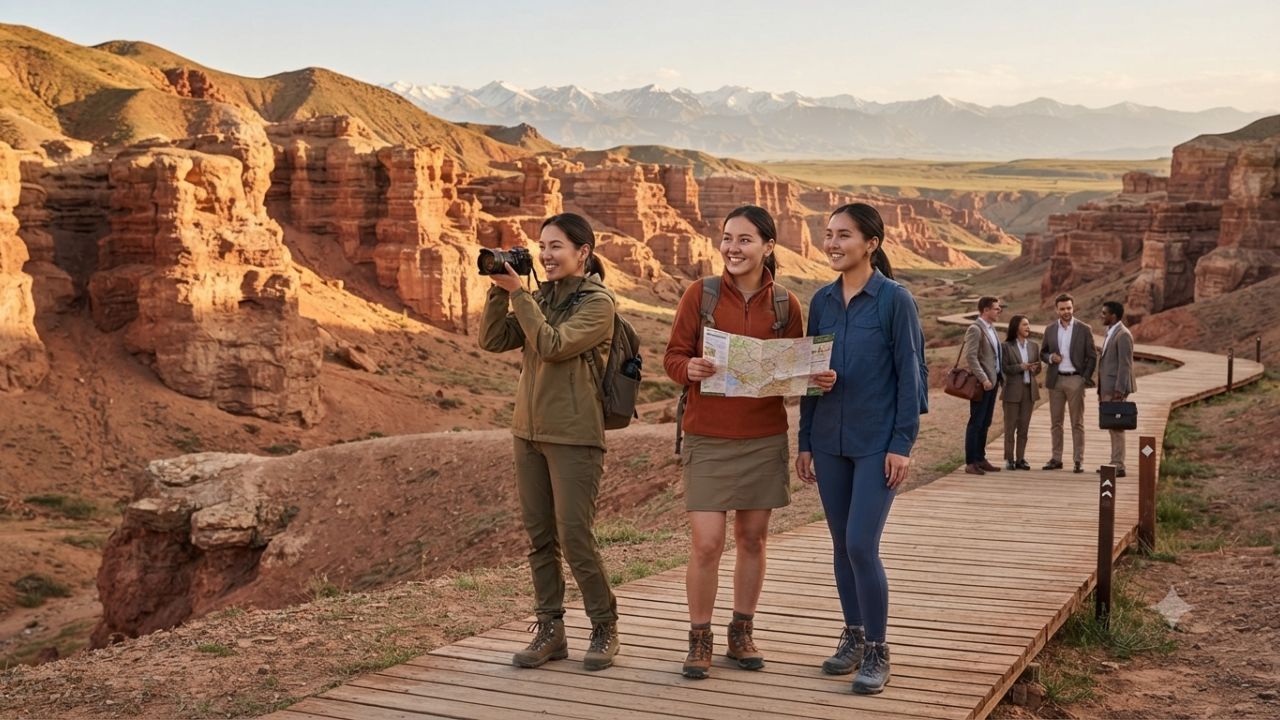
Image generated by AI
Denmark and Kazakhstan have established an expanded bilateral trade and economic framework, unleashing new corporate investment along the Middle Corridor and accelerating Eurasian business, MICE, and eco-tourism.
Diplomatic Delegation Establishes Permanent Commercial Pipeline
ASTANA — High-level diplomatic discussions held in Astana have established a formalized framework to expand trade, industrial investment, and transit connectivity between Northern Europe and Central Asia. Led by an official visit from Danish Foreign Minister Lars Løkke Rasmussen on October 1–2, 2026, the diplomatic summit established a permanent bilateral commission focused on institutionalizing economic cooperation ahead of the 35th anniversary of Kazakh-Danish diplomatic relations in 2027.
As outlined by Olzhas Suleimenov, Kazakhstan’s Ambassador to Denmark and Sweden, the bilateral agenda transitions political goodwill into structured investment projects. Official updates confirmed by the Ministry of Foreign Affairs of Denmark highlight that while industrial logistics and engineering anchor initial agreements, the strategic pact expands corporate travel networks and elevates Central Asia's profile among European business and nature-focused travelers.
[ DENMARK-KAZAKHSTAN BILATERAL TRADE & BLEISURE PIPELINE ]
  │
  ├── 1. DIPLOMATIC SUMMIT   ──► Official Visit by Foreign Minister Lars Løkke Rasmussen (Oct 1-2, 2026)
  ├── 2. NORDIC CAPITAL      ──► $400 Million Cumulative Danish Investment Since 2005
  ├── 3. LOGISTICS ARTERY    ──► Middle Corridor (Trans-Caspian Transport Route) Expansion
  └── 4. BLEISURE EXPANSION  ──► MICE Corporate Travel + Kazakh National Park Eco-Tourism
$400 Million Danish Corporate Footprint Anchors Regional Growth
Danish commercial entities have contributed nearly $400 million in direct foreign investment into the Kazakh economy since 2005. The industrial footprint features major European corporations driving regional supply chain development:
- Carlsberg: Operating a newly established, state-of-the-art non-alcoholic beverage manufacturing facility in the Almaty Region to serve Central Asian consumer markets.
- Maersk: Partnering on intermodal freight integration and port development across the Caspian Sea to streamline transcontinental shipping times.
- FLSmidth: Deploying heavy engineering and sustainable cement and mining processing technologies across industrial project sites.
- Novo Nordisk: Expanding specialized pharmaceutical distribution systems and regional healthcare infrastructure.
- Danfoss: Implementing energy-efficiency systems, climate technology, and automated heating grids across Kazakh municipal projects.
DANISH CORPORATE INVESTMENT MATRIX IN KAZAKHSTAN
| Column 1 |
|---|
| Cumulative Investment (2005–2026) : Nearly $400 Million |
| Primary Manufacturing Hub : Carlsberg Non-Alcoholic Plant (Almaty) |
| Logistics Partner : A.P. Moller – Maersk |
| Industrial Engineering Lead : FLSmidth |
| Healthcare Infrastructure Lead : Novo Nordisk |
| Energy & Climate Systems Lead : Danfoss |
Middle Corridor Infrastructure Modernization Unlocks Transit Routes
A central focus of the Denmark-Kazakhstan bilateral agenda is the acceleration of the Trans-Caspian International Transport Route, commonly known as the Middle Corridor. This multimodal trade route connects manufacturing centers in East Asia and Central Asia with European markets by bypassing traditional northern transit lines.
[ MIDDLE CORRIDOR TRANSIT ROUTE MAP ]
  East Asia / China ──► Kazakhstan Rail Network ──► Caspian Sea Ports ──► Azerbaijan ──► Georgia ──► Europe
To support increased cargo capacity managed by logistics providers like Maersk, Kazakhstan is undertaking massive national infrastructure upgrades. These projects include upgrading rail lines, modernizing Caspian Sea maritime ports, and expanding high-speed highway networks. Consequently, these infrastructure improvements open previously hard-to-reach inland regions to international travelers and eco-tourists.
Rise of Corporate "Bleisure" and MICE Travel Between Copenhagen, Astana, and Almaty
Deepened commercial ties are driving rapid growth in Meetings, Incentives, Conferences, and Exhibitions (MICE) tourism across Kazakhstan. The continuous movement of executive delegations, engineering specialists, and trade representatives establishes a steady stream of "bleisure" travelers—professionals who combine corporate assignments with personal vacation extensions.
[ THE BLEISURE TRAVELER VALUE CYCLE ]
  Corporate Meeting in Astana ──► Weekend Extension ──► High-End Hotel & Dining ──► Regional Excursions
Corporate travelers visiting industrial facilities in the Almaty Region frequently extend their itineraries to explore local cultural landmarks and alpine destinations. This steady influx of high-spending European professionals generates sustained revenue for luxury hotels, fine dining establishments, and private transportation services in Astana and Almaty.
Infrastructure Modernization Opens Kazakh National Parks to Nordic Travelers
Historically, navigating Kazakhstan’s expansive geography—the ninth largest nation globally by land mass—presented logistical challenges for international visitors moving beyond primary urban centers. The ongoing modernization of regional transport corridors eliminates travel friction, connecting major cities directly with pristine natural areas.
KAZAKHSTAN ECO-TOURISM & VISITOR STATS
| Column 1 |
|---|
| Annual National Park Visitors : 3.7 Million (Record High) |
| Key Alpine Destination : Tien Shan Mountain Range |
| Prime Geological Attractions : Charyn Canyon & Altyn-Emel Singing Dunes |
| Primary Nordic Target Market : Sustainable, Nature-Based Eco-Tourists |
This structural transport upgrade aligns with Scandinavian travel preferences. Market research confirms that Danish travelers prioritize sustainable, nature-based, and off-the-beaten-path experiences over traditional resort destinations. With Kazakhstan’s national park visitation reaching a record 3.7 million visitors, iconic landscapes such as the Tien Shan mountains, Charyn Canyon, and the singing sand dunes of Altyn-Emel are becoming prime attractions for European eco-tourists.
Direct Air Connectivity and Cultural Exchange Frameworks
As trade volumes increase and corporate travel expands, diplomatic delegates from both nations are evaluating steps to enhance direct aviation links between Copenhagen Airport (CPH) and Kazakh aviation hubs, including Astana International Airport (NQZ) and Almaty International Airport (ALA).
Establishing direct flight corridors will significantly reduce transit times, replacing multi-leg connecting routes with direct service. Furthermore, the bilateral commission plans to introduce reciprocal cultural exchange programs, youth initiatives, and streamlined visa processing ahead of the 2027 diplomatic anniversary, ensuring seamless mobility for both business executives and leisure travelers.
FAQ: Denmark & Kazakhstan Trade and Bleisure Tourism 2026
How does the trade agreement between Denmark and Kazakhstan impact international tourism?
While the bilateral pact focuses on industrial manufacturing, energy, and logistics, it directly stimulates MICE (Meetings, Incentives, Conferences, and Exhibitions) tourism. Increased corporate travel by executives and engineering teams generates a steady flow of "bleisure" travelers who extend business trips for leisure travel.
What is the Middle Corridor and why is it important for travelers?
The Middle Corridor (Trans-Caspian International Transport Route) is a multimodal trade corridor connecting Asia to Europe via Kazakhstan, the Caspian Sea, Azerbaijan, and Georgia. National infrastructure upgrades designed for freight along this route make remote natural attractions across Kazakhstan far more accessible to international tourists.
Which major Danish companies operate in Kazakhstan?
Danish commercial involvement totals nearly $400 million since 2005. Key active corporations include Carlsberg (which operates a major beverage plant in Almaty), shipping giant Maersk, engineering leader FLSmidth, pharmaceutical firm Novo Nordisk, and climate technology provider Danfoss.
What attracts Nordic and Scandinavian tourists to Kazakhstan?
Scandinavian travelers frequently seek eco-friendly, uncrowded, and nature-centric destinations. Kazakhstan offers vast natural landscapes, including the Tien Shan mountain range, Charyn Canyon, and Altyn-Emel National Park, aligning with Nordic preferences for sustainable eco-tourism.
Related Travel Guides
Disclaimer
This article is for informational and educational purposes only. It does not constitute legal, financial, or professional advice. While we strive to provide accurate and up-to-date information, travel policies, regulations, and conditions change rapidly. Always verify information with official sources before making travel decisions. Nomad Lawyer makes no representations about the accuracy, reliability, completeness, or suitability of the information provided. Readers should consult qualified professionals for advice specific to their circumstances. The views expressed in this article are those of the author and do not necessarily reflect the views of Nomad Lawyer.
Raushan Kumar
Founder & Lead Developer
Full-stack developer with 11+ years of experience and a passionate traveller. Raushan built Nomad Lawyer from the ground up with a vision to create the best travel and law experience on the web.
Learn more about our team →