
Delta Flight Barcelona to Boston Diverts to Porto After In-Flight Cabin Smoke: Emergency Landing and Passenger Protocol Guide
A Delta Airlines flight carrying 296 passengers from Barcelona to Boston made an emergency diversion to Porto Airport in Portugal after smoke filled the cabin.

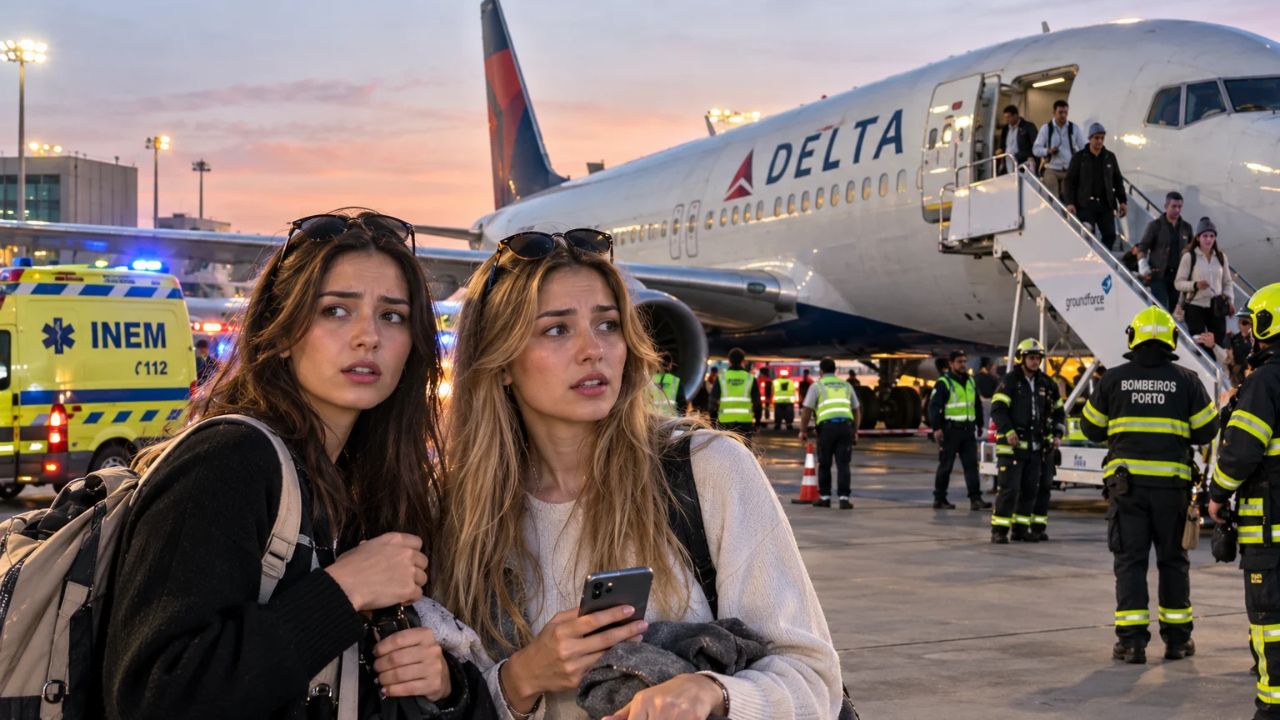
Image generated by AI
Transatlantic flight crews are trained to divert to the nearest certified coastal airfield within twenty minutes of identifying unidentified cabin fumes or electrical haze. This safety mandate was executed over the Iberian Peninsula when a Delta Airlines widebody aircraft carrying 296 passengers from Barcelona El Prat to Boston Logan declared an in-flight emergency and safely touched down at Francisco Sá Carneiro Airport in Porto, northern Portugal.
Transatlantic Diversion and Emergency Response at Porto
Operating on its scheduled transatlantic crossing toward the United States, the flight crew detected smoke issuing from an onboard aircraft system into the passenger cabin. Prioritizing passenger wellbeing and operational safety, the pilots altered course over western Iberia, initiating a rapid descent into Porto Airport.
Airport emergency teams, fire engines, and medical responders met the aircraft immediately upon landing on the runway apron. Emergency medical personnel evaluated 14 travelers on the ground for potential smoke exposure. Four passengers exhibiting mild respiratory symptoms were transported to a local medical facility for precautionary evaluation for smoke inhalation, with attending physicians confirming no severe injuries. The remaining 292 passengers and crew members were safely escorted into the international terminal concourse.
What Makes Oceanic Diversion Protocols Unique
Transatlantic flights operate under Extended-range Twin-engine Operational Performance Standards (ETOPS), requiring aircraft to remain within specific single-engine flying times of designated en-route diversion airports. When cabin air contamination or equipment smoke occurs, protocol dictates landing at the nearest viable runway rather than attempting ocean transit:
- Strategic Coastal Gateways: Porto Airport serves as one of the primary emergency diversion stations along the European Atlantic seaboard. Real-time facility updates are maintained by ANA Aeroportos de Portugal.
- Technical Inspection Procedures: The aircraft remains grounded in Porto while specialized aviation maintenance engineers and safety investigators inspect air conditioning packs, auxiliary power units, and electrical ducting to determine the root mechanical cause of the smoke.
- Passenger Duty of Care: Delta Airlines provided hotel lodging, meal vouchers, and rebooking arrangements to transport stranded travelers onward to Boston Logan once replacement aircraft scheduling was confirmed.
Passenger Travel and Contingency Insider Tips
- Handling Unexpected European Layaways: When diverted to a Schengen country like Portugal unexpectedly, passengers on US-bound flights do not need immediate transit visas if remaining in the secure airside terminal. If overnight hotel accommodation is required, non-EU travelers are processed through temporary border waivers coordinated by local authorities.
- Documenting In-Flight Medical Events: If you experience smoke inhalation or nausea during a flight incident, request an official medical evaluation report from airport first responders before leaving the terminal. These documents are vital for insurance reimbursement and airline health claims.
- Tracking Replacement Aircraft Flights: Monitor replacement ferry flight assignments directly through the airline mobile application rather than generic airport flight monitors, as recovery flights often operate under specialized four-digit flight numbers.
- Exploring Northern Portugal During Delays: If granted an extended layover in Porto, travelers can access regional cultural insights and heritage transport routes via Visit Portugal.
Regulatory Oversight and EU261 Passenger Protections
The investigation into the in-flight system failure will proceed under the oversight of Portuguese aviation incident boards in coordination with the European Union Aviation Safety Agency (EASA).
Because the flight originated at an airport within the European Union (Barcelona), passengers are protected under European Regulation (EC) No 261/2004. Under EU261 statutes, airlines must provide comprehensive duty of care—including complimentary meals, refreshments, hotel accommodation, and communication access—during extended operational delays, regardless of the operating carrier's nationality.
FAQ: Delta Flight Diversion to Porto 2026
What caused the Delta flight from Barcelona to Boston to divert?
The flight crew detected smoke from an internal aircraft system inside the passenger cabin, prompting an emergency landing at Porto Airport in northern Portugal.
Were any passengers injured during the emergency landing?
No serious injuries occurred among the 296 passengers. Fourteen travelers received on-site medical assessments, and four were evaluated at a local hospital for mild smoke inhalation before being discharged.
What are passenger rights during an international transatlantic diversion?
Under EU261 rules, passengers departing EU airports are entitled to complimentary hotel lodging, meals, ground transportation, and timely rebooking to their final destination.
How does Porto Airport handle unexpected transatlantic widebody diversions?
Porto's Francisco Sá Carneiro Airport features a Category III instrument runway and dedicated international gate capacity capable of handling large twin-aisle widebody airliners and emergency responses.
Rigorous transatlantic emergency safety standards and swift crew coordination ensured 296 passengers reached the ground safely in Portugal without major injury.
Disclaimer
This article is for informational and educational purposes only. It does not constitute legal, financial, or professional advice. While we strive to provide accurate and up-to-date information, travel policies, regulations, and conditions change rapidly. Always verify information with official sources before making travel decisions. Nomad Lawyer makes no representations about the accuracy, reliability, completeness, or suitability of the information provided. Readers should consult qualified professionals for advice specific to their circumstances. The views expressed in this article are those of the author and do not necessarily reflect the views of Nomad Lawyer.
Kunal K Choudhary
Co-Founder & Contributor
A passionate traveller and tech enthusiast. Kunal contributes to the vision and growth of Nomad Lawyer, bringing fresh perspectives and driving the community forward.
Learn more about our team →