
Delta Disruptions Atlanta Hub Spark Cascading Network Delays May 2026
Delta Air Lines grappled with operational strain at Hartsfield-Jackson Atlanta on May 8, 2026, as five cancellations and over 100 delays rippled across its nationwide network, affecting major routes from coast to coast.

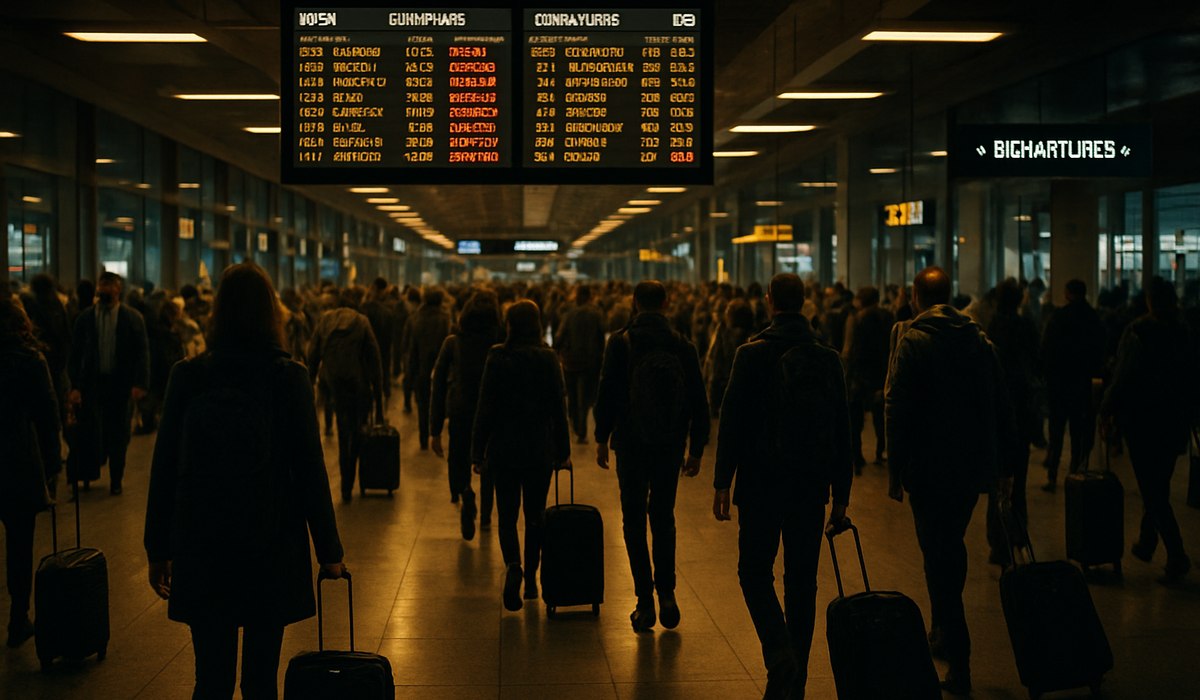
Image generated by AI
Major Delta Disruptions Paralyze Atlanta Hub Operations
Delta Air Lines scrambled to recover operations at Hartsfield-Jackson Atlanta International Airport on May 8, 2026, as the carrier recorded at least five flight cancellations and more than 100 delays across its largest operational hub. The disruption cascaded through Delta's entire domestic network, affecting travelers on routes spanning from the Southeast to the Pacific Northwest and Southwest. Passengers experienced crowded gates, extended ground times ranging from 30 to 90 minutes, and widespread rebooking challenges during what should have been a routine travel day at the world's busiest airport.
Operational Crisis at America's Busiest Airport Hub
The delta disruptions Atlanta incident exposed the fragile operational margins at which major U.S. carriers function during peak travel periods. At Hartsfield-Jackson, Delta operates as the dominant carrier, controlling roughly 60% of daily traffic through the facility. When the airline experiences even modest operational stress, the ripple effects extend far beyond Atlanta's terminals.
Industry observers describe what occurred on May 8 as a textbook "cascading disruption event." While five cancellations might seem manageable for a carrier processing hundreds of daily flights, the combination with triple-digit delays created severe network strain. Crowded concourses filled with frustrated travelers, customer service representatives struggled to handle rebooking requests, and departure boards displayed predominantly yellow and red delay indicators throughout the afternoon and evening.
The root causes of the disruption—whether mechanical issues, staffing constraints, weather-related ground delays, or scheduling conflicts—were not immediately disclosed by Delta. However, industry data suggests the airline has experienced intermittent capacity and reliability challenges in recent weeks, with Hartsfield-Jackson frequently at the epicenter of these operational spikes.
Network Cascade: How Atlanta Disruptions Spread Nationwide
Delta disruptions Atlanta operations inevitably create consequences far from Georgia. The carrier's heavy dependence on its Atlanta hub means that local operational setbacks translate directly into systemwide network impacts. Aircraft that should depart Atlanta for connections to other hubs become delayed, stranding crew members and triggering duty-time violations that force additional flight cancellations.
On May 8, affected routes demonstrated the breadth of impact. Passengers traveling from Atlanta to Fayetteville, North Carolina, encountered delays on what is typically a one-hour regional service. Longer routes to Phoenix experienced significant ground delays, affecting onward connections to West Coast destinations. The Atlanta-to-New York LaGuardia corridor, a critical business market for Delta, saw multiple delayed departures that threatened tight same-day connections for Manhattan-bound travelers.
Richmond, Virginia, and San Antonio, Texas, routes also experienced extended ground times in Atlanta. The cumulative effect meant that travelers throughout Delta's network faced reliability challenges they couldn't predict or control, simply because their aircraft was positioned through the Atlanta hub during an operational disruption.
Aviation analysts note that this hub concentration creates systemic vulnerability. When a single airport experiences strain, the airline's entire network suffers. Modern airline operations optimize for efficiency, which means there's minimal spare capacity to absorb disruptions. This reality has prompted ongoing industry discussions about whether large carriers should maintain more redundancy in scheduling and crew positioning.
What Travelers Need to Know Right Now
The Hartsfield-Jackson disruption on May 8 served as a reminder that operational challenges can occur with limited warning. For travelers currently booked on Delta flights, several important considerations apply:
First, check your flight status immediately through Delta's official app or website rather than relying on social media reports or third-party information. The airline updates flight statuses in real-time as operational conditions evolve.
Second, understand your rebooking options. Delta Air Lines, like other major carriers, has specific policies regarding compensation and rebooking for flight disruptions caused by operational issues (as opposed to weather or security concerns). Familiarize yourself with the airline's published guidelines before you need them.
Third, consider the domino effect on your itinerary. If you're connecting through Atlanta, a disruption there could impact flights you're booked on from different cities entirely. Build extra buffer time into connections through Delta's largest hub, especially during peak travel periods.
Finally, monitor alerts from the Transportation Security Administration and airport authorities. Ground stops, security staffing issues, or other facility-level problems can exacerbate operational disruptions at major hubs like Hartsfield-Jackson.
Delta's Systemic Vulnerability Exposed
The May 8 disruption at Hartsfield-Jackson highlighted a broader structural challenge facing Delta and competing carriers: the tension between operational efficiency and resilience. Modern airlines operate on razor-thin margins, with aircraft scheduled for back-to-back flights and crews positioned for maximum utilization.
This optimization strategy works smoothly under normal conditions. However, when disruptions occur, there's virtually no slack in the system. A single aircraft that experiences a mechanical delay cascades through multiple subsequent flights. Crews that exceed their legal duty limits create gaps in the schedule that require canceled flights or significantly delayed departures.
Industry observers have noted that Delta experienced several weeks of intermittent operational challenges preceding the May 8 incident. These spikes suggest potential staffing shortages, maintenance backlogs, or scheduling misalignments that haven't been fully resolved. Unlike weather-related disruptions, which are largely unavoidable, operational challenges stemming from capacity or staffing can theoretically be addressed through proactive management.
The airline has not publicly acknowledged systemic issues, instead characterizing disruptions as isolated incidents. However, the frequency and magnitude of recent disruptions at Atlanta suggest deeper organizational challenges requiring executive attention and resource allocation.
Passengers should anticipate that disruptions may recur until Delta implements more substantive operational improvements. This might include hiring additional crew members, increasing maintenance staff, or adjusting scheduling practices to build more recovery time into the network.
Disruption Impact Analysis: May 8, 2026
| Metric | Value | Impact |
|---|---|---|
| Cancellations at Hartsfield-Jackson | 5+ flights | Direct passenger displacement |
| Total System Delays | 100+ flights | Network-wide schedule slippage |
| Primary Delay Length | 30–90 minutes | Missed connections likely |
| Affected Route Network | Southeast to West Coast | Multi-regional impact |
| Peak Concourse Crowding | Afternoon/evening hours | Rebooking bottlenecks |
| Busiest Affected Routes | ATL-LGA, ATL-PHX, ATL-FAY | High-traffic corridors |
What This Means for Travelers
The May 8 operational disruption at Hartsfield-Jackson underscores several important realities for business and leisure travelers:
1. Build extra connection time through Atlanta. If you're connecting through Delta's largest hub, allow at least 90 minutes between flights rather than the standard 60-minute minimum. This buffer absorbs routine operational delays that cascade through the system.
2. Monitor your flights continuously. Download Delta's mobile app and enable push notifications for your booked flights. Operational disruptions can change flight status multiple times within hours, and real-time monitoring helps you make informed rebooking decisions faster than those relying on email alerts alone.
3. Understand your legal protections. The Department of Transportation has specific rules requiring airlines to provide meal vouchers, hotel accommodations, and ground transportation for significant delays caused by airline operations. Familiarize yourself with these protections before you travel.
4. Consider travel insurance or airline-specific protections. Premium cabin passengers and frequent flyer elite members often receive priority rebooking and better accommodation options during disruptions. If you're a leisure traveler, travel insurance can protect your vacation investment when disruptions occur.
5. Expect residual effects the day after disruptions. Aircraft and crews
Disclaimer
This article is for informational and educational purposes only. It does not constitute legal, financial, or professional advice. While we strive to provide accurate and up-to-date information, travel policies, regulations, and conditions change rapidly. Always verify information with official sources before making travel decisions. Nomad Lawyer makes no representations about the accuracy, reliability, completeness, or suitability of the information provided. Readers should consult qualified professionals for advice specific to their circumstances. The views expressed in this article are those of the author and do not necessarily reflect the views of Nomad Lawyer.
Preeti Gunjan
Contributor & Community Manager
A passionate traveller and community builder. Preeti helps grow the Nomad Lawyer community, fostering engagement and bringing the reader experience to life.
Learn more about our team →