
Delta Air Lines Grants 4% Pay Raise to Non-Union Workforce Amid Industry Cost Pressures
Breaking airline news and aviation industry updates for 2026.

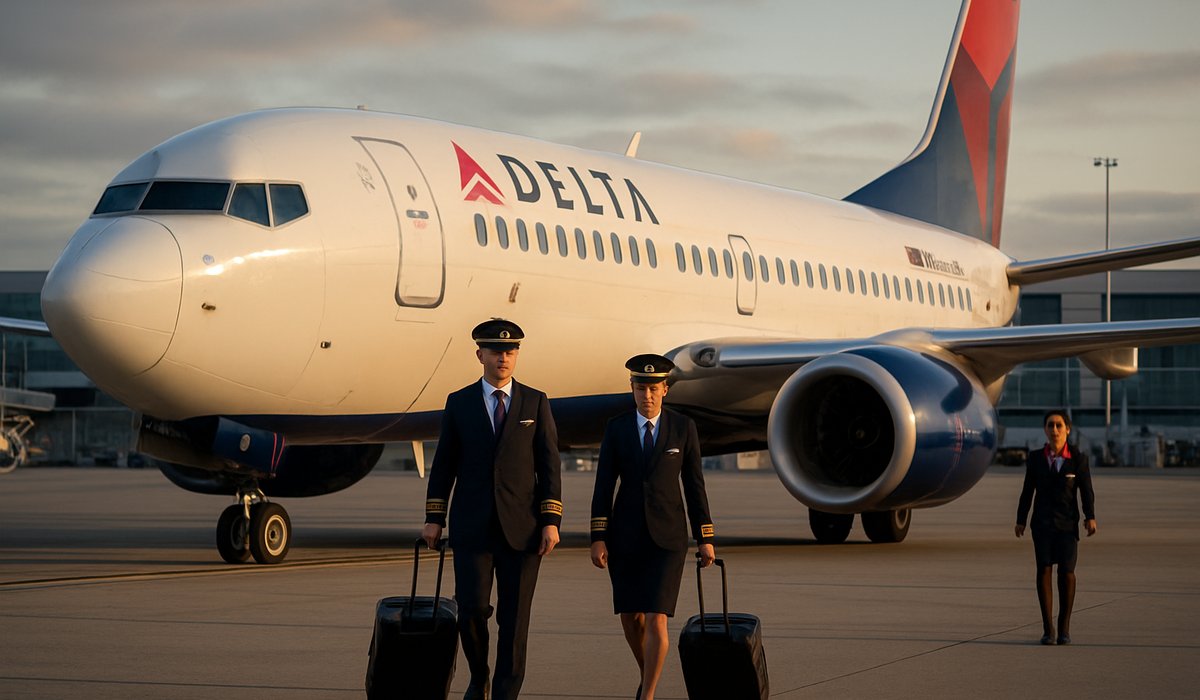
Image generated by AI
Delta Air Lines Grants 4% Pay Raise to Non-Union Workforce Amid Industry Cost Pressures
Major U.S. carrier doubles down on employee retention strategy while managing operational restructuring and volatile fuel markets
Compensation Push Signals Competitive Hiring Climate
Delta Air Lines has announced a 4% salary increase for its non-union employee base, marking a significant personnel investment even as the carrier navigates ongoing industry headwinds stemming from elevated jet fuel prices and global economic uncertainty. The move comes just days after the Atlanta-based airline implemented what it characterized as "modest" corporate workforce reductions, underscoring a selective approach to labor costs in an increasingly competitive aviation employment market.
The wage adjustment represents Delta's latest effort to retain skilled personnel across administrative and operational roles—a critical consideration as major carriers face intensifying competition for qualified staff across pilot, mechanic, and management positions. The announcement follows the company's earlier distribution of a $1.3 billion profit-sharing allocation to employees earlier this year, demonstrating the carrier's commitment to sharing financial gains with its workforce despite industry volatility.
Strategic Compensation in a Volatile Market
The timing of Delta's compensation strategy reflects broader dynamics affecting the aviation sector. Major airlines worldwide are contending with persistently elevated jet fuel costs, which continue to compress operating margins and force carriers to reassess spending priorities. Yet Delta's investment in non-union employee compensation suggests the airline views workforce stability as essential to maintaining operational efficiency and service quality.
"This reflects our ongoing commitment to our people," Delta officials indicated, emphasizing that competitive wages remain fundamental to attracting and retaining talent in an industry where skilled workers remain in high demand.
Layoffs and Long-Term Planning
While the 4% raise provides relief to most non-union staff, Delta's concurrent reduction in corporate positions highlights the airline's nuanced approach to cost management. Rather than broad-based cuts, the carrier appears to be optimizing its organizational structure while preserving investment in frontline and essential operational roles.
This strategy contrasts with some competitors that have implemented more aggressive headcount reductions in response to fuel price volatility and macroeconomic uncertainty. Delta's dual approach—trimming corporate overhead while increasing non-union compensation—suggests confidence in near-term demand and a focus on service delivery capabilities.
Industry Context
The announcement occurs within an industry grappling with structural cost inflation. Jet fuel expenses remain elevated compared to pre-pandemic baselines, forcing carriers to balance profitability against competitive pressure on fares. Delta's willingness to increase labor costs during this period signals expectations of sustained revenue performance and reflects the carrier's financial strength relative to some global peers.
FAQ: Airline Compensation and Industry Labor Trends
Q: Why are airlines raising employee pay despite high fuel costs? A: Labor shortages across the aviation sector and competition for skilled workers have made competitive compensation critical for operational continuity. Delta's move reflects industry-wide pressure to retain employees.
Q: How do jet fuel prices affect airline staffing decisions? A: Rising fuel costs compress margins, forcing carriers to seek efficiency gains elsewhere. However, labor shortages can be more damaging operationally than fuel inflation, prompting strategic wage investments.
Q: What does the $1.3 billion profit-sharing indicate about Delta's financial health? A: It demonstrates strong earnings despite industry challenges, allowing the carrier to distribute gains to employees while funding operations and growth initiatives.
Q: Are baggage fees and airline fees affected by labor cost increases? A: Potentially. When operational costs rise, carriers often adjust ancillary fees. However, Delta's profitability appears sufficient to absorb wage increases without immediate fee restructuring.
Q: How do non-union and union employee compensation structures differ at major airlines? A: Union employees typically receive contracted raises negotiated collectively, while non-union staff receive discretionary increases. Delta's 4% raise signals competitive pressure across both categories.
Related Travel Guides
Flight Delay Compensation Guide 2026
Understanding Airline Route Changes
Airport Security Process Updated (2026)
External Resources
Disclaimer
This article is for informational and educational purposes only. It does not constitute legal, financial, or professional advice. While we strive to provide accurate and up-to-date information, travel policies, regulations, and conditions change rapidly. Always verify information with official sources before making travel decisions. Nomad Lawyer makes no representations about the accuracy, reliability, completeness, or suitability of the information provided. Readers should consult qualified professionals for advice specific to their circumstances. The views expressed in this article are those of the author and do not necessarily reflect the views of Nomad Lawyer.
Raushan Kumar
Founder & Lead Developer
Full-stack developer with 11+ years of experience and a passionate traveller. Raushan built Nomad Lawyer from the ground up with a vision to create the best travel and law experience on the web.
Learn more about our team →