
Delta Air Lines Flight DL3112 Boeing 737-900 Diverts to Columbia Metropolitan Airport from Atlanta to Savannah
Delta Air Lines Flight DL3112, a Boeing 737-900 traveling from Atlanta to Savannah, was forced to divert to Columbia Metropolitan Airport on July 6, 2026, causing significant passenger delays.

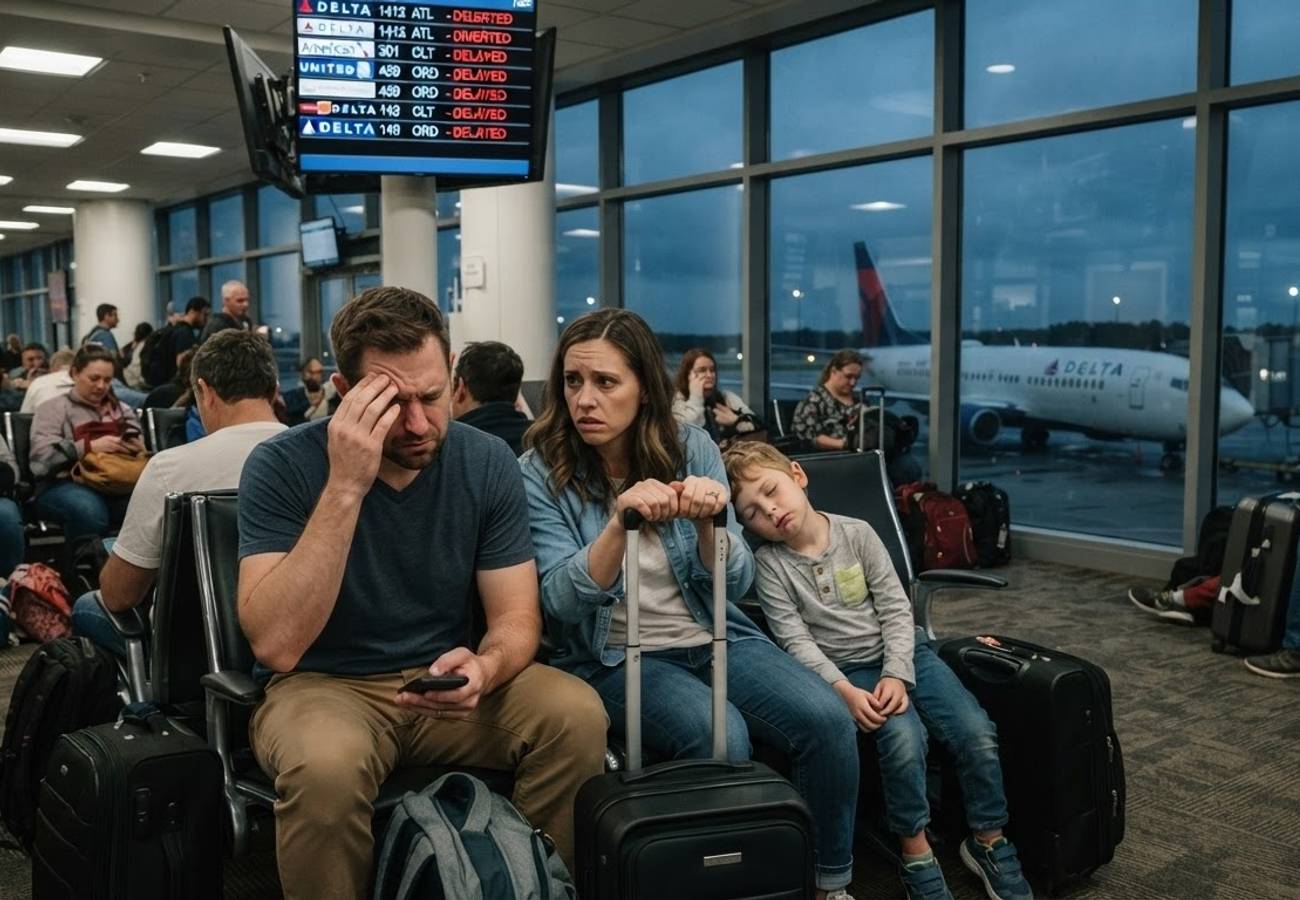
Image generated by AI
[Columbia, SC] — A scheduled domestic flight operated by Delta Air Lines was forced to change course on July 6, 2026, leading to an unplanned landing at Columbia Metropolitan Airport (CAE). Flight DL3112, utilizing a Boeing 737-900, was originally slated to transport passengers from Hartsfield-Jackson Atlanta International Airport (ATL) to Savannah/Hilton Head International Airport (SAV) before the diversion occurred.
The incident involved aircraft registration N916DU and resulted in a deviation from the standard flight path, delaying passengers who were expecting a short evening hop between the two Georgia cities. While the aircraft landed safely, the shift in destination required immediate operational adjustments by ground crews and airline staff in South Carolina.
Timeline of Delta Flight DL3112 Departure and Diversion
The disruption began at Hartsfield-Jackson Atlanta International Airport, where the Boeing 737-900 experienced an initial delay. The flight was scheduled to depart from Gate A25 at 4:55 PM EDT; however, it did not leave the tarmac until approximately 5:29 PM EDT, marking a 34-minute delay from the original timetable.
Once airborne, the flight did not proceed to its intended destination in Savannah. Instead, the crew redirected the aircraft toward Columbia Metropolitan Airport. The flight eventually touched down at Gate 8 in Columbia at approximately 7:21 PM EDT.
Compared to the original scheduled arrival time of 6:03 PM EDT at Savannah/Hilton Head International Airport, the aircraft reached its alternate landing site roughly 1 hour and 18 minutes behind schedule.
Operational Logistics and Flight Data
The following table summarizes the key flight details and timing associated with the diversion of DL3112.
| Flight Detail | Data |
|---|---|
| Flight Number | DL3112 |
| Aircraft Type | Boeing 737-900 |
| Registration | N916DU |
| Origin | Hartsfield-Jackson Atlanta Int'l (ATL) |
| Intended Destination | Savannah/Hilton Head Int'l (SAV) |
| Diversion Airport | Columbia Metropolitan Airport (CAE) |
| Scheduled Departure | 4:55 PM EDT |
| Actual Departure | 5:29 PM EDT |
| Scheduled Arrival (SAV) | 6:03 PM EDT |
| Actual Arrival (CAE) | 7:21 PM EDT |
Analysis of the Diversion to Columbia Metropolitan Airport
Industry reports indicate that the specific catalyst for the diversion of Flight DL3112 was not immediately disclosed. In the aviation sector, such unplanned route changes are typically triggered by a variety of critical operational factors. These may include sudden shifts in weather patterns, technical aircraft assessments, onboard medical emergencies, or specific air traffic control mandates.
Flight crews are trained to prioritize safety above all other considerations. When the primary destination is deemed unsuitable—whether due to runway closures, weather minimums, or mechanical concerns—pilots select an alternate airport capable of accommodating the aircraft's size and weight. In this instance, Columbia Metropolitan Airport served as the viable alternative to ensure the safety of the passengers and crew.
Once the aircraft landed in South Carolina, Delta's operations teams took over to manage the logistics of the displaced passengers. This process typically involves coordinating ground transportation or rescheduling flights to ensure travelers reach Savannah.
Passenger Impact and Regional Disruptions
The diversion caused notable instability for passengers traveling from Atlanta to Savannah. Because the aircraft landed in a different state, travelers faced immediate disruptions to their evening schedules. This was particularly impactful for those with pre-arranged ground transport, hotel check-ins, or time-sensitive commitments in Savannah.
Diversions often create a period of uncertainty as passengers await official communication regarding the next steps. Depending on the nature of the diversion, airlines may either resolve the issue on the spot and continue the flight or arrange for alternative aircraft to ferry passengers to their final destination.
Reports suggest that Delta coordinated with Columbia Metropolitan Airport authorities to streamline the landing and passenger processing, utilizing standard operational procedures to mitigate the inconvenience caused by the route change.
Aviation Safety Standards in United States Domestic Travel
The event involving Flight DL3112 underscores the rigorous safety protocols embedded in U.S. aviation. Diversions are not viewed as failures of the system but as the system working as intended to mitigate risk. Even on short-haul domestic routes, variables such as air traffic congestion and localized weather can necessitate a change in landing sites.
For travelers, this incident highlights the necessity of using real-time tracking tools and airline applications to monitor flight status. The ability of the national aviation network to pivot to alternate airports like Columbia Metropolitan Airport ensures that aircraft are not forced into dangerous situations when a primary airport becomes unavailable.
Why This Matters: The Broader Aviation Perspective
The diversion of a Boeing 737-900 on a short regional route demonstrates a critical aspect of aviation resilience: the "alternate airport" strategy. While passengers view a diversion as a delay, from a journalistic and operational standpoint, it is a manifestation of risk management.
The fact that a flight from Atlanta to Savannah—a relatively short distance—diverted to Columbia suggests that the decision was based on a non-negotiable safety or operational requirement. It proves that safety-centric decision-making overrides schedule adherence, even when the delay is minimal. For the industry, these incidents validate the importance of maintaining high-capacity alternate airports that can handle diverted traffic from major hubs like Atlanta without collapsing under the sudden load.
Safety protocols remain the primary driver of flight path decisions in the U.S. domestic network.
Related Travel Guides
Disclaimer
This article is for informational and educational purposes only. It does not constitute legal, financial, or professional advice. While we strive to provide accurate and up-to-date information, travel policies, regulations, and conditions change rapidly. Always verify information with official sources before making travel decisions. Nomad Lawyer makes no representations about the accuracy, reliability, completeness, or suitability of the information provided. Readers should consult qualified professionals for advice specific to their circumstances. The views expressed in this article are those of the author and do not necessarily reflect the views of Nomad Lawyer.
Kunal K Choudhary
Co-Founder & Contributor
A passionate traveller and tech enthusiast. Kunal contributes to the vision and growth of Nomad Lawyer, bringing fresh perspectives and driving the community forward.
Learn more about our team →