
Delta Air Lines Flight DL1336 Diverts to Columbia Metropolitan Airport
Delta Air Lines flight DL1336, a Boeing 757-232 from Norfolk to Atlanta, diverted to Columbia Metropolitan Airport on August 4, 2026.

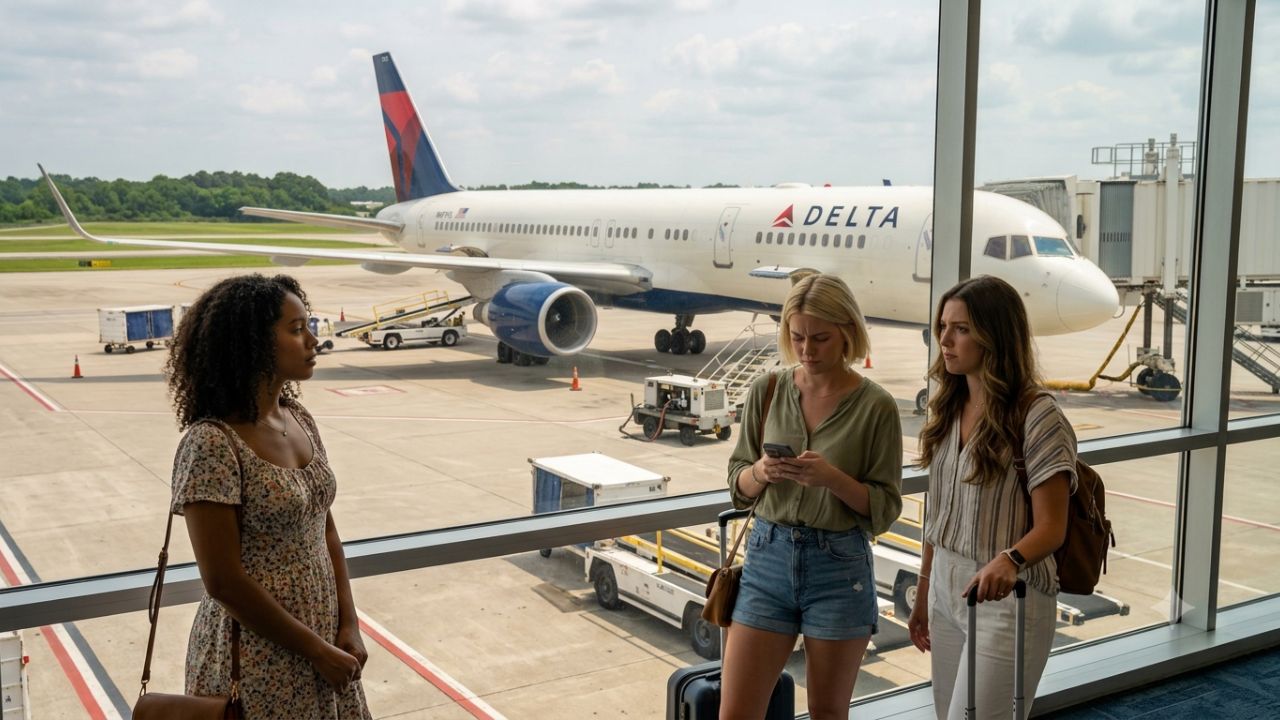
Image generated by AI
Delta Air Lines Flight DL1336, a Boeing 757-232 scheduled from Norfolk to Atlanta on August 4, 2026, diverted to Columbia Metropolitan Airport in South Carolina. The aircraft N697DL subsequently continued to Hartsfield-Jackson Atlanta International Airport, arriving later that afternoon.
Flight Disruption: Delta Flight DL1336 Diverted to Columbia
The regional air corridors linking mid-Atlantic coastal cities with the southeastern United States require highly coordinated flight operations. Passengers aboard Delta Air Lines Flight DL1336 on August 4, 2026, experienced a change in their scheduled flight path when their aircraft diverted to Columbia Metropolitan Airport.
The flight was scheduled to operate from Norfolk International Airport (ORF) in Virginia to Hartsfield-Jackson Atlanta International Airport (ATL) in Georgia, a routine domestic connection. The aircraft did not complete the journey directly, turning toward Columbia, South Carolina, where it made an unscheduled landing.
Aviation tracking records confirmed that the diversion was temporary rather than a permanent route cancellation. The aircraft landed safely at Columbia, remained at the airport for a brief period, and subsequently resumed its flight to Atlanta, completing the scheduled route. For the traveler, the real impact was an unexpected delay, but the safe resolution of the route deviation reflects the operational preparedness of the flight crew and regional air traffic control. This emphasizes the value of aviation backup plans and standard routing regulations, ensuring that passenger safety is never compromised.
Technical Specifications: The Boeing 757-232 and Fleet Integrity
The aircraft assigned to Flight DL1336 was a Boeing 757-232, carrying the United States registration N697DL. The Boeing 757 is a widely recognized narrow-body passenger aircraft, designed for medium-haul domestic routes and valued by commercial carriers for its passenger capacity and takeoff performance.
Delta Air Lines operates a substantial fleet of Boeing 757-200 series aircraft, deploying them across high-volume domestic sectors and transcontinental routes. The model's engine power makes it well suited for flights departing coastal airports like Norfolk, where seasonal weather and air temperature can influence flight planning.
While N697DL's registration and flight history are fully documented in public aviation databases, the aircraft's specifications do not provide evidence regarding the reason for the diversion. Modern jetliners are designed with complex backup systems, and flight crews regularly perform precautionary landings when operational parameters change during a flight. Within Delta's fleet, the B757 has maintained a robust safety profile over decades of domestic service, making it a reliable workhorse for regional operations, especially during unpredictable summer weather in the eastern United States.
Operations and Safety: Precautionary Landings at Regional Fields
A flight diversion is a routine safety procedure rather than an emergency. Pilots and airline dispatchers coordinate route modifications whenever conditions at the destination or along the flight path suggest that a precautionary landing is advisable. These decisions can result from weather fronts, minor technical adjustments, medical needs, or air traffic control flow management.
In the case of Flight DL1336, publicly available flight records do not confirm a specific cause for the diversion, such as mechanical issues or medical emergencies. Columbia Metropolitan Airport serves as a practical diversion airport in the southeastern region, offering full runway facilities and ground handling services capable of supporting large commercial narrow-body jets.
Landing at Columbia allowed the crew to coordinate with Delta's dispatch center before resuming the flight. Flight-tracking logs show that the aircraft departed Columbia at approximately 2:29 p.m. EDT, reached the Atlanta area around 3:07 p.m., and arrived at its gate at Hartsfield-Jackson Atlanta International Airport at approximately 3:19 p.m. It also highlights the close cooperation between regional air traffic controllers and commercial airline dispatchers during dynamic route changes.
Passenger Impacts: Managing Scheduled Route Delays
Although the diversion was temporary, it introduced additional transit time and uncertainty for the passengers on board. Missed connections are a primary concern for travelers flying into Atlanta, which serves as Delta's primary hub and a major gateway for onward domestic and international travel.
Delta's airport customer service teams coordinate rebooking and lounge assistance for passengers whose connections are affected by unscheduled delays. While flight records indicate that the aircraft resumed its journey within a few hours, passengers may have experienced varying degrees of disruption depending on their final destinations and travel schedules.
Aviation safety protocols require that flight crews prioritize passenger and aircraft safety over schedule adherence. Diversions ensure that any potential operational issues are assessed on the ground before the flight continues. These precautionary decisions are fully supported by aviation regulators worldwide as the safest course of action during unforeseen circumstances.
Sustainable Travel: Optimized Flight Paths and Sourcing Locally
From a sustainable tourism perspective, managing flight route deviations efficiently helps limit excess carbon emissions and fuel burn. Modern air traffic management networks, overseen by the Federal Aviation Administration (FAA), utilize real-time trajectory modeling to guide diverted aircraft along the shortest possible route to alternative airports.
By landing at Columbia Metropolitan Airport, the crew minimized the extra mileage flown, conserving fuel and reducing the flight's overall environmental impact. Additionally, travelers can support sustainability by choosing direct routes when booking flights, packing light to reduce overall aircraft weight, and purchasing concessions from local independent businesses inside airport terminals.
Supporting local food and beverage vendors in regional airports helps keep tourism revenue within the host community, supporting local jobs and regional agricultural suppliers.
Local Insider Guide: Carolina Dining and Layovers in Columbia
For passengers who find themselves transiting through Columbia Metropolitan Airport or experiencing an extended layover in the Midlands region of South Carolina, local destination specialists suggest the following tips:
- Optimal Booking Windows: To avoid summer afternoon convective weather and thunderstorm delays in the Southeast, select early morning flights when regional skies are generally clearer.
- Transit Etiquette: When experiencing an unscheduled layover, remain patient and check your airline's mobile app for real-time gate and seat updates. Keep your boarding documents accessible to make security re-entry quick.
- Sample Regional Cuisine: If you spend time at Columbia Metropolitan Airport or visit the city, try local South Carolina dining specialties. Sample mustard-based Carolina barbecue pork, try Southern-style pimento cheese spreads, or enjoy sweet iced tea.
- Explore Congaree National Park: For longer delays, take a taxi or rideshare to Congaree National Park, located just outside the metropolitan area. The park preserves the largest intact expanse of old-growth bottomland hardwood forest in the southeastern United States, offering quiet boardwalk trails.
Aviation Outlook: The Role of Alternative Regional Infrastructure
The diversion of Delta Flight DL1336 highlights the importance of regional airport networks in maintaining the resilience of the national airspace system. Alternative facilities like Columbia Metropolitan Airport ensure that commercial aircraft have safe landing options when major hubs like Atlanta experience traffic congestion or convective weather.
Ongoing infrastructure funding, supported by local and federal transport departments, ensures that regional airports can maintain high safety standards, update navigation systems, and manage diverted commercial flights efficiently.
Ultimately, the successful resumption and arrival of Flight DL1336 in Atlanta demonstrates the coordination between Delta Air Lines' flight crews, dispatchers, and regional air traffic control, ensuring that passengers reach their destinations safely despite unscheduled route adjustments.
Related Travel Guides
- International Ontario Airport Sets Record: 6% Passenger Surge in March 2026
- Sharjah International Airport Gripped by Severe Travel Turmoil as Air Arabia Cancels 5 Flights and Multiple Delays Stranded Thousands Across Doha, Karachi, Hyderabad, and Southeast Asia: Latest Airline News and Aviation Updates
- American Airlines' Redesigned Premium Economy Takes on Delta's Established Offering as US Carriers Intensify Mid-Cabin Competition
Disclaimer
This article is for informational and educational purposes only. It does not constitute legal, financial, or professional advice. While we strive to provide accurate and up-to-date information, travel policies, regulations, and conditions change rapidly. Always verify information with official sources before making travel decisions. Nomad Lawyer makes no representations about the accuracy, reliability, completeness, or suitability of the information provided. Readers should consult qualified professionals for advice specific to their circumstances. The views expressed in this article are those of the author and do not necessarily reflect the views of Nomad Lawyer.
Kunal K Choudhary
Co-Founder & Contributor
A passionate traveller and tech enthusiast. Kunal contributes to the vision and growth of Nomad Lawyer, bringing fresh perspectives and driving the community forward.
Learn more about our team →