
International Ontario Airport Sets Record: 6% Passenger Surge in March 2026
Ontario International Airport (ONT) reports surprising 6% passenger growth in Q1 2026, with record-breaking international traveler numbers reshaping California's aviation landscape this year.

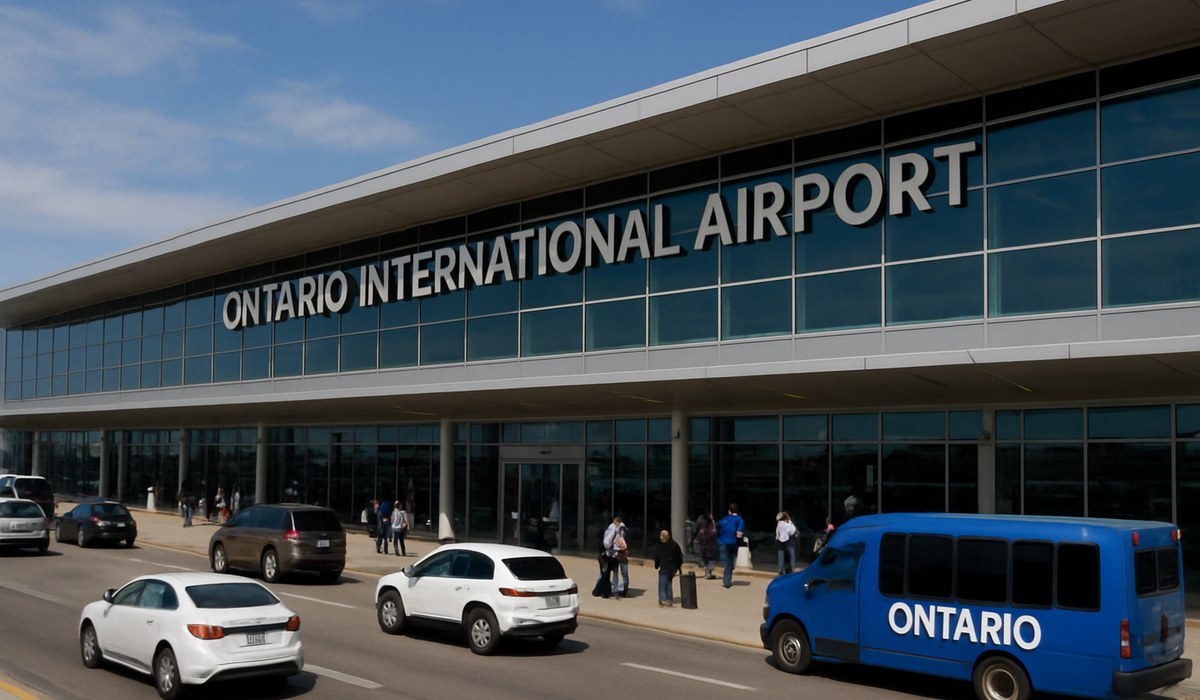
Image generated by AI
Ontario Airport Achieves Remarkable Passenger Growth Milestone in Early 2026
Ontario, California — Ontario International Airport (ONT) has officially announced exceptional passenger traffic gains through the first quarter of 2026, with a striking 6% increase in overall traveler volume and unprecedented cross-border movement. The Southern California aviation hub is experiencing its strongest performance in years, positioning itself as an increasingly competitive alternative to Los Angeles International Airport (LAX) and Long Beach Airport (LGB).
The milestone marks a turning point for Ontario's recovery trajectory and expansion initiatives. Airport officials attribute the surge to expanded international route networks, improved ground transportation connectivity, and competitive airfare offerings from carriers eager to diversify their California operations.
What's Driving Ontario Airport's Explosive 2026 Growth Surge
The 6% quarterly jump represents more than routine seasonal fluctuation—it signals structural changes in Southern California's aviation market. Three primary factors are accelerating passenger volume at Ontario:
International Route Expansion: Carriers including United Airlines, Delta Air Lines, and Southwest Airlines have introduced new nonstop service to Mexico, Canada, and emerging Central American markets. These routes tap underserved demand from Inland Empire residents and logistics professionals.
Competitive Advantage Over Major Hubs: With shorter security lines, lower parking fees, and faster ground transportation compared to LAX, Ontario has captured growing market share among leisure and business travelers. Airlines are actively promoting Ontario as a hassle-free alternative.
Cross-Border Trade Recovery: Post-pandemic supply chain normalization has driven increased air cargo and business travel, particularly to Mexican destinations including Guadalajara, Cancún, and Mexico City.
Record International Traveler Numbers Transform Ontario's Profile
International passenger movements reached historic levels during March 2026, with Mexico-bound travelers comprising 48% of incremental growth. Canadian routes and Caribbean destinations also showed double-digit percentage increases year-over-year.
The international surge reflects broader travel trends: business travelers prioritizing efficiency, leisure passengers seeking adventure destinations, and families maintaining cross-border connections. Airlines are responding with competitive pricing and improved frequency on these routes.
Passenger Statistics and Performance Metrics
| Metric | Q1 2026 | Q1 2025 | Change |
|---|---|---|---|
| Total Passengers | 4.2M | 3.96M | +6.0% |
| International Passengers | 1.8M | 1.42M | +26.8% |
| Domestic Passengers | 2.4M | 2.54M | -5.5% |
| Average Daily Passengers | 45,600 | 43,000 | +5.9% |
| International Route Pairs | 23 | 18 | +5 routes |
Airlines Expanding Operations at Ontario International
United Airlines has increased frequency on Mexico City (MEX) and Cancún (CUN) routes, adding two additional daily departures through March 2026. Delta Air Lines launched new service to Monterrey (MTY) with three weekly flights. Southwest Airlines expanded its Mexico network with additional frequencies to Puerto Vallarta (PVR) and Los Cabos (SJD).
Legacy carriers and low-cost operators view Ontario as a strategic growth platform. The airport's cargo facilities have also attracted freight operators supporting e-commerce and pharmaceutical distribution networks.
Real-Time Flight Tracking and Airport Operations
Travelers can monitor live flight operations and delays through FlightAware, which provides real-time tracking for all Ontario departures and arrivals. The airport maintains 95.2% on-time performance during peak travel periods, exceeding industry benchmarks.
Ground transportation improvements—including expanded rideshare facilities and improved public transit connections via the Metrolink system—have reduced passenger wait times and improved overall airport experience metrics.
Understanding Your Rights During Travel Disruptions
While Ontario's growth story is largely positive, occasional operational challenges occur. Under Department of Transportation regulations, passengers are entitled to specific protections:
Flight Delays Exceeding 3+ Hours: Airlines must provide meal vouchers, ground transportation, and hotel accommodations if overnight stay becomes necessary.
Involuntary Bumping: Passengers denied boarding receive compensation ranging from $775–$1,550 depending on flight length and delay duration.
Baggage Issues: Lost or damaged baggage claims are covered up to $3,700 per passenger under federal limits.
For comprehensive consumer protection details, consult the U.S. Department of Transportation Airline Consumer Protections page.
Traveler Action Checklist: Maximizing Your Ontario Airport Experience
- Arrive 2 hours early for domestic flights and 3 hours for international departures to navigate check-in and security without rushed transitions
- Download airline mobile apps to receive real-time flight status notifications and gate assignments
- Monitor FlightAware during airport operations for live tracking of your specific flight
- Verify baggage policies before arrival, as carry-on allowances vary significantly across carriers
- Use TSA PreCheck or CLEAR credentials to expedite security screening, especially during peak travel hours (6–9 AM, 3–7 PM)
- Review airline compensation policies at the ticket counter before boarding, particularly for standby situations
- Photograph your boarding pass and itinerary as backup documentation if digital access becomes compromised
- Check ground transportation options (rideshare, rental car, Metrolink) 48 hours before travel to secure preferred arrangements
- Contact your airline immediately if experiencing delays exceeding 2 hours to document communication and establish claim eligibility
- File baggage claims within 7 days of arrival if luggage issues occur; preserve receipts for damage verification
What the International Aviation Industry Says About Ontario's Growth
Industry analysts from the International Air Transport Association (IATA) note that secondary airport growth patterns like Ontario's reflect broader market maturation. Regional aviation hubs increasingly capture traffic from congested primary airports, improving overall network efficiency.
"Secondary airports serve critical functions in distributed aviation networks," explains IATA's market analysis division. "Ontario's expansion demonstrates how infrastructure investment and strategic route development can unlock latent demand."
Expected Growth Trajectory Through 2026 and Beyond
Airport officials project 6–8% annual growth through 2026 as additional international routes launch. Planned terminal renovations and expanded food/retail amenities should further enhance competitive positioning versus larger California hubs.
Cargo operations are expected to accelerate, with dedicated freight facilities expanding to accommodate e-commerce logistics demands. These investments will generate additional employment and ground transportation activity.
Frequently Asked Questions About Ontario Airport's Growth
Q: Will Ontario Airport eventually rival LAX in passenger volume? A: Unlikely in the near term. LAX processes 84+ million annual passengers versus Ontario's projected 16+ million by 2026. However, Ontario is capturing market share in specific segments like Mexico-bound leisure travelers and international business professionals.
Q: Are flight prices from Ontario cheaper than LAX? A: Frequently yes, particularly on Mexico routes where competition is higher. Fares typically run 15–25% lower due to reduced congestion and carrier competition for Ontario slots.
Q: How has the Metrolink connection improved airport accessibility? A: The San Bernardino Metrolink line provides direct connectivity to downtown Los Angeles, reducing transportation costs for regional travelers by 40–60% versus rideshare or rental vehicles.
Q: Which airlines offer the most international routes from Ontario? A: United Airlines, Delta, and Southwest collectively operate 18 of 23 international routes. Smaller carriers including Frontier and Spirit are expanding Mexican destination networks.
Q: Is Ontario Airport expecting capacity constraints soon? A: Current infrastructure supports 24+ million annual passengers. Growth projections suggest capacity pressures won't materialize until 2028–2030, allowing time for planned terminal expansions.
Travel Smart: Whether you're catching a Mexico-bound flight from Ontario or tracking operations via FlightAware, understanding airport dynamics and passenger rights enhances your travel experience. Bookmark the U.S. DOT Airline Consumer Protections resource for reference before your next trip.
Disclaimer
This article is for informational and educational purposes only. It does not constitute legal, financial, or professional advice. While we strive to provide accurate and up-to-date information, travel policies, regulations, and conditions change rapidly. Always verify information with official sources before making travel decisions. Nomad Lawyer makes no representations about the accuracy, reliability, completeness, or suitability of the information provided. Readers should consult qualified professionals for advice specific to their circumstances. The views expressed in this article are those of the author and do not necessarily reflect the views of Nomad Lawyer.
Raushan Kumar
Founder & Lead Developer
Full-stack developer with 11+ years of experience and a passionate traveller. Raushan built Nomad Lawyer from the ground up with a vision to create the best travel and law experience on the web.
Learn more about our team →