
Delta Air Lines Flight DAL2146 Diverts to Los Angeles After Missing San Diego Airport Noise Curfew in 2026
Delta Air Lines flight DAL2146 diverted to LAX on July 12, 2026, after a departure delay from Minneapolis made it impossible to meet San Diego's strict midnight noise curfew.

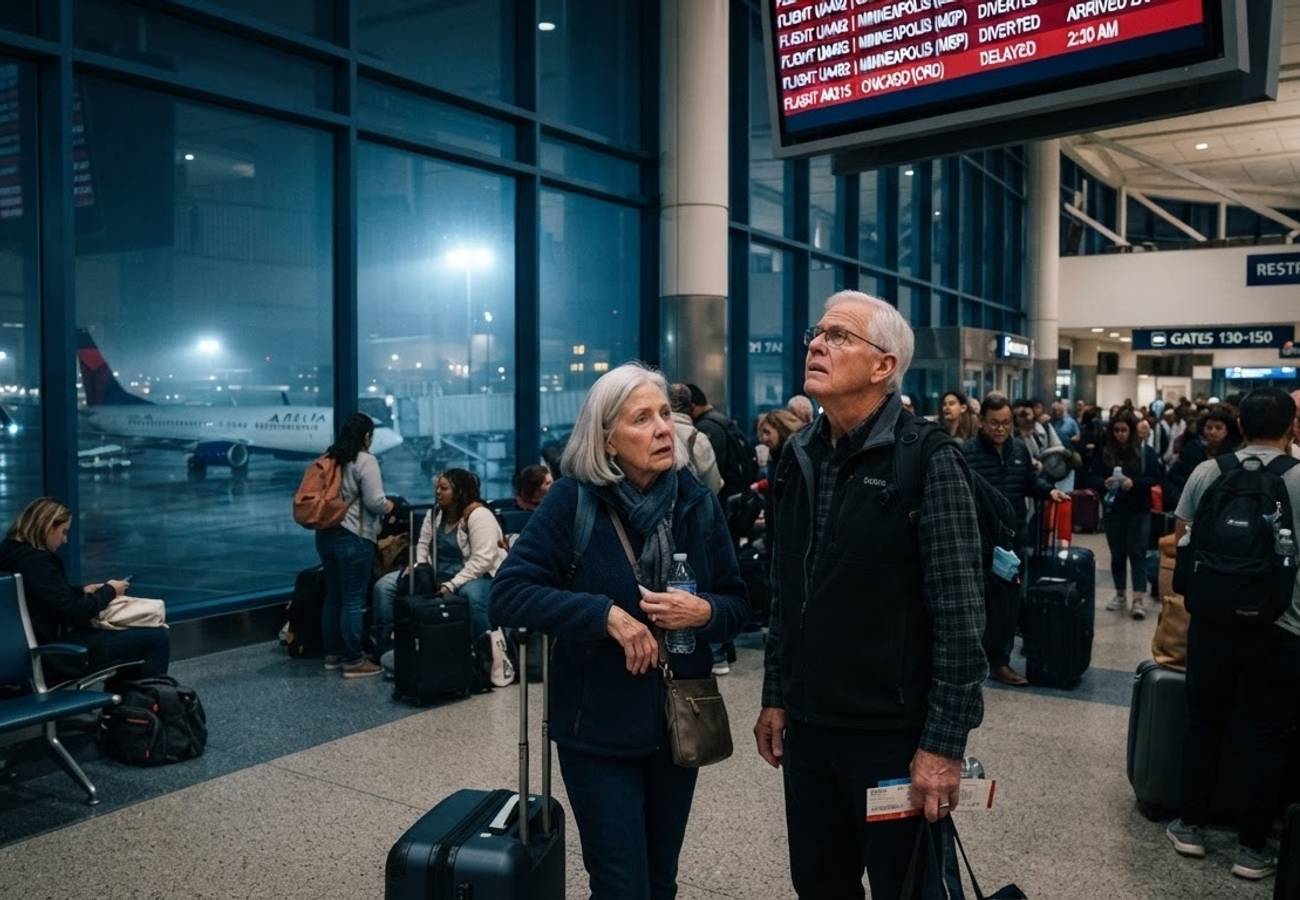
Image generated by AI
Delta Air Lines flight DAL2146, a Boeing 737-932(ER) traveling from Minneapolis to San Diego, was forced to divert to Los Angeles International Airport (LAX) on July 12, 2026, due to strict municipal noise regulations.
The diversion occurred after a delayed departure from Minneapolis-Saint Paul International Airport caused the aircraft to miss its scheduled arrival window of 23:30 EST. Flight tracking data indicates the crew altered course over Southern California to avoid violating the midnight curfew at San Diego International Airport.
Operational Breakdown of the Diversion
The diversion was triggered by a combination of scheduling delays and rigid environmental ordinances. Because San Diego International Airport enforces a strict noise mitigation curfew, commercial arrivals are effectively prohibited after midnight.
Flight analysis shows that the initial pushback delay in Minnesota eliminated the operational buffer required to absorb mid-flight headwinds and air traffic control routing adjustments. To avoid heavy financial penalties and regulatory reviews associated with curfew violations, the flight crew coordinated with dispatch to reroute the aircraft to LAX, a 24-hour facility.
Flight Specifications and Impact:
- Flight Number: DAL2146
- Aircraft Model: Boeing 737-932(ER)
- Origin: Minneapolis-Saint Paul International Airport (MSP)
- Intended Destination: San Diego International Airport (SAN)
- Diversion Point: Los Angeles International Airport (LAX)
- Primary Cause: Midnight noise curfew violation risk and poor visibility due to a summer marine layer.
Passenger Recovery and Logistics
Upon landing at LAX, Delta Air Lines initiated a ground-bridge recovery plan. Since the diversion occurred late in the evening, immediate flight re-bookings to San Diego were unavailable.
The airline deployed high-capacity charter motor coaches to transport passengers from the LAX terminal gates directly to their final destination in San Diego. This operational pivot ensured that passengers were not stranded overnight at the airport, although it added several hours to the total travel duration.
Passenger Rights & Advisory (Information Gain)
When a flight is diverted due to operational constraints or regulatory requirements (such as curfews), passengers have specific rights depending on the jurisdiction and the carrier's contract of carriage.
1. Duty of Care Under standard aviation guidelines and DOT policies, airlines are responsible for the "duty of care" when a diversion occurs. This includes:
- Transportation: Providing ground transport (buses/shuttles) to the final destination or a hotel.
- Communication: Allowing passengers to contact family or make necessary arrangements.
- Refreshments: Providing food and water vouchers if the delay exceeds a reasonable window.
2. Compensation Claims In the United States, diversions due to "operational necessity" (like curfew avoidance) are generally not eligible for cash compensation unless the delay was caused by a controllable mechanical failure. However, passengers should:
- Keep Receipts: Document all out-of-pocket expenses for food or unplanned transport if the airline fails to provide vouchers.
- Request Documentation: Ask for a formal "Statement of Delay" from Delta to support insurance claims.
3. Rebooking Rights If a passenger chooses not to take the provided ground transport, they are entitled to the next available flight to their destination at no additional cost.
Industry Analyst View
This incident highlights the increasing tension between rigid municipal environmental policies and the volatility of long-haul domestic flight schedules. The "zero-tolerance" nature of the San Diego curfew forces carriers to make binary decisions: risk significant fines and legal scrutiny or incur the high cost of a diversion and ground transportation.
For operators of the Boeing 737-932(ER), the lack of a "buffer" in late-night slots means that even a minor boarding delay at a hub like Minneapolis can jeopardize the legality of a landing 2,000 miles away. As urban centers implement stricter noise ordinances to protect residential zones, airlines will likely be forced to pad their schedules further, potentially reducing overall fleet efficiency.
Operational precision is no longer just about safety; it is now a requirement for regulatory survival.
Related Travel Guides
Disclaimer
This article is for informational and educational purposes only. It does not constitute legal, financial, or professional advice. While we strive to provide accurate and up-to-date information, travel policies, regulations, and conditions change rapidly. Always verify information with official sources before making travel decisions. Nomad Lawyer makes no representations about the accuracy, reliability, completeness, or suitability of the information provided. Readers should consult qualified professionals for advice specific to their circumstances. The views expressed in this article are those of the author and do not necessarily reflect the views of Nomad Lawyer.
Kunal K Choudhary
Co-Founder & Contributor
A passionate traveller and tech enthusiast. Kunal contributes to the vision and growth of Nomad Lawyer, bringing fresh perspectives and driving the community forward.
Learn more about our team →