
Delta Air Lines Flight 570 Incident: Non-Consensual Filming Trends and Airline Policy Shifts 2026
An analysis of the non-consensual recording incident on Delta Flight 570 and how evolving airline contracts of carriage are reacting to the rise of viral passenger content.

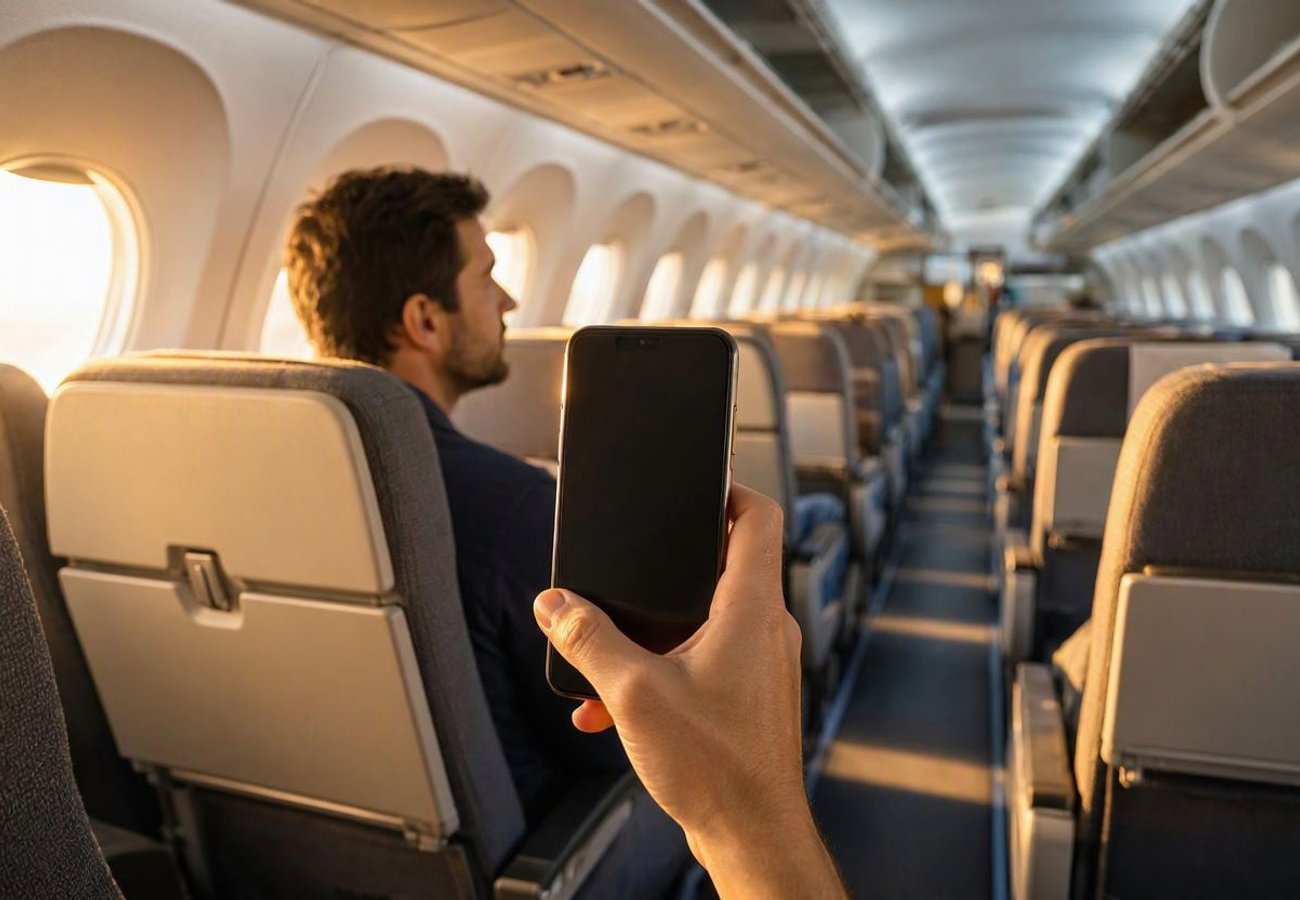
Image generated by AI
While Delta Air Lines maintains a general openness to passengers documenting their journeys, the line between "travel vlogging" and harassment has blurred, as evidenced by a recent incident on Flight 570 where a passenger was caught secretly filming a fellow traveler. This event highlights a growing tension in the aviation industry: the conflict between a passenger's desire for digital content and the fundamental right to privacy in a confined, high-stress environment.
The Flight 570 Incident in Numbers
On September 27, 2026, a Boeing 757 operating as Delta Flight 570 from San Francisco International Airport (SFO) to Hartsfield-Jackson Atlanta International Airport (ATL) became the site of a privacy breach. The flight, which spanned 4 hours and 17 minutes, departed SFO at 6:05 a.m. and landed in ATL at 1:22 p.m.
The data from the event reveals a specific spatial conflict: a male passenger in middle seat 39E was caught recording a female passenger in the adjacent window seat without her permission. Upon being alerted, flight attendants intervened, attempting to relocate the victim to a different seat. The situation escalated as the aircraft approached Atlanta, prompting the crew to notify Delta Flight Operations to determine if law enforcement should be stationed at the gate for the passenger, who was connecting to Luis Munoz Marin International Airport (SJU) in Puerto Rico.
Comparative Policy Frameworks: Privacy vs. Public Space
The legal gray area of mid-flight recording is a recurring theme in global aviation. Delta’s internal 2024 memo acknowledges that as a "common carrier," the airline has less authority to restrict customer conduct than a private business (such as a gym). However, the airline explicitly prohibits content capture that is "not well-intentioned" or interferes with the safety and security of customers and employees.
The challenge lies in the definition of "private space." For example, Georgia law (Ga. Code Ann. § 16-11-66(d)) prohibits recording in private places without consent, but aircraft cabins are generally categorized as public or quasi-public spaces, complicating criminal prosecution.
Global Carrier Response to Non-Consensual Filming
| Carrier | Policy Focus | Enforcement Level | Primary Target |
|---|---|---|---|
| Delta Air Lines | Intent-based (Well-intentioned vs. Harassment) | Case-by-case intervention | General Passengers |
| British Airways | Strict Prohibition (Contract of Carriage) | Potential Bans / Legal Action | Airline Staff/Crew |
| GOL Airlines | Reactive (Post-incident litigation) | Legal/Civil Damages | General Passengers |
This shift toward stricter language is mirrored in broader industry trends tracked by the International Air Transport Association (IATA), where "unruly passenger" definitions are expanding to include digital harassment and non-consensual recording.
What This Means for Travelers
For the modern traveler, the "right to record" is not absolute. If you find yourself the subject of non-consensual filming, the data from Flight 570 suggests a specific protocol for resolution:
- Immediate Notification: Alert flight crew immediately. In the Flight 570 case, prompt reporting allowed the crew to initiate a seat change and notify ground operations.
- Documentation: Note your seat number and the seat number of the offender (e.g., 39E). This is essential for any subsequent Federal Aviation Administration (FAA) or law enforcement reports.
- Requesting Ground Intervention: If the behavior is predatory, request that the crew notify the destination airport's law enforcement via Flight Operations before landing.
If you are planning a transcontinental trip in Q4 2026, be aware that airlines are increasingly treating "digital harassment" as a safety violation rather than a civil dispute, which can lead to immediate removal from the aircraft or being placed on internal "no-fly" lists.
Forward Projection: The Digital Boundary Shift
Based on the trajectory of lawsuits—such as the 2025 case involving Jennifer Castro and GOL Airlines, where a passenger sued for distress after a TikTok video went viral—we expect a shift in the "Contract of Carriage" for most major US carriers.
The industry is moving away from the "common carrier" excuse of being unable to restrict conduct. We project that by 2027, more airlines will adopt the British Airways model, explicitly banning the recording of other passengers without consent as a condition of boarding. This will likely be driven by a rise in civil litigation regarding "emotional distress" caused by viral social media exposure.
FAQ: Mid-Flight Recording Rights 2026
Is it legal to film other passengers on a plane? Generally, aircraft cabins are not considered "private places" under many state laws, but filming that constitutes harassment or violates an airline's specific "Contract of Carriage" can lead to removal from the flight or civil lawsuits.
Can Delta ban a passenger for filming without consent? Yes. While Delta allows "well-intentioned" travel documentation, any behavior that interferes with the security or safety of other customers is a violation of their internal policy and can result in sanctions.
What should I do if I am being recorded secretly? Immediately notify a flight attendant. Request a seat change and ask the crew to log the incident in the flight report to create a paper trail for potential legal action.
The line between a travel vlog and a privacy violation is now a matter of airline policy and potential litigation.
Related Travel Guides
Disclaimer
This article is for informational and educational purposes only. It does not constitute legal, financial, or professional advice. While we strive to provide accurate and up-to-date information, travel policies, regulations, and conditions change rapidly. Always verify information with official sources before making travel decisions. Nomad Lawyer makes no representations about the accuracy, reliability, completeness, or suitability of the information provided. Readers should consult qualified professionals for advice specific to their circumstances. The views expressed in this article are those of the author and do not necessarily reflect the views of Nomad Lawyer.
Preeti Gunjan
Contributor & Community Manager
A passionate traveller and community builder. Preeti helps grow the Nomad Lawyer community, fostering engagement and bringing the reader experience to life.
Learn more about our team →