
Delhi's Electric Double-Decker Tourist Bus Hits 1,500 Passengers With Aggressive Summer Discounts
Delhi's electric double-decker tourist bus surpasses 1,500 riders in four months. Summer ticket discounts slash prices by 40% as the Delhi government doubles down on tourism revival.

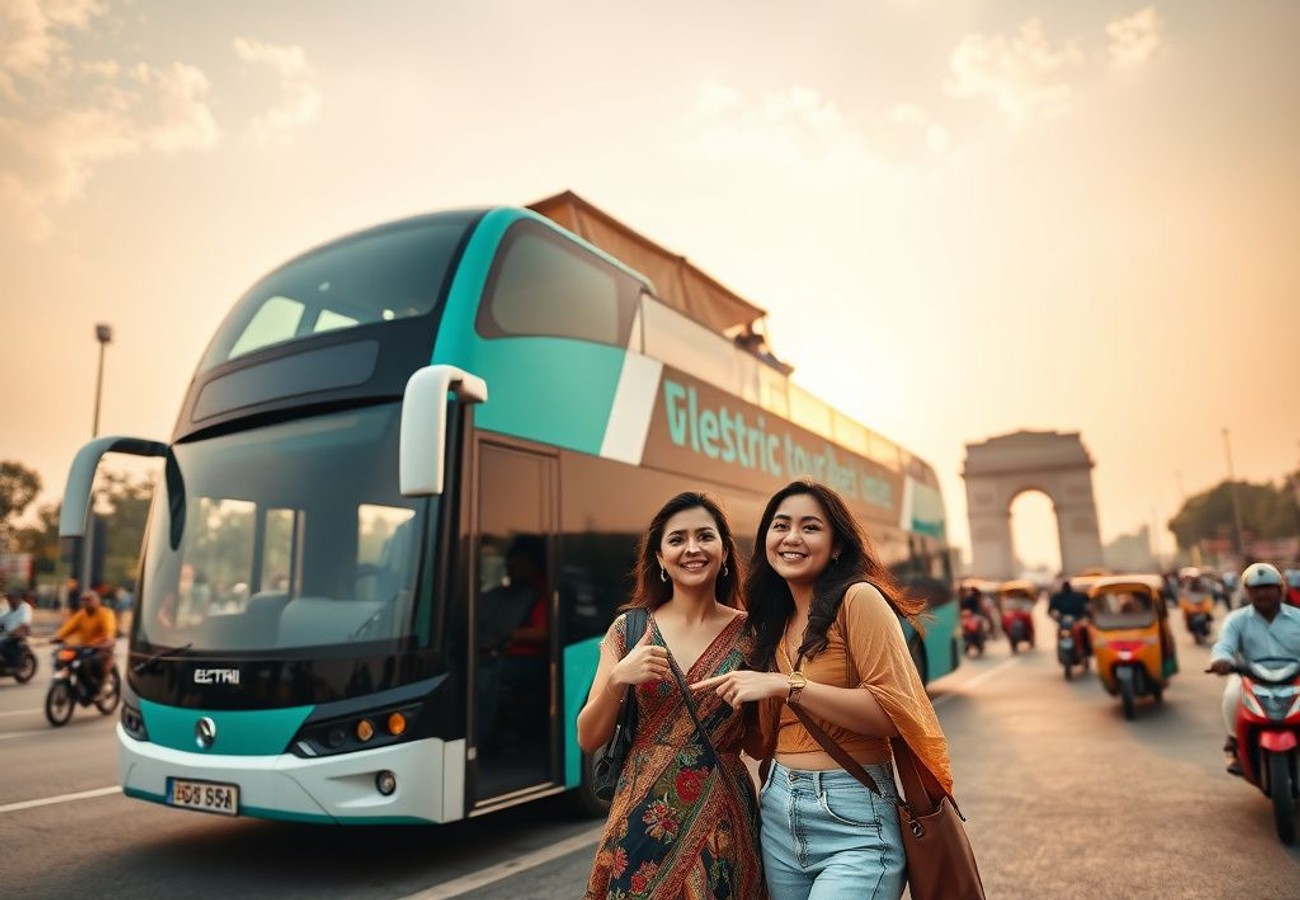
Image generated by AI
Delhi's Double-Decker Bus Boom: How Aggressive Summer Discounts Are Luring Tourists Back
When the Delhi government fired up its electric double-decker tourist bus in February 2026, few could have predicted what would unfold. Four months later, the initiative has already welcomed over 1,540 passengers—and the numbers keep climbing.
The real momentum kicked in when the tourism department slashed ticket prices this summer. Adults saw their fares drop from ₹500 to ₹300 (a 40% cut), while children's tickets tumbled from ₹300 to ₹200. The response has been swift and measurable.
Reddit: "Finally affordable ways to see Delhi's monuments without breaking the bank. The bus tour costs less than my coffee habit." — r/IndiaTravel
The Growth Trajectory: From Slow Start to Summer Surge
The numbers tell a compelling story of accelerating demand. When operations commenced on February 28, the bus carried just 12 passengers that first month. March brought 432 riders. By April, the figure climbed to 372. May pushed it to 424.
Then came the discount announcement—and the shift became undeniable. By June 12, the bus had transported 1,540 total passengers, with officials reporting that weekend ridership accounts for a disproportionate share of bookings. This isn't random growth; it's proof that pricing strategy directly drives tourism participation.
According to PTI reports from June 18, 2026, officials credited the summer discount strategy with "encouraging" weekend response rates, particularly among Indian families planning staycations.
Two Routes, Two Different Experiences
The Delhi government's pilot operates across two distinct routes, each engineered for different tourist preferences.
Weekday tours depart from Vijay Chowk and traverse the Central Vista area, then proceed to major museums and the newly constructed Pradhanmantri Sangrahalaya (Prime Minister's Museum). This route appeals to history buffs and culture-focused visitors.
Weekend tours kick off from Dilli Haat, INA, and feature the crown jewel: the Change of Guard ceremony at Rashtrapati Bhavan (the official residence of India's President). Officials confirmed this remains the single most popular attraction driving weekend bookings.
The air-conditioned buses themselves—capacity 63 passengers—come equipped with trained tour escorts who narrate the historical and cultural significance of each site. Stops include Bharat Mandapam, the National War Memorial, and the new Parliament complex.
A Historic Comeback: Four Decades Later
This initiative marks something extraordinary: the return of double-decker buses to Delhi's roads after nearly 40 years.
The Delhi Transport Corporation operated double-decker services until 1989, when an ageing fleet forced the city to phase out the iconic vehicles entirely. A generation of Delhi residents has grown up without this transportation staple.
The electric version represents not nostalgia but pragmatism—a climate-conscious retrofit that solves multiple problems simultaneously: tourism promotion, sustainable transport, and revenue generation for the city's hospitality ecosystem.
What This Means for Nomad Lawyers and Digital Travellers
For professionals working remotely across India, this development carries legal and practical implications. The Delhi government's decision to operate tourist services as a pilot project (with plans to expand routes based on public response) reflects India's broader policy shift toward data-driven tourism infrastructure investment.
If you're based in or visiting Delhi for extended stays, understanding transit options becomes part of your legal and logistical planning. Tourist buses offer documented, regulated transportation with safety protocols—critical considerations when navigating Indian cities while managing work obligations and visa requirements.
The Ministry of Tourism oversees these initiatives, meaning passenger data feeds into national tourism statistics that influence policy. For travel journalists and legal researchers tracking India's tourism sector, this pilot represents a measurable case study in public-private transportation models.
The Discount Math: Why ₹300 Matters More Than You Think
Here's where it gets strategic. By reducing adult fares to ₹300, the Delhi government eliminated the primary barrier to weekend family outings. This price point sits comfortably within discretionary spending for middle-class Indian families—the demographic driving domestic tourism growth.
The 40% reduction directly correlates with the passenger surge observed post-announcement. When you remove friction from purchasing decisions, demand surfaces rapidly. Officials are likely collecting this behavioral data to justify route expansion and justify continued subsidy of the pilot program.
The Pilot Becomes Blueprint
Currently classified as a pilot project, the double-decker initiative won't remain limited to two routes indefinitely. Officials explicitly stated that "additional routes may be explored in the future based on public response."
Translation: if ridership maintains momentum through the summer season, expect expansion announcements by Q4 2026. New routes could realistically cover Red Fort, India Gate, Connaught Place, and the southern Delhi circuit (including Qutb Minar and Humayun's Tomb).
This pattern—pilot launch, performance-based expansion, eventual full-service rollout—has become standard across Indian government tourism initiatives. What starts as experimental often becomes permanent infrastructure when metrics justify it.
Implications for India's Tourism Recovery
The double-decker success arrives during a critical moment for India's tourism sector. Post-pandemic recovery metrics show strong domestic demand but international visitor numbers lagging behind 2019 baselines.
By making iconic Delhi landmarks more accessible—both financially and logistically—the Delhi government addresses a fundamental tourism problem: friction between desire and access. A tourist who might hesitate to hire a private guide or navigate public transit alone feels confidence boarding a curated, air-conditioned double-decker with a trained escort.
This model scales. If Delhi's pilot succeeds, expect comparable initiatives in Mumbai, Bangalore, Kolkata, and Hyderabad within 12-18 months.
The return of double-decker buses to Delhi signals something larger: India's willingness to innovate on infrastructure when data demands it.
Related Travel Guides
Disclaimer
This article is for informational and educational purposes only. It does not constitute legal, financial, or professional advice. While we strive to provide accurate and up-to-date information, travel policies, regulations, and conditions change rapidly. Always verify information with official sources before making travel decisions. Nomad Lawyer makes no representations about the accuracy, reliability, completeness, or suitability of the information provided. Readers should consult qualified professionals for advice specific to their circumstances. The views expressed in this article are those of the author and do not necessarily reflect the views of Nomad Lawyer.
Kunal K Choudhary
Co-Founder & Contributor
A passionate traveller and tech enthusiast. Kunal contributes to the vision and growth of Nomad Lawyer, bringing fresh perspectives and driving the community forward.
Learn more about our team →