
Delhi Set to Inaugurate ₹1,635 Crore Barapullah Phase 3 Corridor on September 29, Slashing East Delhi–Noida Commute Times to 15 Minutes
Delhi will open the 3.5 km Barapullah Phase 3 elevated corridor on 29 September 2026, creating a continuous 9 km signal-free route across the Yamuna River.

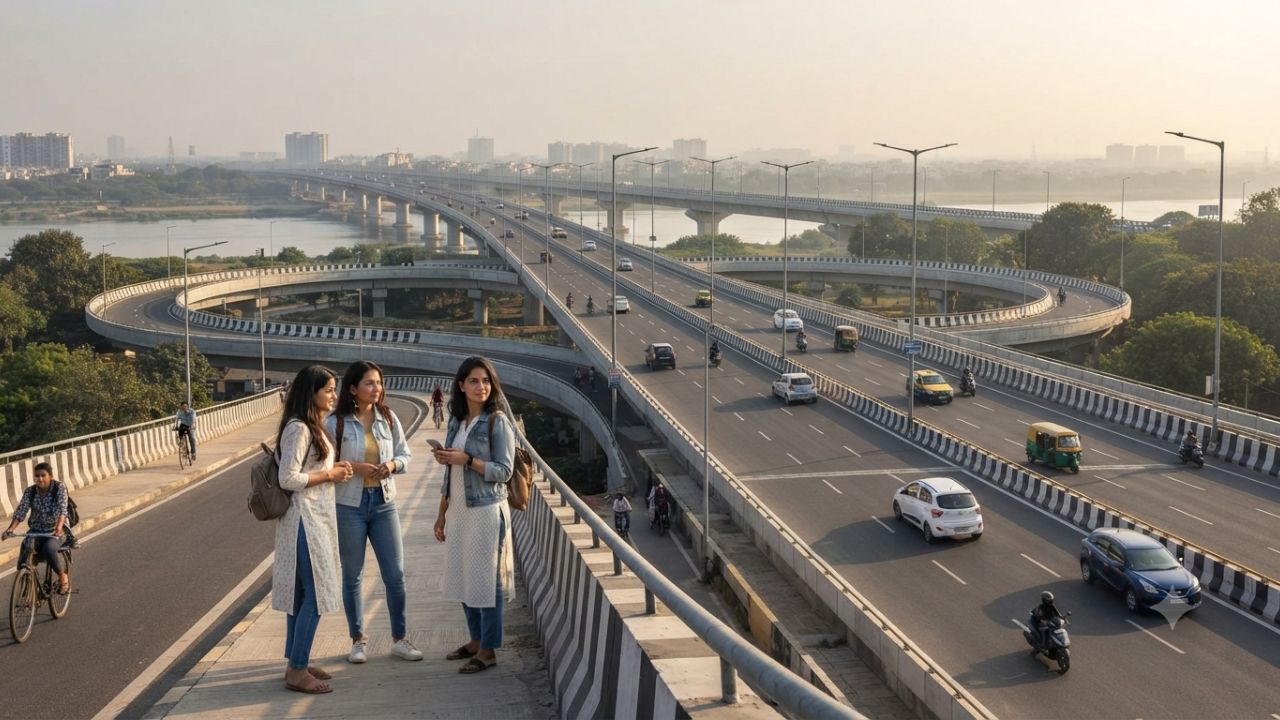
Image generated by AI
Urban mobility in the National Capital Region (NCR) is set for a major transformation as Delhi prepares to inaugurate the long-awaited Barapullah Phase 3 Elevated Corridor on 29 September 2026. Constructed at a revised cost of ₹1,635 crore, the 3.5-kilometer, four-lane elevated roadway links Mayur Vihar Phase I in East Delhi directly with Sarai Kale Khan in South Delhi, integrating with existing flyovers to create a continuous 9-kilometer signal-free transit corridor.
The infrastructure project cuts travel time for commuters traveling between East Delhi, Noida, and South Delhi destinations such as AIIMS from 35–40 minutes down to nearly 15 minutes. Featuring Delhi’s 10th road bridge across the Yamuna River, nine interconnected loops, and dedicated non-motorized transport lanes, the corridor promises relief for tens of thousands of daily commuters.
   [ Mayur Vihar Phase I ] ── (3.5 km Phase 3 Extra-Dosed Yamuna Bridge) ──> [ Sarai Kale Khan ]
                                                                                   │
   [ East Delhi & Noida ] ◄── (9 km Continuous Signal-Free Corridor) ──────────────┴──> [ AIIMS & South Delhi ]
Barapullah Phase 3 Technical Specifications & Yamuna Bridge Engineering
The Phase 3 extension forms the final link in the multi-stage Barapullah elevated transit vision spearheaded by the Delhi Public Works Department.
BARAPULLAH PHASE 3 CORRIDOR ENGINEERING MATRIX
| Column 1 |
|---|
| Phase 3 Elevated Length: 3.5 kilometers (4-lane dual carriageway) |
| Total Integrated Network: 9.0 kilometers of continuous signal-free elevated road |
| Yamuna River Crossing: Delhi's 10th road bridge (125-meter extra-dosed spans) |
| Interchange Loops: 9 interconnected entry/exit ramps |
| Revised Project Cost: ₹1,635 crore (includes ₹375 crore escalation) |
| Inauguration Date: 29 September 2026 |
Key Engineering & Design Highlights
- The Extra-Dosed Yamuna Bridge: The project introduces Delhi’s 10th road bridge spanning the Yamuna River, engineered using an extra-dosed cable arrangement with main spans of approximately 125 meters. This design minimizes the number of piers required in the active riverbed, supporting environmental protection.
- 9 Interconnected Interchange Loops: Nine strategic entry and exit loops distribute traffic smoothly between Mayur Vihar, the Delhi-Noida Direct (DND) Flyway, Ring Road, and Nizamuddin Railway Station.
- Dedicated Cycling & Pedestrian Infrastructure: Unlike traditional urban flyovers, Phase 3 integrates protected, non-motorized transport lanes, providing safe passage for cyclists and pedestrians across the river.
| Structural Component | Specification & Operational Metric | Commuter Impact |
|---|---|---|
| Phase 3 Route Length | 3.5 kilometers | Direct link: Mayur Vihar ➔ Sarai Kale Khan |
| Full Network Length | 9.0 kilometers | Signal-free link: East Delhi ➔ South Delhi |
| Yamuna Bridge Structure | Extra-dosed cable bridge (125m spans) | 10th road bridge across the Yamuna |
| Interchange Access | 9 multi-directional loops | Seamless integration with DND & Ring Road |
| Travel Time Saving | 35–40 minutes down to ~15 minutes | 60%+ reduction in peak-hour delays |
| Total Capital Expenditure | ₹1,635 crore (revised) | Includes ₹375 crore delay adjustment |
Impact on Delhi-Noida Commute Times and Transit Integration
The opening of Barapullah Phase 3 directly addresses chronic bottleneck points at the DND toll plaza, Ashram Intersection, and Ring Road.
                  ┌── East Delhi / Noida ➔ AIIMS Hospital (Reduced to ~15 Mins)
 [ Commute Impact ]┼── Direct Airport Access via Vasant Kunj / DND Network
                  └── Multimodal Link: Nizamuddin Railway Station & Sarai Kale Khan RRTS
Commute Time Reduction Breakdown
- Mayur Vihar to South Delhi (AIIMS/Safdarjung): Peak morning journeys that previously took up to 40 minutes along congested surface streets will now take approximately 15 minutes.
- Noida to South Delhi Connection: Drivers crossing from Noida via the DND Flyway can merge directly onto the elevated Barapullah network, bypassing signalized intersections at Maharani Bagh and Ashram.
- Emergency Medical Corridor: The uninterrupted, signal-free route establishes a vital rapid transit corridor for ambulances traveling from East Delhi and western Uttar Pradesh to major tertiary healthcare centers like AIIMS and Fortis.
Multimodal Transit Hub Integration
Sarai Kale Khan is rapidly evolving into one of India’s premier multi-modal transit hubs. The Barapullah Phase 3 terminal integrates directly with:
- Nizamuddin Railway Station: One of Delhi’s primary long-distance rail terminals.
- Sarai Kale Khan ISBT: Inter-State Bus Terminus serving northern and western states.
- Delhi-Meerut RRTS Terminal: Operated by the National Capital Region Transport Corporation.
- Delhi Metro Pink Line: Sarai Kale Khan / Hazrat Nizamuddin Metro Station.
Project Timeline, Cost Escalation, and City Mobility Future
Initially planned to ease travel ahead of major NCR urban expansions, Barapullah Phase 3 experienced construction delays related to land acquisition, environmental clearances in the Yamuna floodplains, and technical modifications for the extra-dosed bridge spans.
COST & INAUGURATION SUMMARY
| Column 1 |
|---|
| Initial Estimated Cost: ₹1,260 crore |
| Revised Final Cost: ₹1,635 crore (Cost increase of ₹375 crore) |
| Official Opening Date: 29 September 2026 |
Despite past hurdles, the final investment of ₹1,635 crore—reflecting a ₹375 crore revised increase—delivers a key structural asset for the Delhi Development Authority and urban planners preparing for long-term population growth in the NCR.
Traveler & Commuter Logistics Guide: Using the Corridor
Drivers and transit users navigating the new elevated route starting 29 September 2026 should note key access protocols:
Mayur Vihar Phase I Ramp ──> Extra-Dosed Yamuna Bridge ──> 9-Loop Interchange ──> Sarai Kale Khan / Ring Road
- East Delhi Entry Point: Access the elevated ramp near Mayur Vihar Phase I metro station, following overhead digital signage toward South Delhi/AIIMS.
- South Delhi Exit & Merge: Vehicles heading toward AIIMS continue on the elevated Phase 1 and Phase 2 flyover structure over Jawaharlal Nehru Stadium directly to Sri Aurobindo Marg.
- Cyclist Safety Rules: Dedicated non-motorized transport lanes are physically segregated from high-speed vehicular traffic, with solar-powered street lighting providing round-the-clock visibility.
Frequently Asked Questions (FAQ)
When will the Barapullah Phase 3 Corridor open to the public?
The corridor is scheduled for official inauguration on 29 September 2026, after which vehicular traffic will be allowed on the elevated route.
How much travel time will the new corridor save between East Delhi and South Delhi?
Commute times between Mayur Vihar / Noida and South Delhi destinations like AIIMS will drop from 35–40 minutes to approximately 15 minutes.
What is the length of the Barapullah Phase 3 section and the entire corridor?
Phase 3 measures 3.5 kilometers in length. When integrated with existing Phase 1 and Phase 2 structures, it creates a continuous 9-kilometer signal-free elevated highway.
What is unique about the new Yamuna River bridge?
It is Delhi’s 10th road bridge across the Yamuna River, featuring an extra-dosed cable design with 125-meter spans that minimize piers in the riverbed.
Related Travel Guides
Disclaimer
This article is for informational and educational purposes only. It does not constitute legal, financial, or professional advice. While we strive to provide accurate and up-to-date information, travel policies, regulations, and conditions change rapidly. Always verify information with official sources before making travel decisions. Nomad Lawyer makes no representations about the accuracy, reliability, completeness, or suitability of the information provided. Readers should consult qualified professionals for advice specific to their circumstances. The views expressed in this article are those of the author and do not necessarily reflect the views of Nomad Lawyer.
Kunal K Choudhary
Co-Founder & Contributor
A passionate traveller and tech enthusiast. Kunal contributes to the vision and growth of Nomad Lawyer, bringing fresh perspectives and driving the community forward.
Learn more about our team →