
Czechia’s October Fuel Price Cap Puts Autumn Road Trip Costs in the Spotlight
Motorists planning autumn trips through the Czech Republic now have an additional consideration, namely fuel prices. The Czec

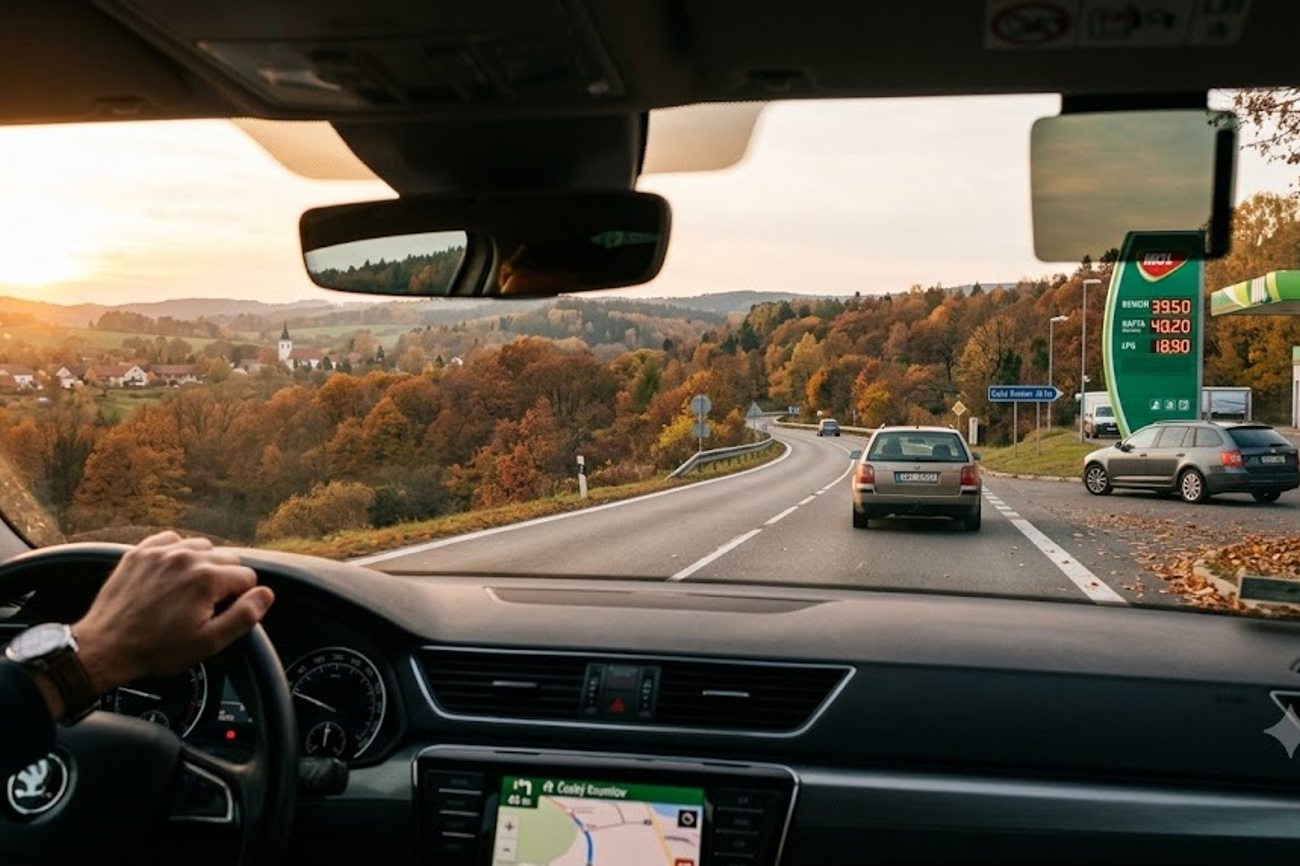
Image generated by AI
Motorists planning autumn trips through the Czech Republic now have an additional consideration, namely fuel prices. The Czech government has set price caps on fuel for the months of October 2023 and 2026. During these months, the government will also charge a lower diesel tax. The effects of these policies will depend on which fuel prices motorists decide to pay and at which locations. Each day, the Czech government will set a fuel price, and motorists will be free to pay those prices or any other price on the market. Considering these factors, families and business motor coach services that use the Czech highway system will benefit from lower costs.
What changes at Czech fuel stations in October?
Czechia’s Ministry of Finance says it will publish a maximum petrol and diesel price for the following day on each working day. On weekends and public holidays, the last announced maximum will continue to apply. The controls are scheduled to run from 1 to 31 October 2026. (Ministerstvo financí ČR)
The maximum price is calculated using a moving average of wholesale prices, a regulated margin of 2.50 Czech koruna per litre, and VAT. It is a ceiling, so a station may charge less. It is not a promise that every litre will cost a fixed amount throughout October. (mf.gov.cz)
The government is also cutting diesel excise duty for that month. It estimates that the duty change will reduce the pump price by 2.35 koruna per litre once VAT is included. That figure describes the expected effect of the tax measure, rather than a confirmed saving against the price a traveller would otherwise have paid at a particular station. (mf.gov.cz)
October measure What the government has announced What it means for a traveller Petrol and diesel price controls A maximum pump price announced on working days Check the applicable price close to the day of travel Retail margin limit 2.50 koruna per litre in the maximum-price formula The cap limits a component of the permitted price; it does not freeze prices Diesel duty cut An estimated 2.35 koruna per litre pump-price effect, including VAT Diesel drivers can use the estimate to gauge scale, but should check actual prices
The Czech government has announced an October fuel price cap, aiming to reduce the financial burden on motorists and potentially impact autumn road trip costs. For the most up-to-date information on fuel prices and road conditions, travelers can visit the Czech Ministry of Transport website. This initiative is expected to boost domestic tourism, with many Czechs opting for road trips to explore the country's scenic landscapes and historic sites. Duration 1–31 October 2026 Do not assume the October measures apply to a November journey
Why the timing matters for an autumn road trip
A self-drive holiday has several costs that are easy to miss when looking only at the price displayed outside a fuel station. The route, vehicle, parking, motorway access and number of overnight stops can matter more than a small change in the price of one litre.
Consider a diesel car that buys 50 litres during an October trip. Applying the ministry’s estimated duty effect of 2.35 koruna per litre gives 117.50 koruna. This is an illustration of the tax change’s scale, not a forecast of what that driver will save: the comparison depends on the wholesale market and actual pump prices on the days they travel. (mf.gov.cz)
There is also a distinction between petrol and diesel. Both are covered by the announced maximum-price system, but the separate October excise-duty cut applies to diesel. Petrol-car drivers should therefore not add the diesel duty estimate to their own travel budgets.
For visitors arriving by air and collecting a hire car, the relevant price is the one in force when they refuel in Czechia. The announcement does not change flight fares, car-hire contracts or parking charges. Those costs need to be checked separately.
As the fuel price cap takes effect, passenger logistics will play a crucial role in ensuring a smooth travel experience. Travelers can check the Prague Airport website for information on airport services, including car rentals and fueling options. Additionally, the airport's website provides useful tips and guides for navigating the airport and planning onward journeys.
The motorway vignette still belongs in the budget
Many road itineraries include motorway driving. For a standard-fuel car, Czechia’s official electronic vignette shop lists a one-day vignette at 230 koruna, a 10-day vignette at 300 koruna and a 30-day vignette at 480 koruna under its 2026 price list. Travellers should check whether their planned roads require one and buy through the official eDalnice shop. (Official State e-shop eDalnice.gov.cz)
The vignette illustrates why a fuel-price headline cannot, by itself, tell a family whether a holiday has become cheaper. On a short journey, the fixed road charge may outweigh a modest change in fuel spending. On a longer drive, litres bought and distance covered become more significant.
Drivers of vehicles registered abroad should also check the official rules for any exemption they expect to claim. The eDalnice price list says foreign-registered electric and hydrogen vehicles must submit an exemption notification to obtain the zero-cost rate. (Official State e-shop eDalnice.gov.cz)
The tourism setting: growth, but an uneven picture
Road travel matters to a country whose visitor activity extends well beyond its capital. Prague is a major accommodation centre, while regional stays give travellers a reason to combine several places in one journey. The fuel measures were announced as economic relief, however, not as a tourism incentive.
The Czech Statistical Office recorded 6.4 million guests and 15.1 million overnight stays in collective accommodation during the second quarter of 2026. Guest numbers rose 0.5% from a year earlier and overnight stays rose 0.3%. These are accommodation figures; they do not count every day visitor or establish how many guests arrived by car. (Rychlé informace)
The Czech Tourism Board is expecting a surge in autumn road trips, with the fuel price cap making it more affordable for visitors to explore the country's hidden gems. For inspiration and planning, travelers can visit the Czech Tourism website, which offers a wealth of information on attractions, events, and accommodation options. The website also features a handy route planner, helping travelers to create their own customized itineraries and make the most of their time in Czechia.
The regional figures show why the road-trip question is worth examining. Prague recorded 2.2 million accommodated guests in that quarter. South Moravia recorded almost 625,000, and South Bohemia more than 500,000. A traveller visiting several regions may need to budget for substantially more driving than someone staying solely in Prague. (Rychlé informace)
Germany was the largest foreign guest market in the second quarter, with about 650,000 accommodated visitors, followed by Slovakia with 262,000 and Poland with 255,000. Those figures identify important neighbouring markets, but they do not show which travellers drove across the border. (Rychlé informace)
For context, the statistical office recorded 23.6 million accommodated guests and 59.1 million overnight stays across 2025. Visitor accommodation had grown beyond its 2019 level, yet the much slower second-quarter growth in 2026 gives tourism businesses a reason to watch autumn demand closely. The official statistics do not attribute those trends to fuel prices. (Rychlé informace)
A return to controls after the summer gap
October will not be Czechia’s first fuel-price intervention this year. According to the finance ministry, its previous pricing regulation ended on 19 July 2026. The government says it is bringing back that mechanism in response to pressure on fuel prices linked to disruption in Middle Eastern energy supplies. (mf.gov.cz)
That history matters for drivers making comparisons. A receipt from early July, late July or September may reflect different tax and regulatory conditions. A fair account of whether an October journey costs less would compare actual pump prices, the same vehicle and roughly the same amount of driving.
The ministry says the diesel measure should particularly lower transport companies’ costs. A coach operator may buy far more diesel than a family motorist, so the change could be material to its operating budget. Whether it affects an excursion price or ticket sold to a visitor is a separate question; no fare reduction is contained in the government announcement. (mf.gov.cz)
Hotels, restaurants and attractions may also follow the issue because transport costs form part of the wider visitor economy. Yet there is no official estimate in the fuel announcement for additional bookings, tourism revenue or jobs. Any claim that the October cap will increase arrivals would go beyond the evidence currently available.
Three questions for travellers
Will every Czech fuel station ch
FAQ: Czechia’s October Fuel Price Cap Puts Au 2026
What is the fuel price cap in Czechia? Fuel price capped at 32 CZK per liter.
How does it affect road trips? Reduces fuel costs for autumn road trips.
Are there any exemptions? Exemptions apply for certain commercial vehicles.
When does the cap expire? The cap is set to expire on December 31, 2026.
Related Travel Guides
Disclaimer
This article is for informational and educational purposes only. It does not constitute legal, financial, or professional advice. While we strive to provide accurate and up-to-date information, travel policies, regulations, and conditions change rapidly. Always verify information with official sources before making travel decisions. Nomad Lawyer makes no representations about the accuracy, reliability, completeness, or suitability of the information provided. Readers should consult qualified professionals for advice specific to their circumstances. The views expressed in this article are those of the author and do not necessarily reflect the views of Nomad Lawyer.
Kunal K Choudhary
Co-Founder & Contributor
A passionate traveller and tech enthusiast. Kunal contributes to the vision and growth of Nomad Lawyer, bringing fresh perspectives and driving the community forward.
Learn more about our team →