
Beyond the Blue: What Ultra-High-Altitude Private Aviation Reveals About Earth's Curvature
Breaking airline news and aviation industry updates for 2026.

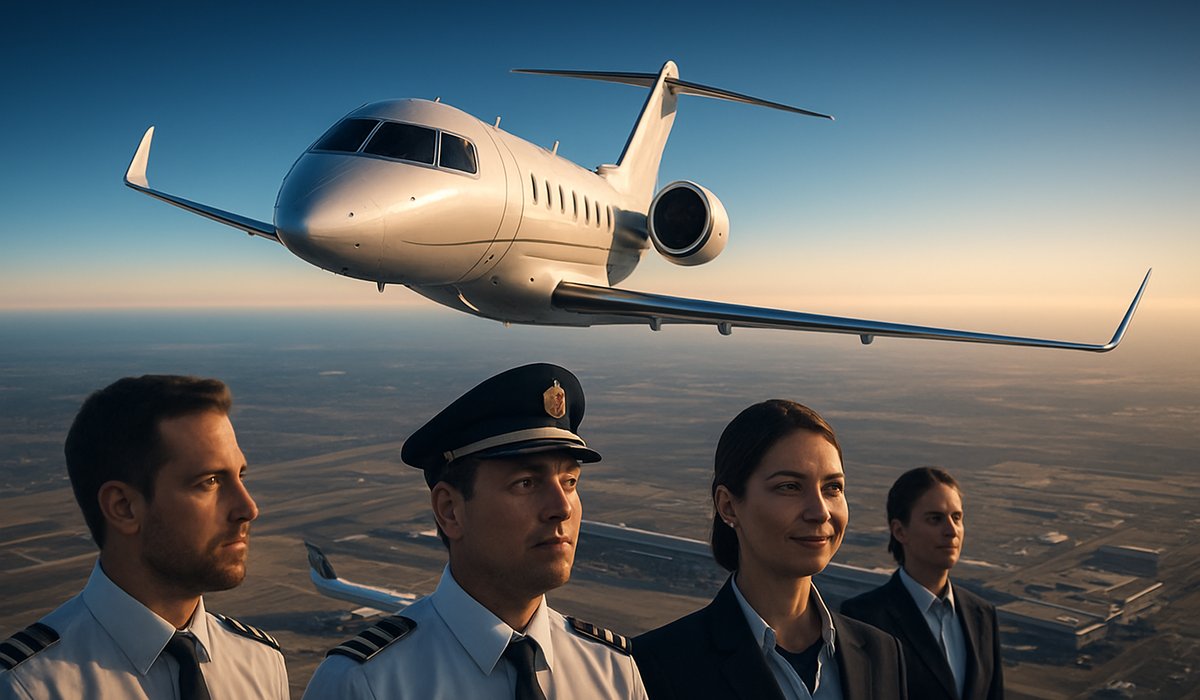
Image generated by AI
Beyond the Blue: What Ultra-High-Altitude Private Aviation Reveals About Earth's Curvature
At 51,000 feet, elite pilots encounter visual phenomena commercial aviators never witness—reshaping perspectives on our planet's true shape
The Frontier Where Sky Becomes Space
Private aviation has opened an exclusive window into Earth's geometry that remains beyond the reach of mainstream commercial operations. When aircraft pierce the 51,000-foot mark—approximately 15,500 meters above sea level—pilots enter an atmospheric zone where the traditional boundaries between conventional flight and space exploration blur into scientific reality.
At this extreme altitude, a profound visual transformation occurs. The familiar cerulean sky that dominates flights at typical cruising altitudes of 35,000-40,000 feet undergoes a dramatic metamorphosis. The scatter of light particles in the upper troposphere diminishes so drastically that the sky transitions into a deep indigo that observers frequently describe as otherworldly—a color palette that exists nowhere else within accessible human experience.
The Curvature Moment
The most striking phenomenon reported by pilots operating at these rarefied heights involves the horizon itself. Beyond 50,000 feet, Earth's curvature becomes unmistakably visible to the naked eye. This isn't a subtle optical illusion; it's a distinct downward curve that stretches across the entire field of vision, fundamentally altering how pilots perceive their planetary position.
This threshold represents a critical boundary in aviation. Commercial carriers—bound by regulatory frameworks, fuel efficiency requirements, and passenger comfort parameters—maintain cruising altitudes typically between 35,000 and 43,000 feet. The ultra-premium segment of private aviation, however, operates in a different category entirely, where specialized aircraft and wealthy clients access regions where atmospheric conditions create visual experiences unavailable to the 2.5 billion annual commercial passengers worldwide.
The Atmospheric Boundary
The air density at 51,000 feet is so significantly reduced that it fundamentally alters light's behavior. With fewer oxygen molecules present to scatter blue wavelengths—the mechanism that produces daytime sky coloration—the atmosphere becomes progressively transparent. The contrast between the thin, dark sky and Earth's illuminated surface below creates a sensory moment that aviation professionals describe as career-defining.
Pilots reaching this altitude operate within specialized aircraft designed for extreme performance, including sustained pressurization and advanced thermal management systems. The technical achievement of sustained flight at this elevation represents the outer boundary of traditional aviation, sitting roughly 2,000 feet below the Armstrong limit—the theoretical altitude where atmospheric pressure becomes too low to sustain human consciousness without pressurization.
Industry Implications
The expansion of ultra-high-altitude private aviation reflects broader shifts in luxury travel markets and technological capabilities. While commercial aviation remains bound by operational constraints, this exclusive niche continues expanding access to perspectives that fundamentally reshape how humans comprehend planetary scale.
Frequently Asked Questions
What is the maximum altitude commercial airplanes can safely cruise? Commercial aircraft typically operate between 35,000-43,000 feet, where fuel efficiency and passenger safety align optimally. This range remains below the altitude where Earth's curvature becomes visually apparent.
Can you see Earth's curvature from commercial flights? While the horizon appears slightly curved at 35,000 feet under specific lighting conditions, the effect remains subtle. True curvature visibility requires altitudes exceeding 50,000 feet.
Why don't commercial airlines fly higher to reach destinations faster? Higher altitudes experience thinner air, requiring more fuel consumption and specialized aircraft design. Commercial operations optimize for fuel efficiency and passenger comfort rather than maximum altitude capability.
What atmospheric changes occur above 50,000 feet? Air density drops significantly, oxygen becomes scarcer, and light scattering diminishes dramatically. The sky transitions from blue to deep indigo, and temperatures plummet to approximately -70°F.
How does private aviation access these extreme altitudes? Ultra-premium private jets utilize specialized pressurization systems, advanced materials, and powerful engines designed for sustained operation in the upper atmosphere—capabilities unnecessary for standard commercial routes.
Related Travel Guides
Flight Delay Compensation Guide 2026
Understanding Airline Route Changes
Airport Security Process Updated (2026)
External Resources
Disclaimer
This article is for informational and educational purposes only. It does not constitute legal, financial, or professional advice. While we strive to provide accurate and up-to-date information, travel policies, regulations, and conditions change rapidly. Always verify information with official sources before making travel decisions. Nomad Lawyer makes no representations about the accuracy, reliability, completeness, or suitability of the information provided. Readers should consult qualified professionals for advice specific to their circumstances. The views expressed in this article are those of the author and do not necessarily reflect the views of Nomad Lawyer.
Preeti Gunjan
Contributor & Community Manager
A passionate traveller and community builder. Preeti helps grow the Nomad Lawyer community, fostering engagement and bringing the reader experience to life.
Learn more about our team →