
Congress Votes to Resurrect Iconic F-14 Tomcat Fighter Jet After Nearly Two Decades in Retirement
Breaking airline news and aviation industry updates for 2026.

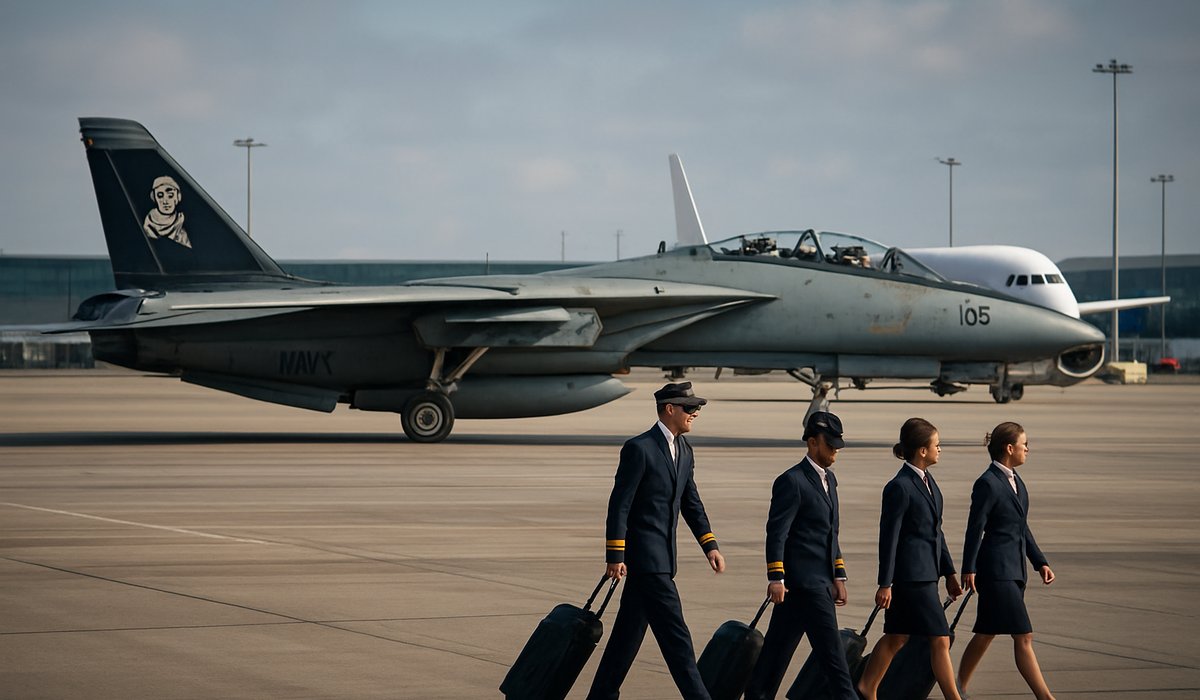
Image generated by AI
Congress Votes to Resurrect Iconic F-14 Tomcat Fighter Jet After Nearly Two Decades in Retirement
A bipartisan legislative push seeks to return one of America's most legendary naval aircraft to active flight status
Historic Fighter Jet Returns from the Graveyard
Nearly 18 years after the Grumman F-14 Tomcat was formally retired from active United States Navy operations, Congress has moved to resurrect the storied carrier fighter. The bipartisan "Maverick Act" represents an unexpected political consensus to bring at least one of the aircraft back into flying condition—a remarkable development for a warplane that concluded its three-decade operational tenure on September 22, 2006.
The legislative proposal directs the transfer of three retired F-14 Tomcats from the military's vast storage facility at Davis-Monthan Air Force Base in Arizona to the US Space & Rocket Center in Huntsville, Alabama. Critically, the language embedded within the measure specifically authorizes the use of surplus Navy aircraft components and spare parts inventory to restore one airframe to operational status.
A Legacy Spanning Cold War to Modern Conflict
The F-14 Tomcat accumulated 32 years of continuous service across some of the most pivotal periods in modern military aviation history. The twin-engine fighter dominated carrier operations throughout the Cold War, the 1991 Gulf War, and subsequent Middle Eastern military campaigns following the September 2001 terrorist attacks. Its distinctive variable-sweep wing design and long-range air-to-air capabilities made it one of the most recognizable military aircraft ever produced.
The jet achieved particular cultural prominence through its starring role in the 1986 film "Top Gun," cementing its place in American popular consciousness alongside its operational legacy.
Congressional Action and Preservation Efforts
The decision to restore a single aircraft reflects broader efforts to preserve significant chapters of American aviation history. By housing three examples at the Space & Rocket Center—a premier aerospace museum and educational institution—Congress aims to ensure these machines remain accessible to future generations while maintaining the technical feasibility of maintaining one in flight-ready condition.
The initiative demonstrates bipartisan recognition of the aircraft's historical importance and its enduring significance to naval aviation heritage. The specific authorization for using Navy surplus parts streamlines what would otherwise be an extraordinarily complex logistical undertaking.
Questions Aviation Enthusiasts Are Asking
What caused the F-14 Tomcat's retirement from active Navy service? Aging airframes, rising maintenance costs, and the introduction of newer platforms including the F/A-18 Super Hornet led to the aircraft's phased retirement beginning in the early 2000s.
Has the US Navy operated any F-14s since 2006? No. The September 2006 retirement marked the complete withdrawal of Tomcats from active service, though some foreign operators continued flying variants for years afterward.
Could the restored F-14 actually see combat operations? Current military doctrine has moved entirely away from the aircraft's capabilities. Any restoration would serve historical and educational purposes exclusively.
How expensive would it be to restore and maintain a flyable F-14? Exact costs remain unclear, but restoring and maintaining 1970s-era fighter technology requires specialized expertise and parts sourcing, making it a significant investment.
Why is Congress interested in this project now? The initiative reflects growing institutional commitment to preserving Cold War-era military heritage and supporting aerospace education through museum partnerships.
Related Travel Guides
Flight Delay Compensation Guide 2026
Understanding Airline Route Changes
Airport Security Process Updated (2026)
External Resources
Disclaimer
This article is for informational and educational purposes only. It does not constitute legal, financial, or professional advice. While we strive to provide accurate and up-to-date information, travel policies, regulations, and conditions change rapidly. Always verify information with official sources before making travel decisions. Nomad Lawyer makes no representations about the accuracy, reliability, completeness, or suitability of the information provided. Readers should consult qualified professionals for advice specific to their circumstances. The views expressed in this article are those of the author and do not necessarily reflect the views of Nomad Lawyer.
Preeti Gunjan
Contributor & Community Manager
A passionate traveller and community builder. Preeti helps grow the Nomad Lawyer community, fostering engagement and bringing the reader experience to life.
Learn more about our team →