
Travel Revolutionary Search Tool: Cruisebound's Map Feature Transforms Cruise Booking
Cruisebound launches groundbreaking map-based cruise search in March 2026, enabling travelers to browse and book voyages visually—reshaping how millions discover their next cruise vacation.

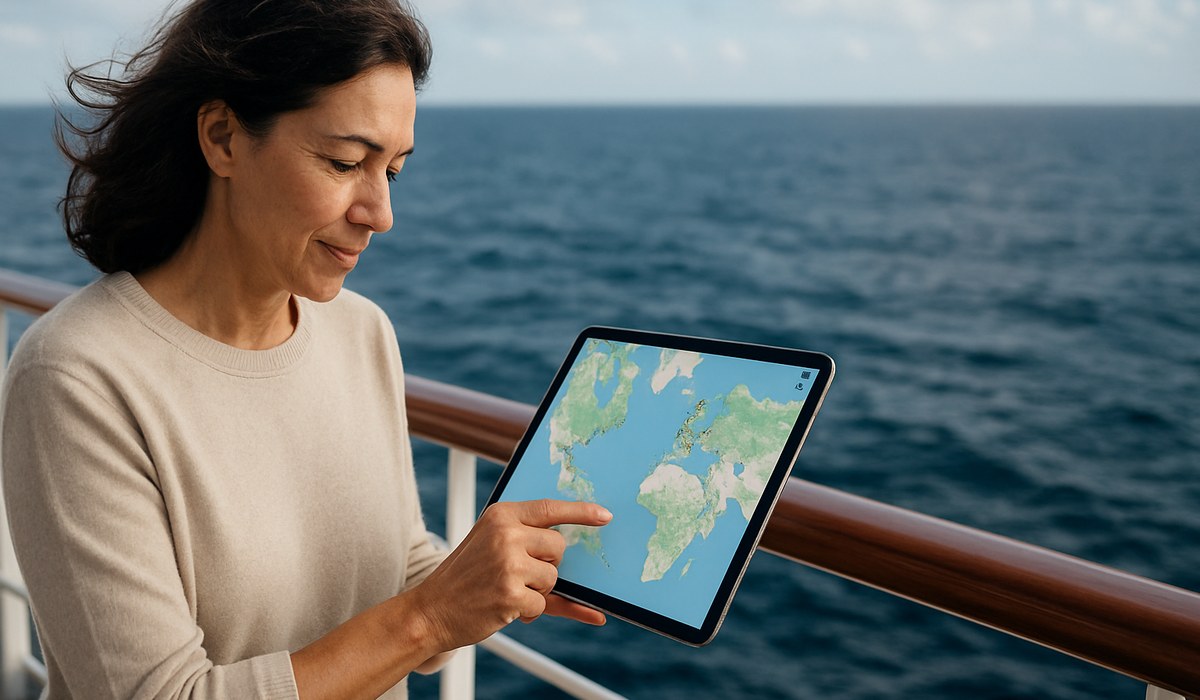
Image generated by AI
**> Quick Summary
- Cruisebound unveils map-driven cruise discovery platform, eliminating keyword-based search friction
- Travelers can now locate, compare, and reserve cruises using geographic visualization tools
- Feature aligns booking experience with modern flight-search expectations and spontaneous travel psychology
- Industry adoption signals broader shift toward experiential discovery in maritime tourism**
The cruise industry just got a visual overhaul. Cruisebound, a technology-forward cruise booking platform, has rolled out a map-based search interface that fundamentally reimagines how travelers find and reserve ocean voyages. Instead of typing destinations into a search bar or scrolling through static itinerary lists, customers can now zoom into their preferred regions, click on departure ports and route markers, and book cabins in seconds.
This isn't incremental progress. It's a reset button for an industry that has clung to outdated booking mechanics while competitors like flight aggregators moved into the visual-search era years ago.
What Is Cruisebound's Revolutionary Map Feature?
Cruisebound's latest offering is a geospatial booking engine that transforms a flat map interface into an interactive commerce tool. Users launch the platform, see a global map dotted with departure ports and cruise routes, and can filter results by date, price, duration, and cruise line without ever leaving the map view.
The interface works similar to how Skyscanner or Google Flights displays flight options. Pan to the Caribbean, and you'll see embarkation points in Miami, Tampa, and Galveston. Click a port, and available sailings materialize with cabin pricing, onboard amenities, and real-time availability. The entire booking funnel—discovery through payment—happens within the same visual context.
Integration with major cruise operators means the database covers sailings from traditional lines like Carnival, Royal Caribbean, and Disney Cruise Line, as well as luxury operators and expedition specialists. Cabin-type filtering, accessibility requirements, and dining plan selection all cascade from the initial map selection, streamlining what once required multiple screen transitions.
How It Changes the Cruise Booking Experience
Traditional cruise booking has always been hampered by friction. A potential traveler needs to know which ports interest them, which dates align with their schedule, and which cruise lines serve those routes—all before entering a single search parameter. This knowledge barrier has historically pushed spontaneous bookings toward flight and hotel channels, where the discovery process feels more intuitive.
The map view eliminates that gatekeeping. A user might notice a departure from Barcelona in early June, explore what's available, and discover a Mediterranean itinerary they didn't know existed. The visual context creates serendipity—a psychological trigger that flight search platforms have weaponized to drive incremental bookings.
Cruisebound's implementation also includes real-time pricing alerts tied to map regions. If you're watching the Western Caribbean market, price fluctuations trigger notifications without requiring manual monitoring. This feature directly addresses the pain point that causes many travelers to abandon cruise research: the exhaustion of checking multiple sites across multiple windows.
For mobility-challenged passengers and families with complex requirements, the filtering capabilities matter even more. Wheelchair accessibility, family cabin configurations, and guaranteed dining times can be layered into the map view before clicking deeper. This transparency prevents wasted browsing on unsuitable inventory.
Why Map-Based Discovery Matters for Today's Travelers
Post-pandemic travel psychology has shifted fundamentally. The pre-COVID cruise market thrived on rigid, planned itineraries—book in March for a December sailing, lock in your cabin type, and commit. Today's travelers crave flexibility.
The rise of bleisure, workations, and extended gap-year travel has created demand for voyages that adapt to emerging opportunities rather than fixed calendars. A remote worker with three weeks of freedom wants to know instantly: What cruises depart from ports I can reach in the next month? The map interface answers that question faster than any itinerary catalog.
Additionally, geopolitical factors increasingly shape travel decisions. Real-time route intelligence has become essential. The ongoing concerns around certain maritime regions—such as the shipping challenges in the Red Sea documented in recent security assessments—now influence which itineraries appeal to different traveler segments. A map-based system can highlight adjusted routes and alternative departures dynamically, something static listing pages struggle to communicate effectively.
The Cruise Lines International Association has noted that digital experience remains the primary differentiator among cruise operators competing for younger demographics. Cruisebound's tool directly addresses this competitive pressure by making the booking experience feel contemporary and aligned with consumer expectations across travel categories.
Competitive Advantages & Industry Impact
Cruisebound's entry into map-based cruise search creates immediate competitive pressure on legacy booking channels. The company positions itself between traditional travel agents and direct cruise line bookings—neither of which offers equivalent visual discovery tools.
Travel agencies, which still dominate cruise bookings (accounting for roughly 80% of cruise sales globally), face a credibility challenge. Agencies excel at personalized consultation, but they cannot compete on speed or visual interface innovation. Cruisebound's tool redefines the baseline expectation for digital cruise shopping.
Direct bookings through cruise lines' proprietary websites have always disadvantaged customers unable to compare across operators. Now, a single interface offers that cross-brand visibility. Carriers like Royal Caribbean and Carnival may push direct-booking incentives harder, but the convenience math favors neutral platforms.
Comparative cruise sites like CruCon and Vacatia already existed, but none leveraged geographic visualization at scale. Cruisebound's technical implementation—likely powered by mapping APIs and real-time inventory management—creates a moat that's harder to replicate than traditional search rankings.
The competitive landscape also intersects with emerging destination trends. As cruise itineraries expand into new regions—including slow-travel circuit expansions throughout Asia—map-based discovery tools become even more valuable for customers unfamiliar with port hierarchies or regional sailing patterns.
Cruise lines are watching closely. Some have announced partnerships with fintech platforms to improve onboard spending experiences, while others focus on promotional bundling. Meanwhile, competitive offerings from platforms like CruCon suggest the industry recognizes that whoever owns the discovery experience controls customer acquisition economics.
Health and safety compliance integration represents another competitive advantage. Cruisebound's map interface incorporates current CDC cruise health guidelines, ensuring travelers see compliance status and vaccination requirements at the destination-selection stage. This transparency builds trust during a period when cruise health protocols remain a booking consideration for segments of the traveling public.
FAQ: Everything You Need to Know About Booking Cruises by Map
Q: Can I filter cruises by price range directly on the Cruisebound map? Yes. Once you select a region or specific departure port, pricing filters appear in the sidebar. You can narrow results by per-person nightly cost, total cabin price, or last-minute deal indicators.
Q: Which cruise lines does Cruisebound's map tool cover? Cruisebound integrates inventory from most major operators, including Carnival Corporation brands, Royal Caribbean Group, Disney Cruise Line, Norwegian Cruise Line, and numerous luxury and expedition specialists. Independent suppliers may not appear in all region filters.
Q: Does the map show itinerary details before I click on a sailing? Partial details appear in a preview card when you hover over or tap a route. Full itinerary information—port schedules, dining menus, shore excursion options—requires clicking through to the booking page.
Q: How does the platform handle price alerts for map regions? You can set alerts for specific departure ports or broader regions (e.g., "all Western Caribbean sailings in June"). Notifications trigger when prices drop or availability shifts, but alert frequency is customizable to prevent notification fatigue.
**Q: Can travel
Disclaimer
This article is for informational and educational purposes only. It does not constitute legal, financial, or professional advice. While we strive to provide accurate and up-to-date information, travel policies, regulations, and conditions change rapidly. Always verify information with official sources before making travel decisions. Nomad Lawyer makes no representations about the accuracy, reliability, completeness, or suitability of the information provided. Readers should consult qualified professionals for advice specific to their circumstances. The views expressed in this article are those of the author and do not necessarily reflect the views of Nomad Lawyer.
Preeti Gunjan
Contributor & Community Manager
A passionate traveller and community builder. Preeti helps grow the Nomad Lawyer community, fostering engagement and bringing the reader experience to life.
Learn more about our team →