
Germany Issues Urgent Economic Travel Warning as Soaring Fuel Prices Force European Tourists to Abandon Expensive Mediterranean Hotspots for Budget-Friendly Croatia: New Travel Alert
As aggressive inflation and rising fuel costs devastate traditional vacation budgets, millions of European travelers are rapidly shifting their summer itineraries toward affordable escapes in Croatia and Türkiye.

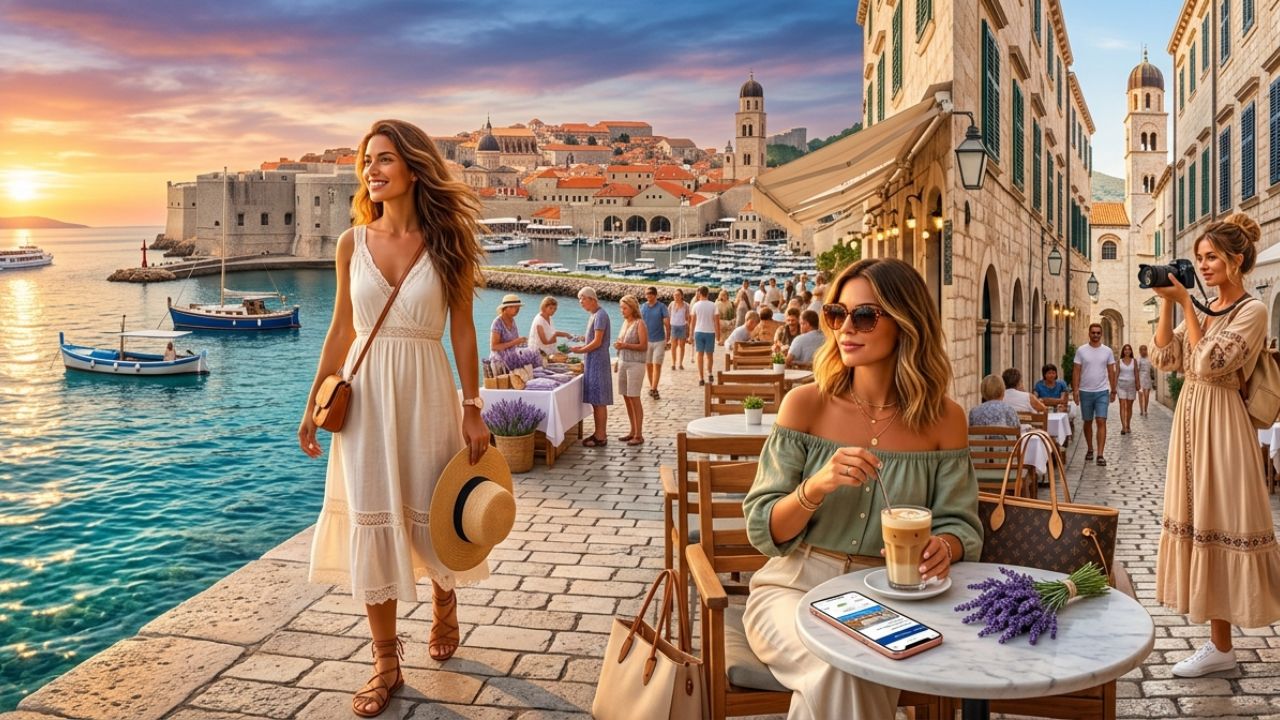
Image generated by AI
A massive, financially-driven migration is currently sweeping across the European tourism sector, as soaring fuel prices, aggressive domestic inflation, and profound economic uncertainty force millions of German and European holidaymakers to drastically alter their summer travel plans. Abandoning historically expensive Mediterranean strongholds like France and Italy, tourists are urgently pivoting toward highly affordable, value-driven destinations, with Croatia and Türkiye emerging as the absolute frontrunners for 2026. For international travelers attempting to finalize their Mediterranean itineraries, this rapid shift in consumer behavior dictates an immediate need to secure bookings in these emerging budget hotspots before unprecedented demand completely exhausts available coastal inventory.
Quick Summary of Key Facts
- Economic Shift: Severe European inflation and skyrocketing aviation fuel prices are actively destroying traditional, high-end vacation budgets.
- Primary Demographic: German tourists, historically the economic engine of European summer travel, are leading a massive migration toward budget-conscious destinations.
- The New Frontrunner: Croatia has officially emerged as the ultimate high-value Mediterranean escape, offering authentic cultural experiences at a fraction of the cost of Western Europe.
- Major Competitors: Türkiye continues to offer hyper-competitive low-cost resort packages, while traditional heavyweights like Greece, France, and Italy suffer from escalating price tags.
- Urgent Action Required: The sudden influx of price-conscious travelers into Croatia is rapidly depleting affordable hotel inventory along the Adriatic coast.
Context: The Collapse of the Traditional European Vacation Budget
The current realignment of the Mediterranean tourism market is the direct, unavoidable consequence of severe macroeconomic pressures crushing the European middle class. For decades, German holidaymakers reliably fueled the massive coastal economies of Spain, France, and Italy without deep financial hesitation. However, throughout late 2025 and into 2026, the European Union has endured a brutal combination of soaring aviation fuel costs, escalating hospitality inflation, and widespread economic anxiety. Consequently, the traditional "luxury" Mediterranean vacation has become mathematically unviable for millions of families. Recognizing this severe budget compression, travelers are actively rejecting highly commercialized, overpriced resorts in favor of destinations that deliver pristine coastlines, UNESCO-level cultural heritage, and exceptional value-for-money without compromising the fundamental quality of the summer escape.
Event/Incident Details: The Mediterranean Market Realignment
The economic pivot has triggered a massive redistribution of European tourist traffic, creating clear financial winners and losers across the Mediterranean basin:
- Croatia (The High-Value Frontrunner): Croatia is actively capturing the largest share of displaced German tourists. Offering over a thousand islands, pristine Adriatic coastlines, and culturally rich UNESCO World Heritage sites like Dubrovnik, Split, and Zadar, Croatia delivers a premium aesthetic at a "Medium-Low" price point. Its proximity to Germany via short flights and accessible road networks makes it the ultimate budget-friendly safe haven.
- Türkiye (The Low-Cost Titan): Türkiye remains the absolute most budget-conscious destination. Regions like Antalya, Bodrum, and Izmir are aggressively deploying deeply discounted, all-inclusive packages that heavily undercut Western European competitors.
- Greece & Spain (The Squeezed Middle): While Spain (Costa del Sol, Balearic Islands) and Greece (Santorini, Mykonos) remain incredibly popular, their "Medium-High" cost structures are forcing budget-conscious Germans to seek shorter stays or downgrade their accommodation tiers to survive the trip.
- France & Italy (The Expensive Elite): Destinations like the French Riviera, Paris, the Amalfi Coast, and Rome now operate at a definitively "High" cost level. While they retain their iconic heritage appeal, they are rapidly losing mass-market German families to the cheaper Adriatic coast.
- Austria (The Alpine Alternative): As a non-Mediterranean competitor, Austria continues to capture significant German traffic by offering accessible, mid-range cultural (Vienna, Salzburg) and alpine tourism that completely bypasses the inflated costs of coastal beach resorts.
Risk/Impact on Travelers and the Tourism Sector
This aggressive pivot toward budget-conscious travel is generating significant operational and financial impacts for both travelers and the regional hospitality industry:
- Inventory Depletion in Croatia: Because millions of tourists are simultaneously identifying Croatia as the optimal budget escape, affordable coastal accommodations and inter-island ferry tickets are selling out months in advance.
- Aggressive Pricing Wars: To prevent a total collapse in arrival numbers, mid-tier resorts in Spain and Greece are being forced into highly competitive pricing wars against Turkish all-inclusive mega-resorts.
- Shorter Booking Windows: Economic anxiety is causing travelers to delay booking until the absolute last minute, hunting desperately for distressed inventory or flash sales to mitigate rising travel costs.
- Overtourism in Budget Hubs: Historic Croatian cities like Split and Zadar face severe infrastructure strain as they absorb massive volumes of redirected European tourists seeking authentic, low-cost cultural immersion.
What Authorities Are Saying
European tourism boards and economic analysts are urgently advising the hospitality sector to aggressively adapt to this new era of hyper-price-consciousness. Financial analysts monitoring the German travel market explicitly note that average per-day spending has dropped significantly, forcing national tourism ministries to heavily promote "value" over "luxury."
Croatian tourism authorities, while welcoming the massive influx of German capital, are simultaneously issuing guidance to manage the extreme demand. They are actively encouraging travelers to look beyond the heavily congested Dubrovnik corridor and explore cheaper, northern Adriatic regions like Istria or inland national parks like Plitvice Lakes and Krka to distribute the economic impact and alleviate severe localized overcrowding.
Practical Traveler Advice
For international tourists attempting to secure a high-quality Mediterranean vacation amidst this severe economic realignment, immediate adherence to the following actionable budget strategies is critical:
- Finalize Croatian Bookings Immediately: Do not wait for summer. The massive influx of German tourists means that the most affordable guesthouses, Airbnbs, and mid-tier hotels along the Dalmatian coast will completely sell out by early spring.
- Exploit Turkish All-Inclusive Deals: If your primary goal is absolute cost containment, pivot your search to Türkiye. The exchange rate and aggressive all-inclusive packages in Antalya currently offer the highest mathematical value for beach-focused holidays.
- Drive Instead of Flying: To bypass soaring aviation fuel surcharges, consider utilizing extensive European road and rail networks. Croatia and Austria are highly accessible by car from central Europe, completely eliminating expensive airline baggage fees.
- Avoid the "Expensive Elite" Zones: Strictly avoid the French Riviera, the Amalfi Coast, and Mykonos unless you possess an exceptionally robust, inflation-proof travel budget.
- Target the Shoulder Season: To secure the Croatian aesthetic without the peak-season price tag, aggressively schedule your travel for late May or September when accommodation rates drop significantly but the Adriatic Sea remains warm.
Broader Context
The rise of Croatia as the ultimate budget-friendly alternative highlights a fundamental shift in what modern European travelers value. For decades, the prestige of the destination heavily outweighed the financial cost. However, in an era defined by geopolitical instability and aggressive domestic inflation, authenticity and financial accessibility have become the primary drivers of tourism. Croatia perfectly threads this needle. It remains significantly less commercialized than the massive, concrete resort strips of southern Spain, offering German tourists deep cultural immersion and breathtaking natural beauty without the devastating financial hangover of a traditional Italian or French holiday.
What to Expect Next / Looking Ahead
Moving forward, the European tourism market will likely remain highly fractured based entirely on price sensitivity. Travelers should expect Croatia to eventually experience aggressive price inflation of its own as global demand continues to violently outpace its coastal supply. To counter this, emerging Balkan destinations like Albania and Montenegro are highly likely to aggressively market themselves as the "new, cheaper Croatia" over the next three years. For the immediate 2026 summer season, however, the financial battle lines are drawn: the Adriatic coast and the Turkish Riviera will absolutely dominate mass-market European travel, forcing legacy Western Mediterranean destinations to either slash prices or accept a permanent reduction in budget-conscious tourist arrivals.
Conclusion
The massive, economically-driven migration of German and European tourists toward Croatia and Türkiye serves as a stark warning to the global travel industry: in an era of soaring inflation and high fuel costs, value absolutely dictates destination. For international travelers looking to experience the magic of the Mediterranean without enduring severe financial damage, securing affordable itineraries in the Adriatic must become an immediate, uncompromising priority.
Frequently Asked Questions (FAQ)
Why are German tourists suddenly pivoting toward Croatia? Soaring aviation fuel prices, aggressive inflation, and economic uncertainty have forced European travelers to abandon highly expensive destinations like France and Italy in favor of Croatia's exceptional value-for-money and accessible Adriatic coastline.
How does Croatia compare to Türkiye in terms of travel costs? While Croatia offers a "Medium-Low" cost structure focusing on authentic culture and historic cities, Türkiye remains the absolute cheapest "Low" cost option, dominating the market with highly aggressive all-inclusive resort packages.
Are traditional destinations like Spain and Greece losing tourists? While they remain popular, their "Medium-High" costs are heavily squeezing budget-conscious travelers, forcing many German families to either shorten their stays or abandon these countries entirely for cheaper Balkan alternatives.
What are the biggest risks of traveling to Croatia right now? Because millions of tourists are simultaneously shifting their vacations to Croatia, the primary risks are massive inventory depletion, severe localized overcrowding in cities like Dubrovnik, and sudden price hikes as demand outpaces hotel supply.
How can I save money on a Mediterranean vacation this year? Book Croatian accommodations immediately before inventory vanishes, strongly consider driving to bypass airline fuel surcharges, and strictly target travel during the cheaper "shoulder seasons" of May or September.
Disclaimer
This article is for informational and educational purposes only. It does not constitute legal, financial, or professional advice. While we strive to provide accurate and up-to-date information, travel policies, regulations, and conditions change rapidly. Always verify information with official sources before making travel decisions. Nomad Lawyer makes no representations about the accuracy, reliability, completeness, or suitability of the information provided. Readers should consult qualified professionals for advice specific to their circumstances. The views expressed in this article are those of the author and do not necessarily reflect the views of Nomad Lawyer.
Kunal K Choudhary
Co-Founder & Contributor
A passionate traveller and tech enthusiast. Kunal contributes to the vision and growth of Nomad Lawyer, bringing fresh perspectives and driving the community forward.
Learn more about our team →