
Singapore Changi Airport Issues Urgent Disruption Warning as Sudden Flight Cancellation Severs Key Bali Travel Corridor, Stranding Hundreds of Southeast Asia Tourists: New Travel Alert
A sudden afternoon flight cancellation at Singapore Changi Airport severely disrupts the high-demand Denpasar route, triggering cascading logistical challenges for travelers heading to Bali.

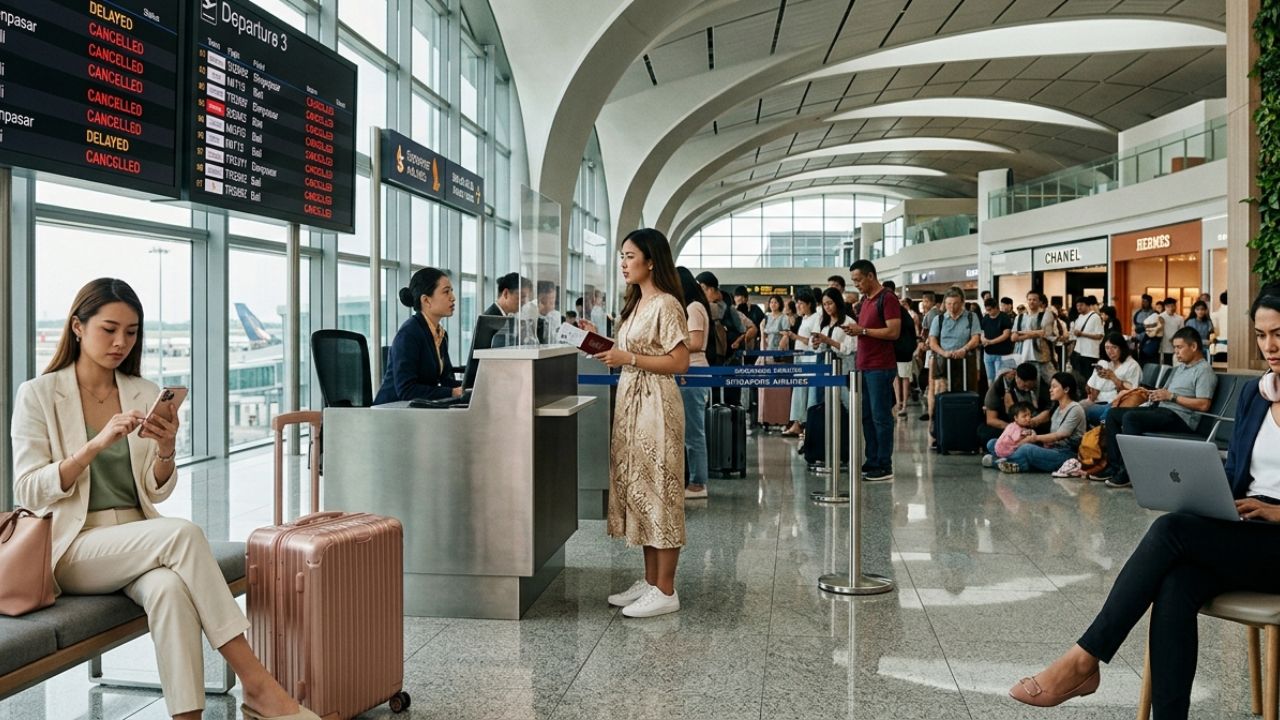
Image generated by AI
Hundreds of international travelers and regional business commuters are facing unexpected logistical hurdles following a sudden flight cancellation that severed a critical connection between Singapore and Bali. The abrupt grounding of an afternoon Airbus A320 service departing from Singapore Changi Airport effectively paralyzed a vital segment of the Denpasar travel corridor, forcing rapid rebooking scrambles and generating significant passenger inconvenience. For tourists relying on precision transit through Southeast Asia's busiest aviation hubs, this specific disruption explicitly highlights the extreme vulnerability of tightly scheduled regional networks and the immediate necessity for flexible travel itineraries when navigating the highly congested Singapore-Bali route.
Quick Summary of Key Facts
- Affected Flight: Service TNU554, operating an Airbus A320, was abruptly cancelled prior to its scheduled afternoon departure.
- Targeted Route: The cancellation directly severed the high-demand connection from Singapore Changi Airport (WSSS) to Ngurah Rai International Airport (DPS) in Bali.
- Scheduled Timing: The flight was programmed for a highly active 02:15 PM (UTC +08) Thursday departure window.
- Passenger Impact: Hundreds of travelers were forced into mandatory rebooking queues, suffering significant timing inconveniences despite the availability of alternative later flights.
- Operational Fallout: The grounding forced immediate adjustments to aircraft rotation cycles and minor scheduling shifts across Changi Airport's afternoon departure board.
Context: The Vulnerability of Precision Aviation Networks
The current disruption stems from the hyper-interconnected nature of modern Southeast Asian aviation logistics. Singapore Changi Airport operates as one of the world's most precise and densely packed international transit hubs, flawlessly managing thousands of aircraft movements weekly. Simultaneously, the corridor connecting Singapore to Ngurah Rai International Airport in Bali represents one of the absolute busiest leisure and business routes in the entire region. Because carriers utilize highly fuel-efficient narrow-body aircraft, such as the Airbus A320, to run high-frequency, rapid-turnaround shuttle services between these two mega-destinations, there is virtually zero margin for error. When a single mechanical issue, crewing deficit, or operational hurdle forces a cancellation on this specific corridor, it instantly breaks the carefully calibrated rotation cycle, generating immediate ripple effects across both inbound and outbound traffic flows.
Event/Incident Details
The disruption officially materialized when flight TNU554 was formally scrubbed from the departure board at Singapore Changi Airport. The service, which exclusively utilizes an Airbus A320 aircraft, was scheduled to execute a routine short-haul regional jump to Denpasar, Bali.
Programmed for a 02:15 PM (UTC +08) departure on Thursday, the flight sat squarely within the peak afternoon travel window—a critical period utilized heavily by international tourists connecting through Singapore to reach their final resort destinations in Bali before evening. The abrupt cancellation removed a massive block of passenger capacity from the market precisely when demand was peaking. Consequently, the operational breakdown forced Changi Airport's ground handlers and the operating airline to rapidly initiate massive passenger re-accommodation protocols, manually processing hundreds of stranded tourists through alternative scheduling layers.
Risk/Impact on Travelers and the Aviation Sector
While a single flight cancellation may appear minor on a macro scale, the specific grounding of TNU554 generated severe, localized disruptions for travelers and operational managers:
- Fixed Itinerary Destruction: Passengers possessing strict hotel check-in times, pre-booked airport transfers in Denpasar, or tightly scheduled business meetings in Bali suffered immediate, unrecoverable delays.
- Connecting Flight Failures: International tourists who utilized Singapore strictly as a transit point from Europe or North America found their carefully constructed multi-leg journeys abruptly halted.
- Aircraft Rotation Collapse: Grounding the A320 broke the aircraft's daily rotation cycle, forcing airline dispatchers to rapidly reposition alternative aircraft and aggressively modify subsequent crew assignments to prevent further downstream cancellations.
- Terminal Congestion: The sudden influx of hundreds of passengers requiring immediate rebooking assistance temporarily congested airline service desks during Changi’s intensely busy afternoon rotation.
What Authorities Are Saying
Aviation authorities and terminal operations managers at Singapore Changi Airport continuously emphasize the critical importance of schedule resilience within regional networks. While neither the Civil Aviation Authority of Singapore nor Indonesian transport ministries issue macro-level travel advisories for single flight cancellations, airport officials acknowledge that disruptions during the afternoon departure window require immediate, aggressive intervention.
Airline representatives have confirmed that their primary directive following the TNU554 cancellation was immediate passenger re-accommodation. Ground teams were instructed to prioritize shifting affected travelers onto subsequent evening services or alternative carrier connections utilizing available partner networks. Authorities stress that because the Singapore-Bali corridor features multiple daily departures across various airlines, the primary disruption to the passenger is one of timing and convenience, rather than absolute route failure.
Practical Traveler Advice
For individuals currently booked on or planning to utilize the highly congested Singapore-Bali travel corridor, implementing the following actionable strategies is essential to survive sudden operational disruptions:
- Monitor Departure Boards Constantly: Do not assume your afternoon flight is secure. Actively monitor your airline's mobile application and Changi Airport's live departure data starting at least 12 hours before your scheduled takeoff.
- Build Itinerary Buffers: Never book a non-refundable, time-sensitive activity (such as a sunset cruise or premium dinner reservation) in Bali for the same evening as your arrival. Build a 24-hour buffer to absorb potential flight delays.
- Utilize Flexible Booking: When purchasing tickets on high-frequency routes like Singapore to Denpasar, strongly consider flexible fare classes that allow you to seamlessly jump to an earlier or later flight without punitive financial penalties if disruptions begin to cascade.
- Secure Transit Accommodations: If your flight is abruptly cancelled and you are forced to endure an overnight rebooking, immediately utilize your airline's customer service desk to secure hotel vouchers or lounge access within Changi Airport.
- Maintain Comprehensive Travel Insurance: Ensure you possess robust travel insurance that explicitly covers "trip delay" and "missed connection" scenarios, guaranteeing financial reimbursement for lost hotel nights or forfeited excursion fees in Bali.
Broader Context
The cancellation of TNU554 serves as a micro-level illustration of macro-level aviation vulnerabilities across Southeast Asia. The Singapore-Bali route is the vital economic artery feeding Indonesia's heavily tourism-driven island economy. Historically, this corridor has been dominated by legacy carriers like Singapore Airlines alongside aggressive regional low-cost operators, creating a highly competitive, densely packed schedule. However, this density also means that broader route disruption patterns can occur rapidly. An A320 cancellation doesn't just strand passengers in Singapore; it means that the corresponding return flight from Bali is also scrubbed, stranding an equal number of tourists in Indonesia and potentially disrupting their massive long-haul connections back to global destinations.
What to Expect Next / Looking Ahead
Moving forward, passengers navigating the Singapore-Bali corridor should expect airlines to aggressively fine-tune their operational flexibility. As Southeast Asian travel demand continues its relentless post-pandemic expansion, carriers will increasingly rely on sophisticated predictive algorithms to manage aircraft rotation and deploy rapid-response reserve crews to mitigate sudden mechanical or operational failures. For the immediate future, travelers affected by the TNU554 cancellation will complete their rebooked journeys, but the incident will undoubtedly force corporate travel managers and independent tourists to re-evaluate their reliance on incredibly tight transit windows when moving through major Asian aviation hubs.
Conclusion
The sudden cancellation of flight TNU554 from Singapore to Bali perfectly demonstrates the fragile nature of high-frequency regional aviation. While Changi Airport and operating airlines possess the infrastructure to eventually re-accommodate stranded passengers, the severe timing disruptions underscore a critical reality: travelers navigating the densely packed Southeast Asian corridor must prioritize extreme flexibility, constant vigilance, and robust contingency planning to successfully reach their final destinations.
Frequently Asked Questions (FAQ)
Which specific flight was cancelled between Singapore and Bali? Flight TNU554, operating an Airbus A320 aircraft, was abruptly cancelled prior to its scheduled 02:15 PM (UTC +08) Thursday departure.
Where did the flight cancellation occur? The disruption took place at Singapore Changi Airport (WSSS), abruptly halting service to Ngurah Rai International Airport (DPS) in Denpasar, Bali.
How did this cancellation impact passengers? Hundreds of travelers suffered significant timing disruptions and were forced into immediate rebooking queues, suffering delays to hotel check-ins and onward connections in Indonesia.
Were passengers able to reach Bali eventually? Yes. Because the Singapore-Bali corridor features multiple daily departures, the vast majority of affected travelers were successfully re-accommodated on later evening services or alternative airline connections.
What should I do if my flight to Bali is suddenly cancelled? Immediately engage with airline customer service via their app or terminal desk to secure a seat on the next available flight, and activate your travel insurance to cover any financial losses related to missed hotel nights in Bali.
Disclaimer
This article is for informational and educational purposes only. It does not constitute legal, financial, or professional advice. While we strive to provide accurate and up-to-date information, travel policies, regulations, and conditions change rapidly. Always verify information with official sources before making travel decisions. Nomad Lawyer makes no representations about the accuracy, reliability, completeness, or suitability of the information provided. Readers should consult qualified professionals for advice specific to their circumstances. The views expressed in this article are those of the author and do not necessarily reflect the views of Nomad Lawyer.
Kunal K Choudhary
Co-Founder & Contributor
A passionate traveller and tech enthusiast. Kunal contributes to the vision and growth of Nomad Lawyer, bringing fresh perspectives and driving the community forward.
Learn more about our team →